Separation techniques: Crystallization
Separation techniques: Crystallization.
It highlights other separation processes due to its potential to combine purification and particle production in a single process. Compared with other separation operations, the crystallization in solution has several. Crystallization is also a liquid separation process in which there is a mass transfer of a solute from the liquid solution to a pure solid crystalline phase. An important example is the sucrose production of beet sugar, where sucrose is crystallized from an aqueous solution.
The characteristics that a substance must fulfill to form crystals are:
- Your natural state must be solid.
- A crystal is a three-dimensional structure of geometric shape that is formed by a single molecule of a substance, for example, the salt crystal is formed by a molecule of sodium chloride.
Crystallization process.
In this process, a solid substance with a very small amount of impurities dissolves in a minimum volume of solvent (hot if the solubility of the substance to be purified increases with temperature). The solution is then allowed to cool very slowly so that the crystals that separate are of the pure substance, and it is filtered.
The filtrate, which contains all the impurities, is usually discarded. For fractional crystallization to be an appropriate separation method, the substance to be purified must be much more soluble than the impurities under the crystallization conditions, and the number of impurities should be relatively small. Commonly impurities are present at low concentrations and they return to the solution even when the solution cools. If an extreme purity of the compound is needed, the filtered crystals can be subject to re-crystallization and, of course, in each crystallization, there is a loss of the desired solute that remains in the mother liquor along with the impurities.
The ideal solvent for crystallization of a particular compound is one that:
- Does not react with the compound.
- Boils at a temperature below the melting point of the compound.
- Dissolves a large amount of the compound when it is hot.
- Dissolve a small amount of compound when it is cold.
- It is moderately volatile and crystals can be dried quickly.
- It is not toxic, it is not flammable and it is not expensive impurities should be insoluble in the solvent so that they can be separated by filtration.

Source
Supersaturation.
Source
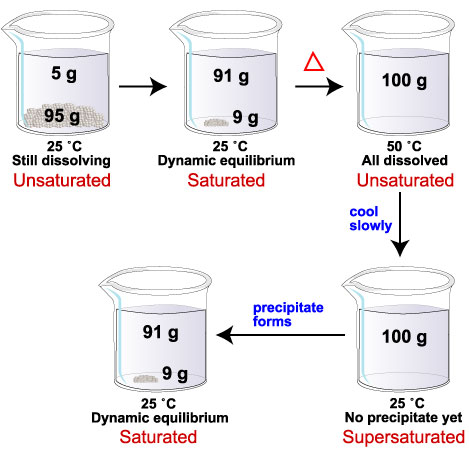
When talking about crystallization, the most important thing is the concept of supersaturation, because if there is no crystallization, it cannot be given.
Supersaturation is the difference in concentration between the supersaturated solution in which the crystal is growing and that of the solution in equilibrium with the crystal.
The saturated solution concept is related to the so-called solubility limit.
Supersaturation is defined as: Ac = C - Cs
- Ac = molar supersaturation, moles per unit volume.
- C = molar concentration of solute in solution.
- Cs = molar concentration of solute in the saturated solution.
Source
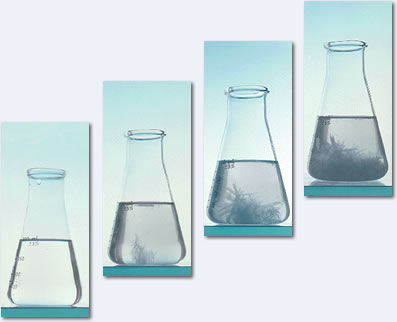
Without supersaturation there is no crystallization, to reach supersaturation you have to perform:
- Cooling: If the solution is cooled, it loses solubility and goes from being concentrated to saturated and finally supersaturated.
- Heating: If the solution is heated, the solvent is removed and it goes from being concentrated to saturated and finally supersaturated. When the temperature increases the solubility can decrease or increase depending on the solid, for example, inorganic solids such as urea the solubility is decreased.
- Evaporation: A part of the solvent is evaporated until the amount of substance dissolved in the remaining solution exceeds that of saturation. This basic operation is used in the cases in which the solubility depends little on the T. An applied example is the industry to form a salt.
- Precipitation: By placing an additional substance in the solution so that the solids agglomerate and form crystals.
- Vacuum: Combination of effects. In a vacuum evaporator, a part of the solvent is evaporated, the elimination of the necessary heat also cools the solution. Advantageous for substances sensitive to ° T.
For the choice of a solvent of crystallization the rule "similar dissolves like" is usually very useful. The most commonly used solvents, in order of increasing polarity, are petroleum ether, chloroform, acetone, ethyl acetate, ethanol, and water.
It is better to use a solvent with a boiling point that exceeds 60 ° C, but which in turn is at least 10 ° C lower than the melting point of the solid to be crystallized. In many cases, you need to use a mixture of solvents and you should try different mixtures to find the one that provides the most effective crystallization.
In the following table appear the solvents most used in the crystallization of the most common classes of organic compounds:
Stages of Crystallization.

Source
In all crystal formation, two stages must be considered:
Nucleation:
Formation of the first ions from the ions or molecules that are in the bosom of the solution. It may be that these first crystals that are formed are destroyed due to an inverse process of nucleation. Within nucleation, we can distinguish between primary nucleation and secondary nucleation.
- Primary: It is one in which the origin of the new solid phase is not conditioned or influenced by the presence of the solid phase that originates.
- Secondary: The secondary nucleation designates that process of formation of crystals of the new phase that is conditioned by the presence of particles of the same phase in the supersaturated system and for which reason, it occurs.
Growth:
Stage of the solidification process where the atoms of the liquid join the solid forming the large crystalline structures.

Source
Types of crystals.

Source
A crystal can be defined as a solid composed of atoms arranged in order, in a model of repetitive type. The interatomic distance in a crystal of any defined material is constant and is a characteristic of the material. Because the pattern or arrangement of the atoms is repeated in all directions, there are definite restrictions on the type of symmetry that the crystal possesses.
The geometrical shape of the crystals is one of the characteristics of each pure salt or chemical compound, so the science that studies crystals in general, crystallography, has classified them into seven universal crystallization systems:
Cubic System.
The substances that crystallize under this system form cubic crystals, which can be defined as bodies in space that show three axes at right angles, with "segments", "lattices", or edges "of equal magnitude, which form six faces or sides of the cube. To this family belongs the crystals of gold, silver, diamond, sodium chloride.

Source
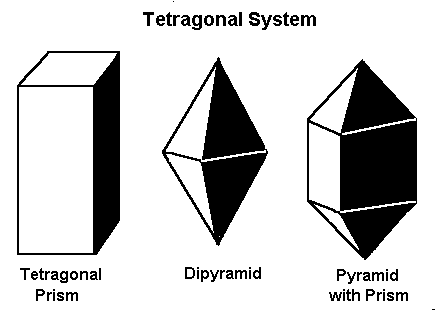
Tetragonal system.
These crystals form bodies with three axes in space at right angles, with two of their segments of equal magnitude, hexahedrons with four equal faces, represented by tin oxide crystals.
Source
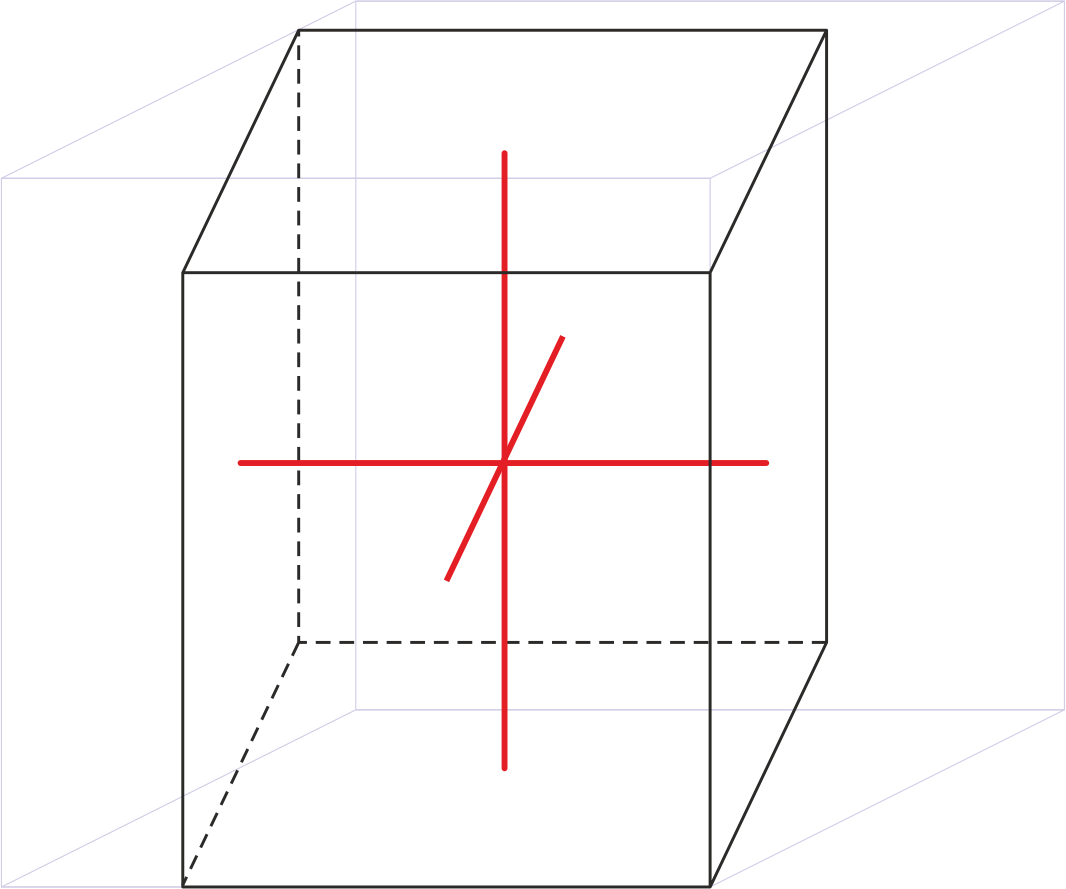
Monoclinic System
They have three axes in space, but only two at right angles, with no equal segment, as is the case of borax and sucrose.
Source
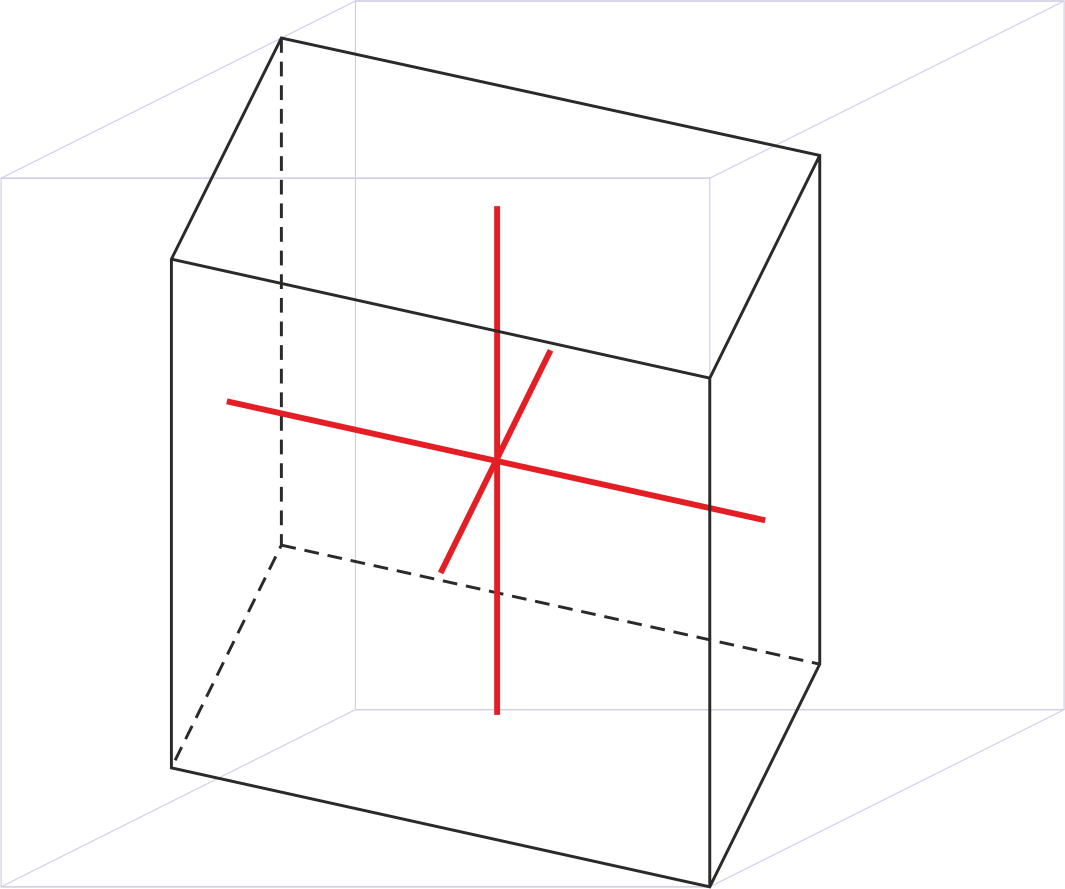
Triclinic System
They have three axes in space, none at a right angle, with no equal segment, forming needle-like crystals, as is the case with caffeine.
Source
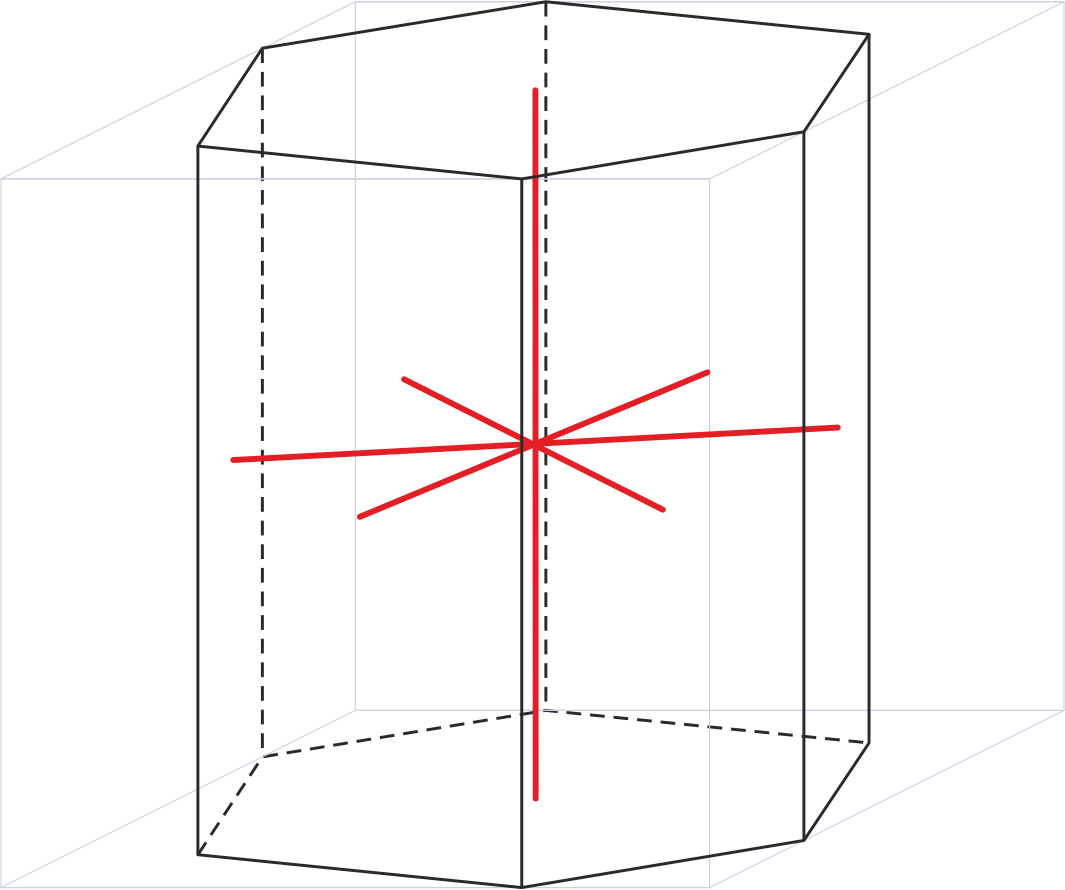
Hexagonal System
They have four axes in space, three of which are coplanar at an angle of 60 °, forming a benzene hexagon and the fourth at right angles, such as zinc crystals, quartz, magnesium, cadmium, etc.
Source
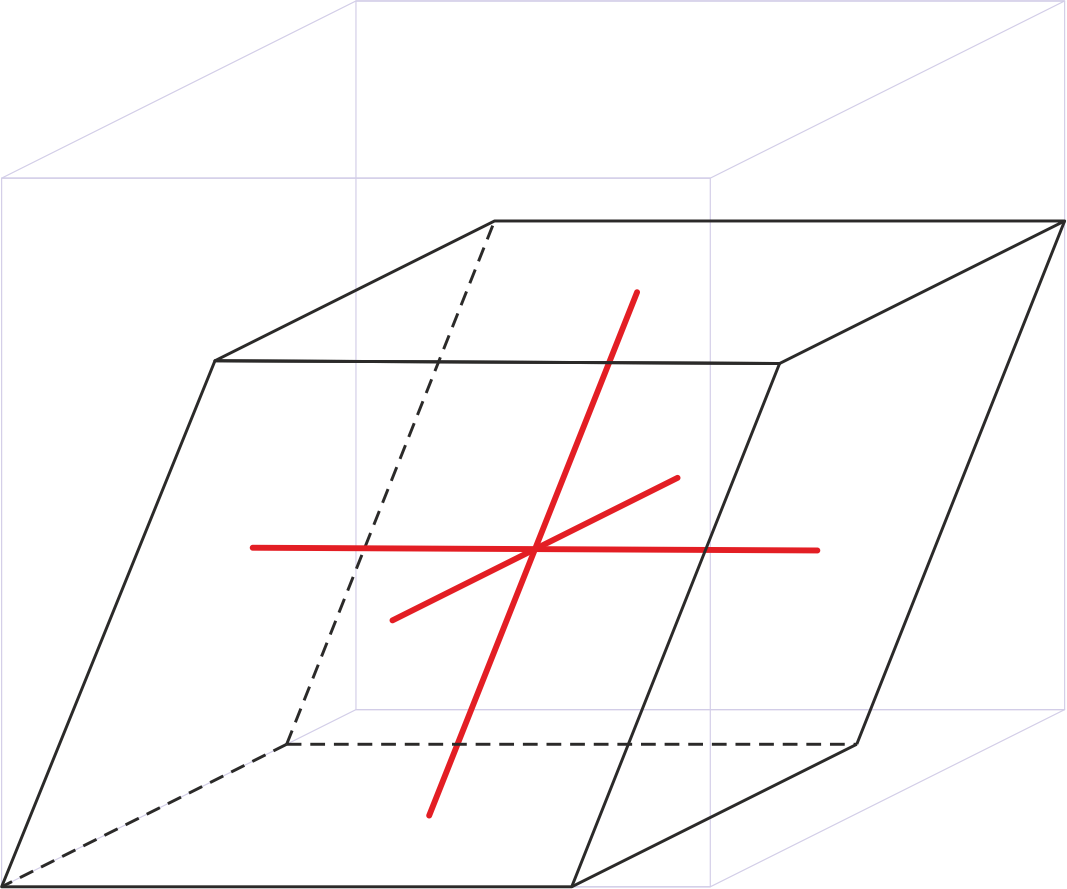
Rhombohedral system
They have three axes of a similar angle to each other, but none are straight and equal segments, such as arsenic, bismuth and calcium carbonate and marble crystals.
Source
Advantage.
• The separation factor is high (product almost free of impurities). In many occasions, a product with a purity greater than 99% can be recovered in a single stage of crystallization, separation, and washing.
• By controlling the process conditions, a solid product is obtained consisting of discrete particles of adequate size and shape to be directly packaged and sold (the current market demands products with specific properties).
• Requires less energy for separation than distillation or other commonly used methods and can be performed at relatively low temperatures.
Disadvantages.
In general, you can not purify more than one component or recover all the solute in a single stage. Additional equipment is necessary to remove the remaining solute from the mother liquor.
The operation involves the handling of solids, with the technological disadvantages that this entails. In practice, it involves a solids processing sequence, which includes crystallization equipment along with other solid-liquid separation and drying.
For more information you can check:
- http://www.reciprocalnet.org/edumodules/crystallization/
- https://www.britannica.com/science/crystallization
- http://www.thermopedia.com/content/679/
- https://www.thoughtco.com/definition-of-crystallize-605854
- Crystallization (Fourth Edition), J.W. Mullin
- Encyclopedia of Chemical Processing and Design: Volume 13 - Cracking: Catalytic to Crystallization, John J. McKetta Jr
Related posts:
Great post :)
thanks!
Crystallization is a commonly used technique for the purification of substances. It's been a while since i play with this stuff thanks for the reminder :D @josalarcon2
I'm glad you like it
Congratulations! This post has been upvoted from the communal account, @minnowsupport, by josalarcon2 from the Minnow Support Project. It's a witness project run by aggroed, ausbitbank, teamsteem, theprophet0, someguy123, neoxian, followbtcnews, and netuoso. The goal is to help Steemit grow by supporting Minnows. Please find us at the Peace, Abundance, and Liberty Network (PALnet) Discord Channel. It's a completely public and open space to all members of the Steemit community who voluntarily choose to be there.
If you would like to delegate to the Minnow Support Project you can do so by clicking on the following links: 50SP, 100SP, 250SP, 500SP, 1000SP, 5000SP.
Be sure to leave at least 50SP undelegated on your account.