Chromatographic detectors, which ones to use.
Chromatographic detectors, which ones to use.
Source
Continuing with the topic that I was talking about in my previous post (Separation techniques: Chromatography), I would like to end by explaining the different types of detectors that can and are used in a chromatographic analysis today.
For this, I would like to clarify again that the detector is the system responsible for showing the presence of solute or components of the sample that leave the column. To do this, it converts the measurement of a physical quantity, comparing it with that of the pure carrier gas itself, into an amplified signal that will indicate the moment in which the components of the column left.
Types of detectors in gas-liquid chromatography.
Thermal conductivity detector (TCD).
It consists of a device whose operation is based on changes in the thermal conductivity of gas caused by the presence of analyte molecules. It has a sensor formed by a filament of Pt or Au electrically heated, whose temperature and, therefore, its electrical resistance, depending on the thermal conductivity of the gas that surrounds it. The most suitable carrier gases are hydrogen or helium since their thermal conductivity is higher (the analytes when mixed with these gases decrease their thermal conductivity).

Source
These detectors are characterized by:
- Universal response.
- Wide linear dynamic range.
- Easy to use.
- Non-destructive.
- Low sensitivity.
- Allow collecting solute after detection.

Source
Electron capture detector (ECD).
It is one of the most used detectors in environmental analysis, due to its selectivity to detect compounds that contain halogens (such as pesticides). In it, the gas that leaves the column passes through an electron emitter (Ni-63), which causes its ionization. Applying a potential difference creates an electric current that constitutes the signal. In the presence of organic compounds the current decreases due to its tendency to capture electrons. Nitrogen or argon is used as a carrier gas, with 5% methane.
An important application of the electron capture detector is the detection and determination of chlorinated insecticides.
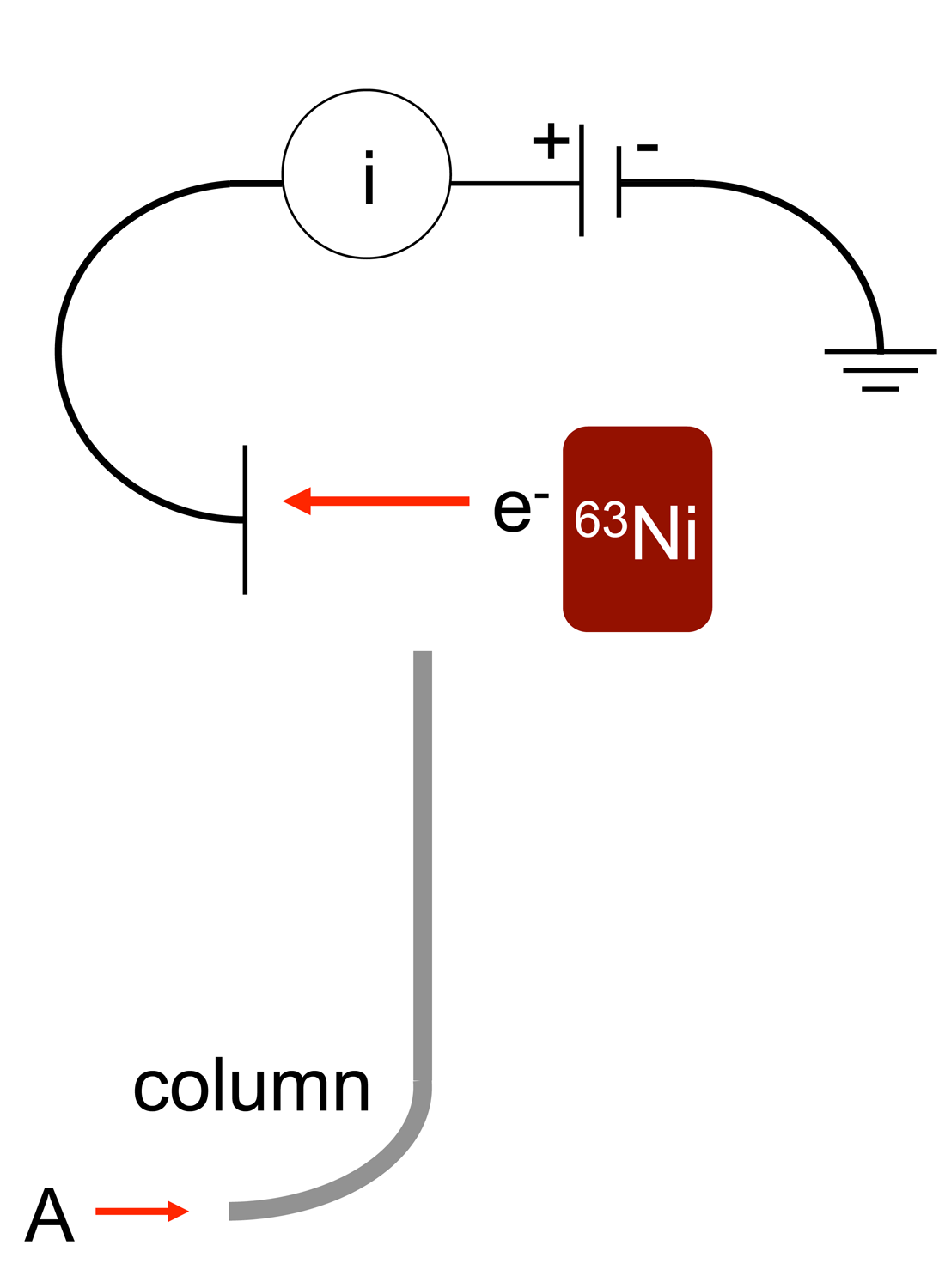
Source
They are usually characterized by:
- Selective detector (molecules with electronegative groups).
- High sensitivity.
- Non-destructive (does not alter the sample significantly).
- Small linear response interval.

Source
Flame ionization detectors (FID).
It is the most popular detector in gas chromatography. In it, the response occurs as a result of the combustion of organic compounds in a small flame of air-hydrogen, with the release of ions (CHO +) and electrons. If we apply a potential difference between the end of the burner and the collector cathode, an electric current is generated which, amplified, constitutes the analytical signal. This will be proportional to the number of carbon atoms per unit of time. The mobile phase that is used with this detector is nitrogen since it is the one that provides the best detection limit.
All these properties of the flame ionization detector make it one of the most used detectors for organic compounds, including those that are contaminated with water and with nitrogen and sulfur oxides.

Source
Characteristics:
- Sensitive to organic compounds (except carbonyl and carboxylic).
- High sensitivity.
- Linear response over a large interval.
- Stability and resistance.
- Easy drive.
- Low noise.
- It is destructive.
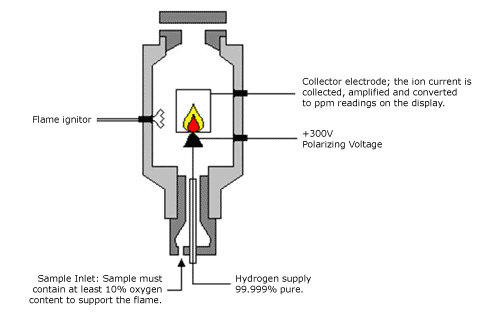
Source
Photoionization detector (PID).
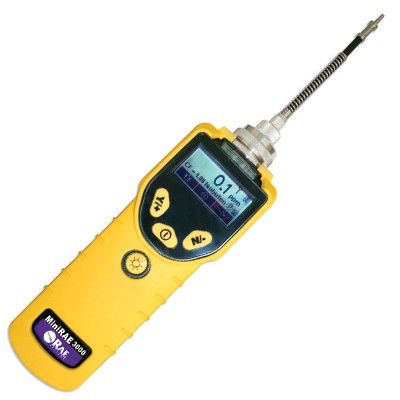
Source
In this detector, the eluate of the column is irradiated with an intense beam of ultraviolet radiation, which causes the ionization of the molecules. By applying a potential through the cell containing the ions produced, an ion current is created, which is amplified and recorded.
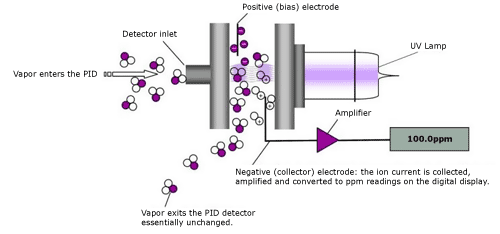
Source

Source
Flame photometric DETECTOR (FPD).
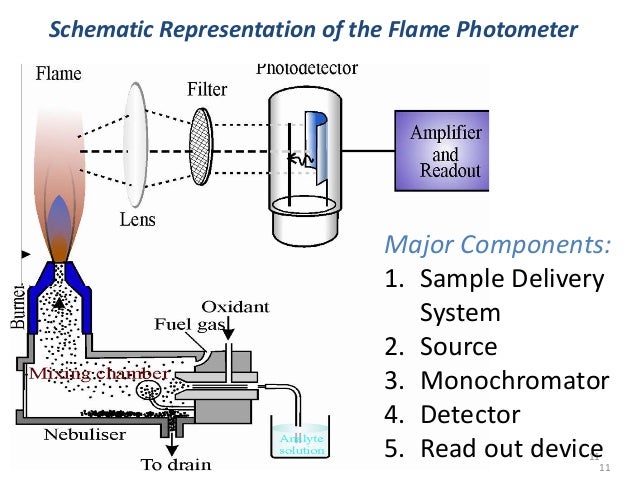
It is a detector that measures the optical emission coming mainly from phosphorus and sulfur. When the eluate passes through a flame mixed with hydrogen and air, in a manner analogous to the FID detector, the excited atoms emit a characteristic radiation (536 nm and 394 nm) that can be isolated with a filter and detected with a photomultiplier tube.
Source
Characteristics:
- It is a selective detector (P and S, also Pb, Sn, halogens).
- It is destructive.
- Less sensitive to sulfur than other detectors.
- Lower linear range for sulfur than other detectors.

Source
ATOMIC EFFECTS DETECTOR (AED).
The eluted gas from the column is introduced into a helium plasma obtained by microwaves, which atomizes and excites the elements of the sample, obtaining their characteristic atomic emission spectra. The spectra are collected in a spectrometer fitted with two diodes in series.

Source
Detector coupled to mass spectrometry.
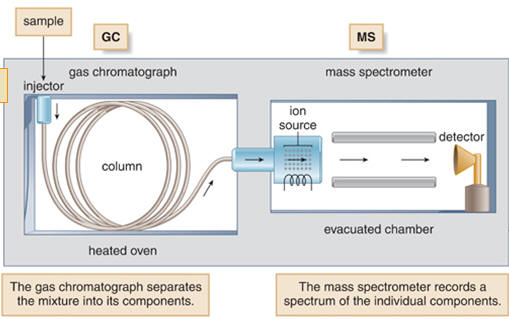
There are hybrid instruments that combine gas chromatography with other techniques, such as a mass spectrometer.
Source
In the case of capillary columns, the coupling of the two techniques can be performed directly, but in the filling columns, a jet separator must be used to eliminate most of the carrier gas that accompanies the analyte.

Source
The most important characteristics of this method are:
- Universal detection.
- High sensitivity.
- Good results in complex organic mixtures.
- High cost.
- The complexity of use.
Source
I hope you liked it, for more information you can visit:
- http://slideplayer.com/slide/2811430/10/images/4/Mass+Spectrometry+
- http://lab-training.com/landing/free-hplc-training-programme-8/
- https://www.sciencedirect.com/topics/biochemistry-genetics-and-molecular-biology/chromatography-detector
- https://www.google.co.ve/url?sa=t&rct=j&q=&esrc=s&source=web&cd=4&cad=rja&uact=8&ved=0ahUKEwjbg5zlq-DYAhXhdd8KHfHnCRoQFgg3MAM&url=http%3A%2F%2Fdavisson.nat.uni-magdeburg.de%2FDownloads%2FChromatographie.pdf&usg=AOvVaw1sfWj2XPNJOeI09E_HZVPv
- Gas Chromatography (Second Edition), A. B. Littlewood
Wow awesome post. I didn't know exist so many types of detectors
I'm glad you like it
Great post.!
thanks!