Light Waves And Electromagnetic Spectrum: Basic Properties

Nearly all objects in the universe emit, reflect or transmit some light. (Black holes do not.) The distribution of this light along the electromagnetic spectrum (called the spectrum of the object) is determined by the object's composition. Several types of spectra can be distinguished depending upon the nature of the radiation coming from an object.
The relation between the light wave and the electromagnetic wave is shown below, and we call it "Spectrum". As can be seen from the figure, the light wave mainly refers to IR: Infrared, Human visible light) and UV (VUV: three parts, in fact, only the central part of all the electromagnetic spectrum, so we say: Light is an electromagnetic wave.

Fig. 1. Electric field and Electromagnetic Waves.--source
Visible light is visible to the human eye and can be roughly divided into seven color blocks of red, light, yellow, green, blue, indigo and purple. As can be seen in Figure 10-3 (a) The wavelength is about 0.78 μm, corresponding to a frequency of 3.85 × 10¹⁴ Hz in Hertz and also to the energy of 1.59 eV in electron volts. The violet wavelength is about 0.38 μm, which corresponds to a frequency of 7.89 × 10¹⁴ Hz, Energy 3.26eV, so the red light longer wavelength, lower frequency, lower energy; violet wavelength shorter, higher frequency, higher energy. Obviously the wavelength of light is inversely proportional to the frequency; the frequency is proportional to the energy.
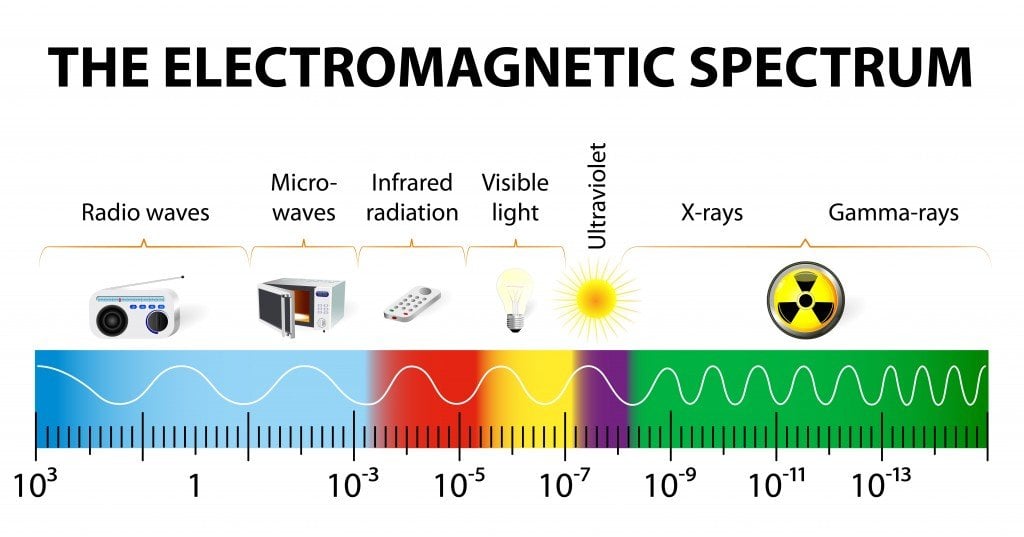
Fig. 2Visible light with different wavelengths, "different colors"--source
The wavelength of the electromagnetic wave to the right of the visible light is shorter (higher energy) than the violet light, followed by the ultraviolet light, the X-rays and the gamma-rays. These electromagnetic waves have a certain degree of harm to humans because of their higher frequency (higher energy).
Ultraviolet (UV): Electromagnetic waves of shorter wavelength (higher energy) than violet, usually used for sterilization, disinfection or deodorization.
X-rays: Electromagnetic waves of shorter wavelength (higher energy) than UV light, commonly used in hospitals to penetrate the human body to radiographs or used in laboratories for diffraction experiments to determine solids The atomic arrangement of materials, namely the simple cubic crystal, the cubic crystal, the face-centered cubic crystal, the diamond structure crystal and the single crystal, polycrystal, amorphous material mentioned in the first chapter of Chapter 1 basic electronic material science analysis.
Γ-rays: Electromagnetic waves with shorter wavelengths (higher energy) than X-rays are the radiation emitted by radioactive material. The highest energy and the most dangerous one are the "secret carving fish The kind of stuff that is usually used in hospitals to kill patients with radiotherapy to kill cancer cells or to experiment with the spectroscopy in the lab to determine the electronic properties of a material.
The electromagnetic wave on the left of visible light is longer in wavelength (lower in energy) than the red light, followed by infrared light, microwaves and radio waves. These electromagnetic waves are often used because of their lower frequency (lower energy) and less damage to human beings In the wireless communications products.
1. Infrared (IR):
Electromagnetic waves of longer wavelength (lower energy) than red light are usually used for short-range communication such as remote control with wireless keyboard and wireless mouse.
2. Microwave (MW):
Electromagnetic waves with longer wavelength (lower energy) than infrared light and are usually used in wireless communications such as mobile phones (GSM, GPRS, WCDMA, etc.), satellite communications (GPS, DBS, DTH, etc.) ), Digital broadcasts (DTV, DAB, etc.), wireless television and radio.
3. Radio waves:
Electromagnetic waves of longer wavelength (lower energy) than microwaves, usually used in wireless communications such as radio used by military and police, wireless walkie-talkies used by sausages and ham families. Technology Taiwan www.hightech.tw
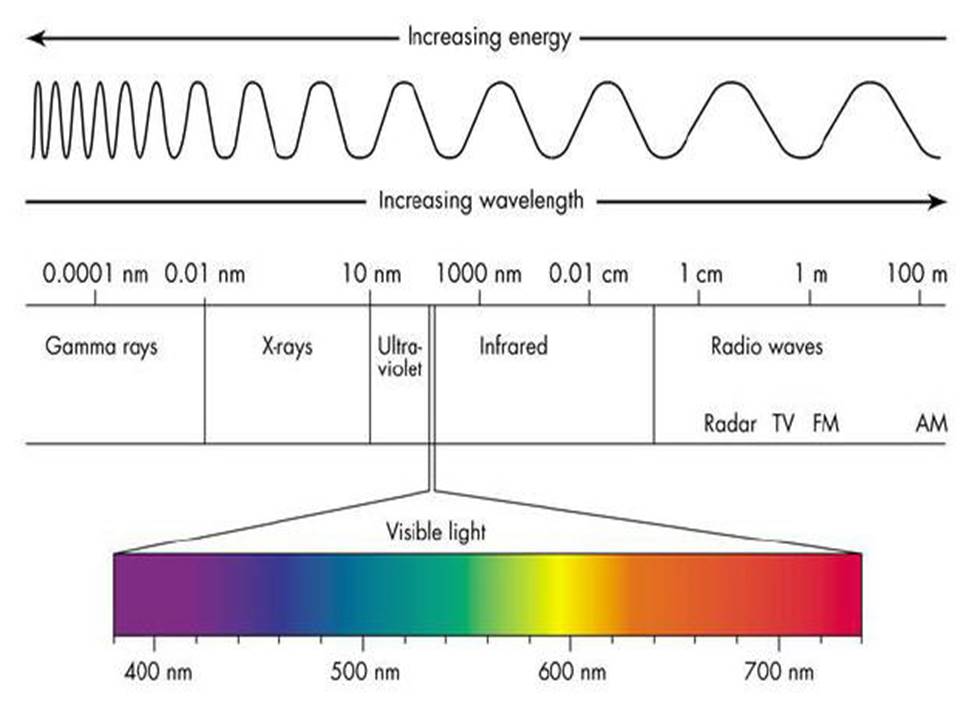
Fig. 3--source
Mobile phone electromagnetic wave security
The longer the wavelength of electromagnetic waves, the lower the frequency, the lower the energy, it is not representative of the more secureness. For example, the electromagnetic wave used by a cell phone is "microwave," and its energy is even lower than that of red or infrared light. Human beings are not exposed to red light. Is it like talking on the cell phone system safe?

Determining whether electromagnetic waves are harmless to humans must be determined by both the "energy" and "power" of the electromagnetic waves, the unit of energy is "Joule" and the unit of power is "Watt Watt) ", which is defined as" the amount of energy per unit of time. " For example, at present, the mobile phone we use uses microwaves to communicate. Although the energy is small, the power is not small, and the power used for a long time can not be used for a long time. Similarly, the energy of large electromagnetic waves, if the power is small, the human injury is not obvious.
For example: the composition of the sun originally contains a lot of γ-rays, these γ-rays are still filtered after the atmosphere There is a very small amount of γ-rays that impinge on the Earth's surface. In other words, we are irradiating γ-rays every day. Although the energy is very high, the power is very low (most of them are overcast by the atmosphere) and there is no long-term exposure.
Microwave oven
When it comes to "Microwave," most people do not think of cell phones, but think of "microwave ovens." In fact, the microwaves used in microwave ovens and the electromagnetic waves used in cell phones are all microwaves in the electromagnetic spectrum, but at different frequencies. Since the vibrational frequency of the bond between the hydrogen atom and the oxygen atom of water molecule (H2O) is 2.4 GHz (Hertz), microwaves having a frequency of 2.4 GHz generate "Resonance" with water when they are irradiated to water molecules, Causing water molecules to vibrate violently. Water molecules vibrate and food molecules rub to generate high heat, so the food can be heated in a very short period of time.
The frequency of 2.4GHz microwave is actually not suitable for use in wireless communications. Unfortunately, 2.4GHz electromagnetic waves are referred to as "Industrial Scientific Medical" in communications and are mainly used for short-range wireless communications such as Bluetooth, wireless local area network (IEEE802.11) and the like, but if power is concerned there's no such thing as a microwave oven. Although these products that use the ISM band must pass harmless tests on the human body, they have more or less impact on human beings.
Visible light has infinite variety of colors to form "continuous spectrum"
With different wavelengths of visible light human eyes look "different colors". But the visible light has how many colors? The answer this question is very simple, because each wavelength of light has a color, the numbers of wavelengths of light is equal to the number of colors. Let us ask yourself a simple mathematical problem, how many "real numbers" are there in a number line? The answer is: There are infinitely many real numbers in one line, so there are infinitely many colors in an infinite variety of wavelengths. We call this "Continuous spectrum,".
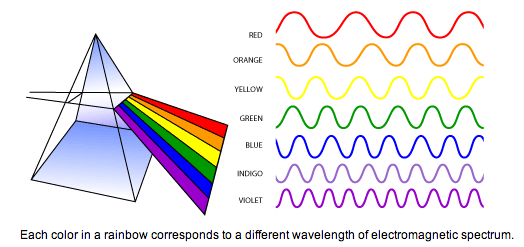
fig. 4--source
The red light has a wavelength in the range of 0.78 μm to 0.60 μm, the orange light has a wavelength in the range of 0.60 μm to 0.58 μm, the yellow light has a wavelength in the range of 0.58 μm to 0.53 μm, and the green light has a wavelength in the range of 0.53 μm to 0.48 μm , The wavelength range of blue light is 0.48μm ~ 0.45μm, the wavelength range of indigo light is 0.45μm ~ 0.43μm, the wavelength range of violet light is 0.43μm ~ 0.38μm, in other words, there is a kind of " Red-orange light ". There is also a kind of" red-orange light "between red light and red-orange light. There is also a kind of" red, red and orange light "between red light and red-orange light, and so on.
There are infinitely many colors, the question is: how many colors can human eyes distinguish? Because the colors that the eye can distinguish are limited, we do not need to display an infinite number of colors for the display, Figure 3 (above) also lists the wavelengths corresponding to the different colors of visible light With energy.
References for Text and Images:
Support @steemstem and the #steemstem
project - curating and supporting quality STEM
related content on Steemit
This post has received a 0.31 % upvote from @drotto thanks to: @chotho.
Nice post, you do a good job of explaining electromagnetic waves and wavelength.
Greetings! I am a minnow exclusive bot that gives a 5X upvote! I recommend this amazing guide on how to be a steemit rockstar! I was made by @EarthNation to make Steemit easier and more rewarding for minnows.