An Introduction Into Implicate and Explicate Order: Resolving Determinism Versus Free Will
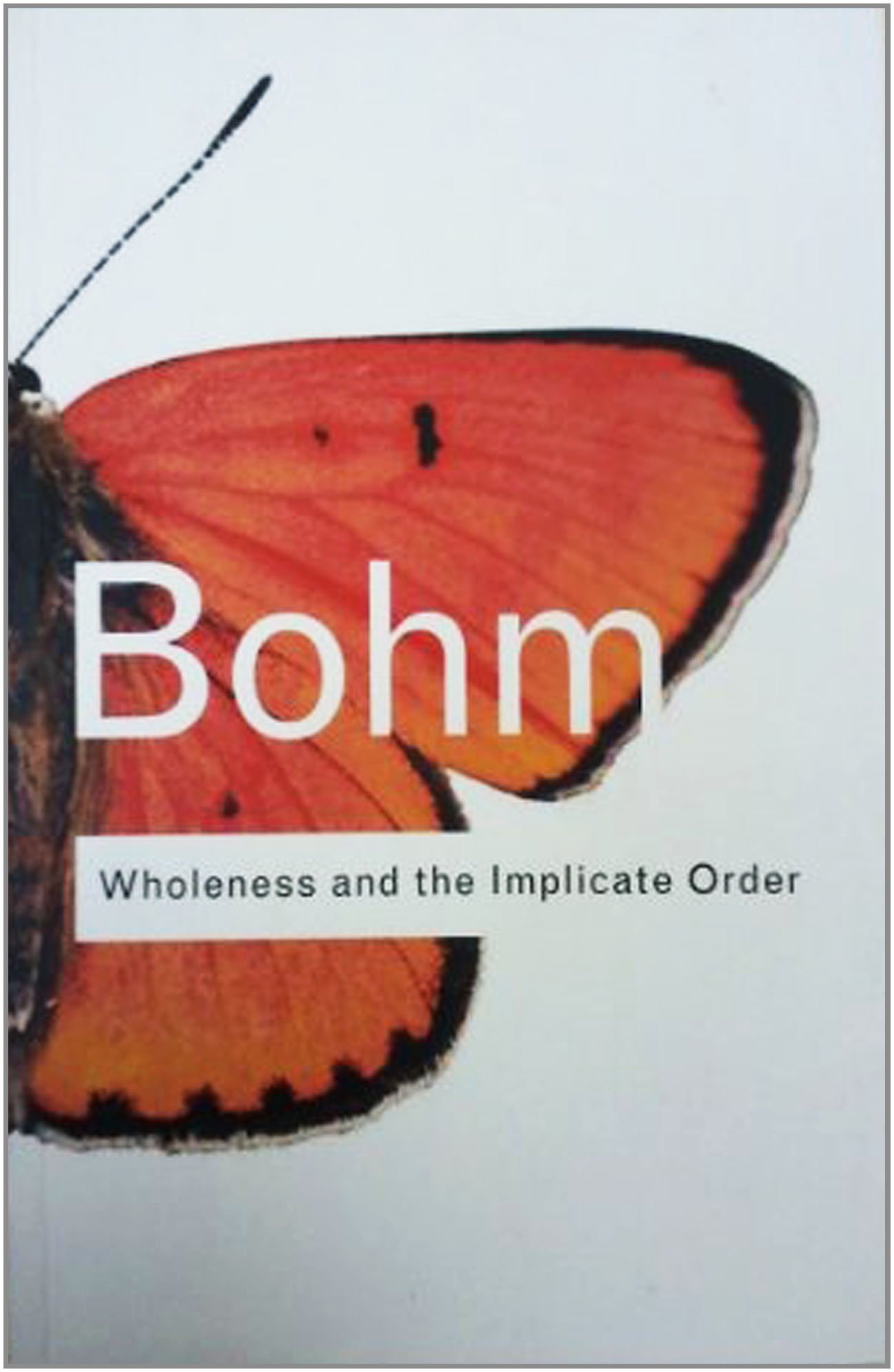
Implicate order and explicate order are ontological concepts for quantum theory coined by theoretical physicist David Bohm during the early 1980s. They are used to describe two different frameworks for understanding the same phenomenon or aspect of reality. ~https://en.wikipedia.org/wiki/Implicate_and_explicate_order
If we can move towards a new perspective on the role of thought in the creation of psychological time we can start to understand (and “experience”) a new order of time.
It is through the levation of this new order that we can inquire into the relationship between these different perspectives on time. As we examine this relationship we can begin to resolve the conflict between determinism and free will.
The False Dilemma
There is a false dilemma created when we use the traditional understanding of thought and its relationship to time and the individual (self/ego). Traditionally thought arises as a mechanism by which we go about solving the problems of our daily lives. When we move beyond the limitations of thought self takes on a different role and this role is seen to never really have had the ability to solve daily problems in the first place.
When we end this pattern of escape, the belief that a self that is separate from its problem dissolves. And so there is left the realization that the self was never in control of anything in the first place.
From this new perspective, the self is seen to be a product of disorder that arises as an automatic response to a disordered perspective.
This poses the question of determinism versus free will in a different manner.
Can the Self Act?
When we observe the relationship of thought to its construct of the self without participating in the cycle we are able to free the mind's function from this process. There is then a detachment from the psychological time that comes to us in the form of a belief that we must do “this” and therefore “that”.
The mind resolves all its problems in this way, by first escaping the anxiety that arises with our problems, and then creating a pleasure and a result of obtaining it.
The disorderly mind becomes obsessed with marrying the future with the past in order to resolve different forms of anxiety.
None of this is action though. It is pattern and conditioning. Automated response.
Where is Free Will?
In order to claim free will, we must move BEYOND our conditioning, and this begins when we can properly observe the pattern we are stuck in, without participating in it further.
Free will can be said to only come about AFTER this pattern is broken.
Breaking the pattern IS action. It MUST be done by free will, because a conditioned response is not a response of free will. So breaking the pattern is the action of free will.
Only when we move beyond the limitations of psychological time, can it be said that free will has taken place. From this view one can see ALL actions rooted in psychological time have deterministic origin.
Implicate/explicate Order: Resolving Determinism versus Free Will
In the enfolded [or implicate] order, space and time are no longer the dominant factors determining the relationships of dependence or independence of different elements. Rather, an entirely different sort of basic connection of elements is possible, from which our ordinary notions of space and time, along with those of separately existent material particles, are abstracted as forms derived from the deeper order. These ordinary notions in fact appear in what is called the "explicate" or "unfolded" order, which is a special and distinguished form contained within the general totality of all the implicate orders (Bohm 1980, p. xv).
Then there are two different perspectives on our traditional view of time. Traditionally time is our tool for solving problems, but from the perspective taught by Krishnamurti and Dr. David Bohm what we traditionally see as time is really a construct of the mind. A higher order of time lies beyond this limited perspective.
When we understand the relationship of these perspectives of time, we have laid the grounds for understanding Implicate and Explicate Order, which Bohm used as a construct to point to a more wholistic understanding of our universe.
A Side Note on Language
An experimental form of language based on verbs.~https://en.wiktionary.org/wiki/rheomode
As we learn to meditate on the implications of the implicate and explicate order of time it becomes apparent that words change their meaning, since words themselves have inherited “tenses” of time as language evolved.
This is an insight Bohm inquired into as he tried to extend our language through the use of “rheomodes”. Rheomodes help us address the limitations our current languages have inherited.
The rheomode addresses the delusional validity of our traditional perspective of time as well as the limited construct of the self that arises because of our mistaken faith in this limited perspective.