Reps Resistance and Rest
Three Variables to Help You Design Your Own Workouts

Hello, Steemians! Today I want to share with you three concepts you need to understand in order to effectively plan and design your own workout. There's always more to be said, but this is meant for the beginners.
Have you ever went to see a personal trainer? Man, that can be expensive. It's not magic what they're doing, though. Sometimes people over complicate things, and a personal trainer has a vested interest in making what they do seem like magic. It isn't
What I'm going to talk about today has been time tested by probably millions of bodybuilders, fitness enthusiasts, military men and women, and more. These concepts can be called by other names, I like the three R's.
First thing's first, though. It's important to keep in mind that we are all different, and we aren't all going to respond to training in the exact same way due to many different things, like diet, life stress, gender, and genetics. The ideas I'm going to share today are GENERALLY true for most people, but there are going to be some weirdos out there...
So, with that in mind, there are generally three variables that you can play with in order to design a workout to met your fitness goals. For the rest of this article I'm going to use weight training examples because it will make examples easier to understand, but these variables can be applied to almost any type of exercise.

Defining Terms
Reps
The first variable is Reps, or Repetitions. Simply put, this is how many times you do a particular exercise.
Resistance
Next, Resistance. This is basically how hard it is to do an exercise. In weight training this refers to how heavy the weight is being lifted.
Rest
Last, but not least is Rest. Rest is the amount of time you give yourself to recover. This includes how much time between sets, how much time between exercises, how much time between workouts, and how much sleep you get.
Goals

Now that we have the terms defined, we need to figure out what your goals are; in other words, why are you working out? Do you want to get bigger? Do you want to be stronger? Do you want to have a lot of endurance? There is a lot of crossover any way you train, meaning if you train specifically for strength, you will gain some size and endurance as well. The same goes for size training and endurance training.
Generally though, you want to tailor your training to be the most compatible with your goals. If you're planning on running a marathon, you probably don't need eighteen inch arms. So, lets take our goals here one at a time and see how playing with our variables effects our workouts.
Size
Training for size is probably the hardest type of training, in my experience, and also one of the most misunderstood. Before we start, there's a few caveats I'd like to mention:
- Getting bigger is hard. Really Hard. A lot of times when asked why not lift weights, people will give to response, "I don't want to get big." Fine, but really, getting bigger is not easy. That should be easy to see by all the steroids and nutritional supplements most bodybuilders take to achieve their goals.
- Getting bigger takes time. If your goal is to gain twenty pounds of muscle, and you aren't on steroids, you need to buckle in for the long haul. You aren't going to get huge arms, chest, and legs by that date next Thursday.
- Training for size takes the most work. Okay, so I admit this one's mostly opinion, but I've been there, done that. You have to spend lots of time in the gym. You have to eat a lot, like... A LOT. You have to push your body when you hurt.

Now, lets look at the variables and see how they can be used to make a workout designed to make you bigger.
- Reps - Generally, if you are trying for size you want to target your repetitions to eight to ten per set. You are going to want to do four to five sets. I know there's some bodybuilders out there with way different guidelines, but generally this is a good place to start, and it will serve you well for a couple of years IMO.
- Resistance - You want to grab a weight that allows you to do your planned 8-10 reps, but heavy enough that you couldn't do much more. Some people respond well to training to failure, which is making the weight heavy enough that you can't complete the last rep without help. If you plan to attempt this, pleas have a spotter. I don't think it's necessary for most people.
- Rest - You want to keep all your rest intervals between sets and exercises at 60 to 90 seconds. This gives your muscles enough time to prepare for the next set, but isn't too long. The reasons for this are complicated and have to do with where your body is drawing energy from, but that's beyond the scope of this article. You want to keep the time between workouts at about two days. Everyone is going to recover at a different rate, but two days is a good starting point. You're probably going to need to be doing different muscle groups on different days so you can get in all the training your going to need for that mankini, though, so an example of how that works out is: Push exercises Monday and Thursday, Pull Exercises Tuesday and Friday, Legs Wednesday and Saturday. (Bodybuilders argue a LOT about the best split, this is a good starting point) Also, you're going to want to sleep eight hours a night. NO EXCEPTIONS. You need the sleep to build the muscle.
Strength
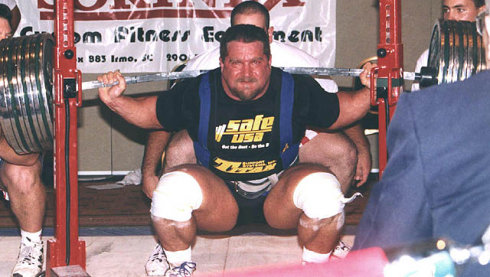
Training for Strength is IMO, one of the most beneficial things a person can do to improve their overall fitness level, and one of the most often overlooked. Why is it so beneficial? Lots of reasons I'm not going to elaborate on for now, which include: building stronger bones, building stronger ligaments, better physiological response to stress, and it makes everyday physical tasks easier and less exerting.
There is a couple of caveats to this one, too. This type of training shouldn't be your first step into lifting weights. Before you start lifting really heavy, you need to make sure your body is ready for it. The best way to do that is by following the endurance protocol I will discuss next.
Also, this type of training takes the most time, so its important to choose exercises that provide a lot of "bang for the buck." These are exercises that train the whole body, or major muscle groups, not specific body parts. Examples are squats, dead lifts, overhead presses, pull ups, bench press, lunges, and Turkish Get-ups.
So, lets take a look at how we can play with the variables to get Strong...
1. Reps - Building Strength isn't like building size, in that you're trying to train neurological system as much as you train the muscular system. For strength, it's best to keep the repetitions on the low end. Some say 3-5, some say 1-5, but most will say if you're doing more that 6 you're bodybuilding. Your overall Rep count per workout should about 10.
2. Resistance - Heavy. You want to be aiming your higher rep sets at about 75-80 percent of your one rep max, and your lower sets at 90 percent. (One Rep Max is how much weight you can lift for that exercise one time)
3. Rest - This type of training requires the most rest between sets. Aim for at least 5 minutes, some say as little as 3, some say as much as 10, but 5 is a good place to start. Training this way allows for less time between workouts. Many strength athletes will train four or five days a week. I would recommend starting with 2 days in a row, one rest day, two more training days, the two rest. Sleep is important, but let your body tell you how much you need. Aim for 7-8 hours.
Endurance Training

Endurance training means training your body to be able to perform a lot of work. Training for endurance is the kind of training you see soldiers, cross fitters, and fighters. Endurance build the cardiovascular, muscular, and respiratory systems to operate under high levels of stress.
If you are a beginner at resistance training, or you've been riding a couch for a few years, this is where I recommend you start. You don't want to be throwing around heavy weights until you're ready for it. If you try to jump into bodybuilding or power-lifting and you don't have a good, basic level of fitness, you are likely to hurt yourself. Also, if you want to be throwing around heavy weights at some point, you need to start out by training yourself to lift properly by performing lots of reps. Lots of reps, that's what endurance training is all about.
1. Reps - Lots. There's all different approaches you can take here, but a good starting place is 15-20 reps of each exercise, and 3-4 sets. This is going to make you tired, so be prepared. The name of the game here is volume. Also, it's important to make sure you are doing the exercises properly, and in a controlled manner. If you can't lift it properly, go lighter.
2. Resistance - You're going to want to go with a lower load here. start small and work your way up. You don't want to reach failure at any point. Don't worry about the meatheads lifting a horse, be comfortable with the journey.
3. Rest - You want to keep the rest interval as short as you can. When you start out, it's going to be hard to rest less than a minute between sets, but your goal is about thirty seconds between sets, and a minute max between exercises. No time here for chit-chat. You should be too short winded to talk, anyway. Between workouts: aim for every other day, and 3 days a week. At first it's going to be tough, especially if you have a tendency to overdo it, (my hand is in the air now) but as your level of fitness increases you should be able to get there. Full body work makes this easier to plan.

Hopefully now you have enough information to start planning and designing your own workouts. Once again, these are general principals and your mileage may vary. The fun is really playing around with the different variable to see if you can tailor a workout for your own goals. Trial and error is always fun.
Remember, though, it's all about the journey. Don't get in a rush to be the next Arnold.
Check out my previous post for more on that. https://steemit.com/life/@garthfreeman/fitness-traps
Photo credits:
Pic1 by Simongrizon, wikimedia commons
Pic2 https://en.wikipedia.org/wiki/User:GeorgeStepanek?rdfrom=commons:User:GeorgeStepanek
Pic3 https://commons.wikimedia.org/wiki/User:WPPilot
Pic4 Public domain, Wikimedia commons
Pic5 by FXShannon, Wikimedia Commons
Pic6 by Javitorre< Wikimedia Commons, http://en.velitessport.com/
Pic7 by @Garthfreeman
Written with StackEdit.