How meat can change the world
A scientific approach to the environmental challenges regarding the mass production of meat. The human urge for animal meat can be used to reduce harmful emissions significantly and reduce the suffering of animals.
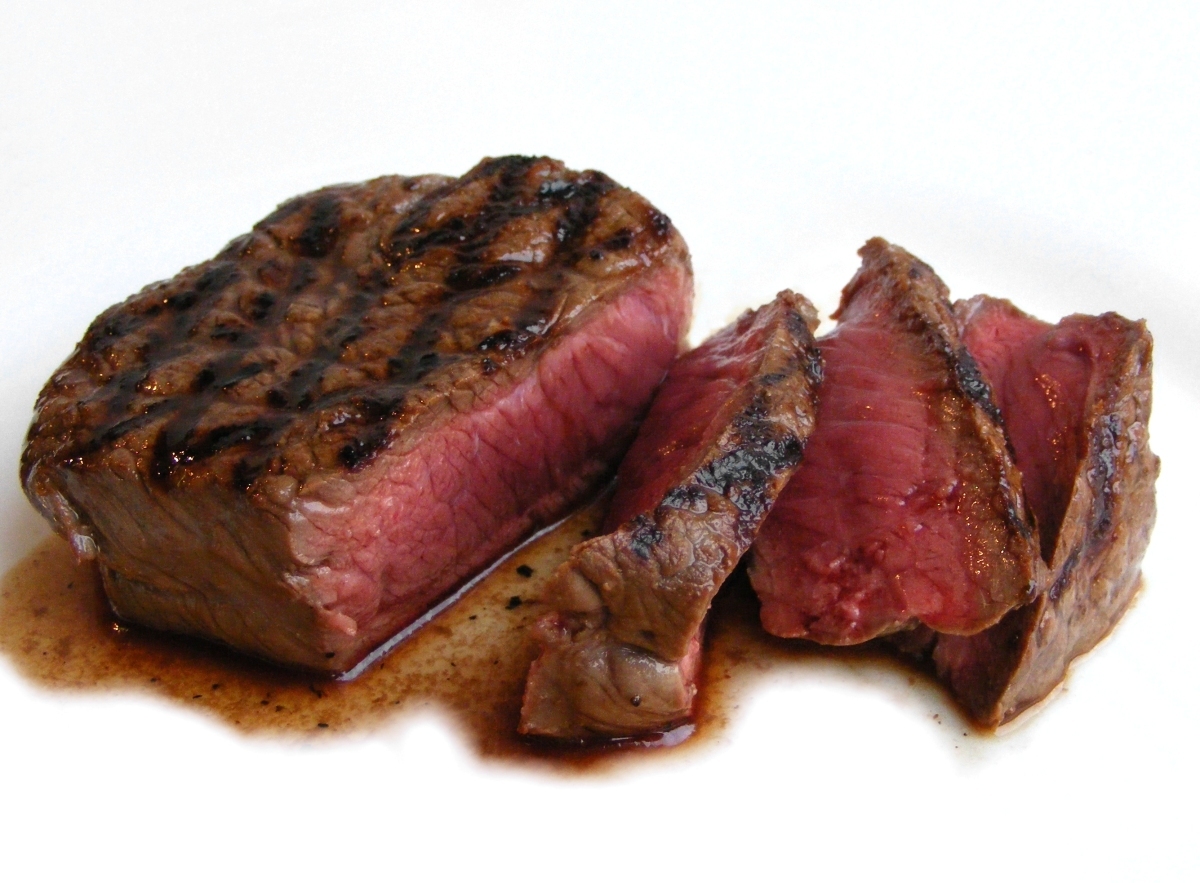
Source
The meat-problem
Right now, the global livestock production is responsible for a massive output of carbon dioxide, methane and nitrous oxide – three of the emissions, which most probably affect climatic changes (in interaction with other emissions) quite heavily. A big part of this livestock is used for producing meat as food. Keep in mind, that I’m specifically talking about livestock and not solely meat-production – the connection between both is quite important. Why, I will explain later.
2014, the total production of meat was about 318 million tons (1). Over the last decades, the consumption of meat increased drastically on every continent. Therefore, it is quite safe to assume, that, in the near future, those numbers will rise further by a large margin.

With this huge amount of consumption, it comes with no surprise at all, that the needed land use for livestock is extremely high as well. A quick look at this chart can help for some perspective:

With those numbers in mind, it’s far from surprising, that greenhouse emissions are rising as well. To support this hypothesis, we can take a look at a recently published study by Wolf et al. (2). According to their findings, the estimated methane emissions by livestock in 2011 were about as high as 119.1 +/- 18.2 Tg. This is an increase by 12.8 Tg in comparison to the emissions, which were measured in 2003. The global methane emissions were ranging between 540-568 Tg each year – so livestock are responsible for about a fifth of global methane emissions. As far as I was able to dig into the available data, I found only numbers of 2010 or 2011 and nothing newer. Even studies published years later are still using those, so it’s probably safe to assume, the actual numbers are a bit higher by now. OWiD puts the available date in a nice-looking chart again:

And the FAO (3) estimates a ratio of 44% methane, 29% Nitrous Dioxide and 27% Carbon Dioxide respectively. Alright, enough data and statistics for now.
Although, it might be quite hard for the vegans and vegetarians among us to accept – most people just love the taste of meat. Most of us don’t really care about animal treatment or environmental protection, when it comes to choosing what to get for the next meal. You could call this sad or be angry about it, but that will not change anything. Instead, we should try to keep this behaviour in mind and use it for a good purpose.
You are now aware of the problems, but there might be a solution right over the edge of horizon. Not all hope is lost.
Meat for a better world
How, you may ask yourself, can meat production help to fight global warming and green house emissions? As mentioned above, there is something important to take note of: The connection between livestock and meat production. If you were able to cut this connection and to get rid of the need of huge amounts of livestock, used producing meat, you would be able to cut away a huge amount of greenhouse emissions as well.
But how to do it?
The answer is as simple as difficult: cultivated meat.
If your mind now creates images of people in white coats working in labs to synthesize your dinner – you are not far away from reality. Scientists and companies are becoming increasingly aware of the problems, connected to the current way to produce meat – as well as of the opportunities, which come along. It’s about time to look for alternatives.
What is cultivated meat?
Producing meat without the use of livestock is far from new. Winston Churchill already wrote in his book “thoughts and adventures” in 1932 (4)
Fifty years hence, we shall escape the absurdity of growing a whole chicken in order to eat the breast or wing, by growing these parts separately under a suitable medium.
But a lot more of research was needed, until mankind obtained the ability to actually try it.
Post (2012) (5) is speaking of three different kinds of technologies, which are used to create skeletal muscles, bones, cartilage, fat and fibrous tissue:
Stem cell isolation and identification
Ex vivo cell culture
Tissue engineering
The ability to use in vitro production of meat would also enable a wide range of useful opportunities. It would be possible, to create completely new kinds of meats, as well as to change certain aspects of the biochemical composition of the meat itself. You could make it healthier or design it as a specialized diet product or whatever you think would be a good idea to try.
But let’s take a closer look into the different tools, which are used right now.
Stem cells
If you are about to culture meat, you have to find out first, which kinds of stem cells are of interest for you. In this case, you are going to use the so-called myoblast or satellite cells (6). Those are the ones, which are responsible to heal your muscles after they were injured. Although it is quite difficult to maintain their replicative state in a cell culture, it’s one of the best ways to engineer skeletal muscle, if you are able to do so.
Another option would be the use of embryonic stem cells, but when Post conducted his review in 2012, it was merely a theoretical but a completely successful approach. I tried, to find more available data of the years after, but was not able to get some. So, if you happen to dig something up, feel free to share.
One of the more promising alternatives to the use of myoblast cells are induced pluripotent stem cells (7) (iPSC). The fascinating aspect of those kinds of stem cells is, that they were adult stem cells before, but with the use of four specific transcription factors converted into pluripotent ones. But again, it was not quite possible, to create bio-artificial muscles using iPSCs until that date.
Though, not only muscles are of importance, if you are about to create some tasty pieces of meat. Fat tissue should not be ignored and for this you are going to need again another kind of stem cells: adipose tissue derived stem cells (Verseijden et al., 2012) (8).
Cell culture
Before scientist discovered stem cells and their uses, they relied on large-scale cell cultures of mammalian cells. If you are about to create skeletal muscles in a cell culture, you have to control thousands of different variables, to make sure, the whole process stays reliable and efficient. This is as well an advantage as a disadvantage. Although you have to define the specifics of each variable like biochemical and biophysical conditions, you are also able to influence the possible interactions between those variables in various ways.
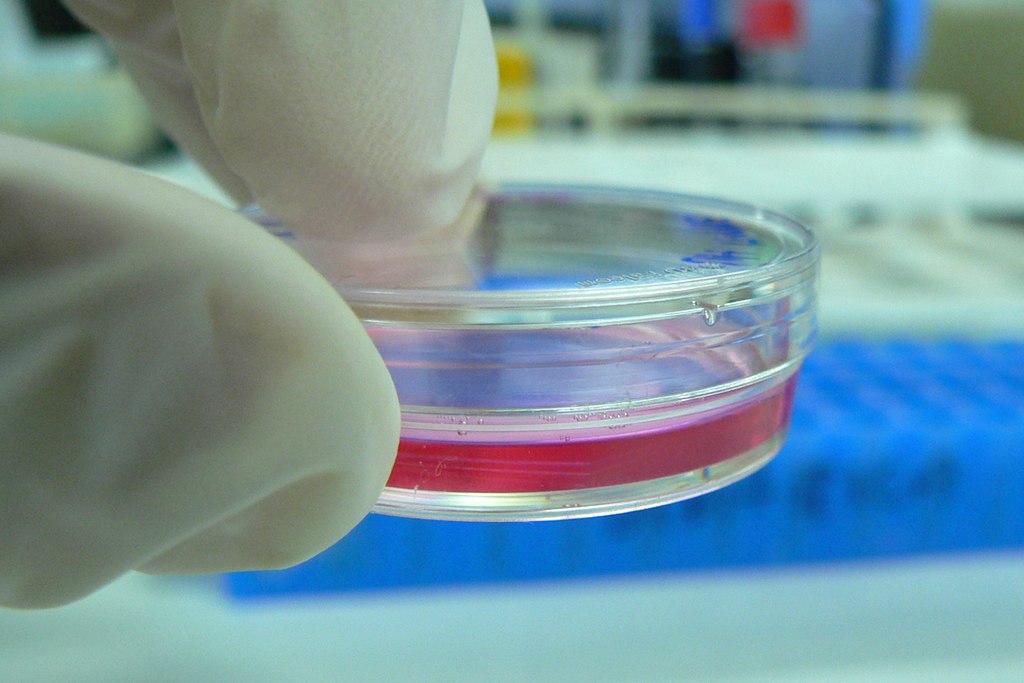
But thanks to stem cells, you are using those instead of mammalian cells now. If you are about to culture muscle cells from myoblasts, you are doing this in two separate phases: the proliferation phase and the differentiation phase.
Source
Proliferation
Its main goal is to obtain the maximum possible number of cells from the starting batch.
Differentiation
As soon as you have enough cells, you want them to differentiate into skeletal muscle cells and to get them to maximum protein production. If you are using myoblasts, this will happen with only small adjustments to culture conditions.
I don’t want to dive too far into details here (but feel free to take a look at my references, of course), so I hope you get a grasp of the basic concepts. And for the scientists among us, who actually work in the labs: please forgive me for not being more specific here.
Tissue engineering
Commonly spoken, you can define (8) tissue engineering as a way of combining cells, using engineering methods as well as biochemical and physicochemical factors to alter biological tissues.
Using these techniques enables us to create small amount of bio-artificial muscles. Currently, it’s not as easy to produce larger amounts, but future research will likely provide labs with the ability to do so. Therefore, it is useful to keep in mind, which requirements are needed, that people voluntarily going to eat lab-grown meat. Post (2012) points out, that synthetic meat needs to imitate or even improve the know aspects of animal meat – such as visual appearance, smell, texture and taste. Only if we are able in achieving this, we can reduce the urge for conventional meat. Which brings me to my final point.
Nice to meat you.
One of the biggest challenges, besides the technological ones, is the mass adoption of cultured meat. It’s not unusual, that a lot of people are reacting with disgust and feelings of unnaturalness, as Verbeke et al. have pointed out in 2015 (9). This is largely connected to the fear of the unknown and the idolizing of so believed “natural ways” in producing food. It’s a similar thinking, which prevents the wide acceptation of GMOs – even if we manage to synthesize solid amounts of meat at a cost-efficient scale, the irrational fear would probably delay mass adoption for years.
This is why it’s important, to highlight the benefits of lab-grown meat and how it’s not only positively going to affect the environment, but maybe even the health of the individual as well. Much less livestock will be needed, so there will be a reduced output of greenhouse emissions. We might be able to produce better meat than ever before, with better taste and dietary benefits. There will be no need for antibiotics, because we can make sure, the production environment is sterile. Cultivated meat can help, to reduce animal suffering in the end, because there will be no need for factory farming and live animal transport anymore; slaughterhouses are going to be obsolete.
Wouldn’t this be something worth researching and fighting for?
Feel always free to discuss my ideas and share your own thoughts about the things I’m writing about. Nobody is omniscient and if we all walk away a bit smarter than before, we’ll have achieved a lot.
Thanks for reading.
Ego
Make sure, to check out #steemstem for more science related content.
References
(1) https://ourworldindata.org/meat-and-seafood-production-consumption#environmental-impacts-of-meat-production
(2) Wolf, Julie, Asrar, Ghassem R.; West, Tristram O. Revised methane emissions factors and spatially distributed annual carbon fluxes for global livestock. Carbon Balance and Management. 2017. 12:16. doi: https://doi.org/10.1186/s13021-017-0084-y
(3) http://www.fao.org/news/story/en/item/197623/icode/
(4) Churchill, W. S. Thoughts and adventures. 1932. London: Thornton Butterworth.
(5) Post, Mark J. Cultured meat from stem cells: Challenges and prospects. Meat Science. Volume 92. Issue 3. 2012. 297-301. doi: https://doi.org/10.1016/j.meatsci.2012.04.008
(6) https://en.wikipedia.org/wiki/Myocyte
(7) https://en.wikipedia.org/wiki/Induced_pluripotent_stem_cell
(8) Verseijden, F., Posthumus-van Sluijs, S. J., van Neck, J. W., Hofer, S. O., Hovius, S. E., & van Osch, G. J. Vascularization of prevascularized and non-prevascularized fibrinbased human adipose tissue constructs after implantation in nude mice. Journal of Tissue Engineering and Regenerative Medicine. 2012. 6(3). 169–178
(9) Verbeke, Wim, Marcu, Afrodita, Rutsaert, Pieter, Gaspar, Rui, Seibt, Beate, Fletcher, Dave, Barnett, Julie. ‘Would you eat cultured meat?’: Consumers' reactions and attitude formation in Belgium, Portugal and the United Kingdom. Meat Science. Volume 102. 2015. 49-58. doi: https://doi.org/10.1016/j.meatsci.2014.11.013
Being A SteemStem Member
Nice post, it is a giant problem to say the least.
I got a solution for stopping all of the related emission as well as much starving around the world, stop eating meat all together!
How can we let the amazon rainforest be cut down for keeping cattle, next to starving humans, while the meat is exported to Europe & USA? sick!
I agree - it would make a huge difference, if we all just stopped eating meat today - but this is by far more unrealistic than the developement of cultivated meat. I doubt, there is any possibility to convince every human being to change to a vegetarian diet. Therefore, synthezising meat seeems like the best approach to me :)
Agreed that society will demand it for a while but still things can be outlawed, take booze for example, it was outlawed against the will of the population, as was many other things? It just a matter of doing for the legislators.
And how did this work out? :D
During the prohibition the consumption, illegal production and import of booze was extremely high.
:) it was a nice show, Imagine the new meat Capone haha hidden barns xD
Agreed shit example, since it might even have brought up consumption, but still lets get some laws going, against the worst meats atleast. Prehaphs the amazon beef cattle!
I don't think, I'd agree here. People tend to revolt, if you outlaw something, and do it anyway. The wiser approach would be, to make them want something voluntarily - to actually convince them, another way of living benefits them in the end. Banning stuff seems like an easy solution, but it might backfire even harder.
Less likely if its slowly regulated for the sake of the environment, but i agree we must push the moral aspects hard, make it more and more voluntarily as we go along.
But do you think it will start if legislation and politics keep pushing for meet, that´s the problem I guess :)
Great to see more people with the same goal!
Peace
I don't know. As I said, the risk of backfiring seems quite high to me. I'd like to educate people on the matter - not ban it. If you start to ban something, which people are used to have in their daily lives, it will be incredibly hard to consider alternatives voluntarily.
Very very interesting
Thank you :)
Such great things coming for meat... I just hope it all tastes the same :)
Taste is one of the main aspects, the responsible scientists are aware of. Nobody would like to eat meat, which tastes worse than before - so I'm quite optimistic, that you will not experience any differences :)
Oh I've no doubt they're aware of it!
It's just a matter or solving the technicality issue!