The Araguaney
The yellow guayacán (Tabebuia Chrysanta), also known by the names of araguaney, yellow flower, guayacán, zapatillo, zapito, yellow oak, cañahuate and tajibo, is a tree native to the tropoperas jungles of the intertropical zone of the United States. It is the national tree of Venezuela where, a difference of other countries, the guayacán is denominated to another species, the Guaiacum officinale, the tree of the zigofiláceas (Zygophyllaceae). It is also known as lapacho amarillo (Argentina, Paraguay) or Ipê (Brazil), guayacán amarillo (Colombia) and araguaney (Venezuela).

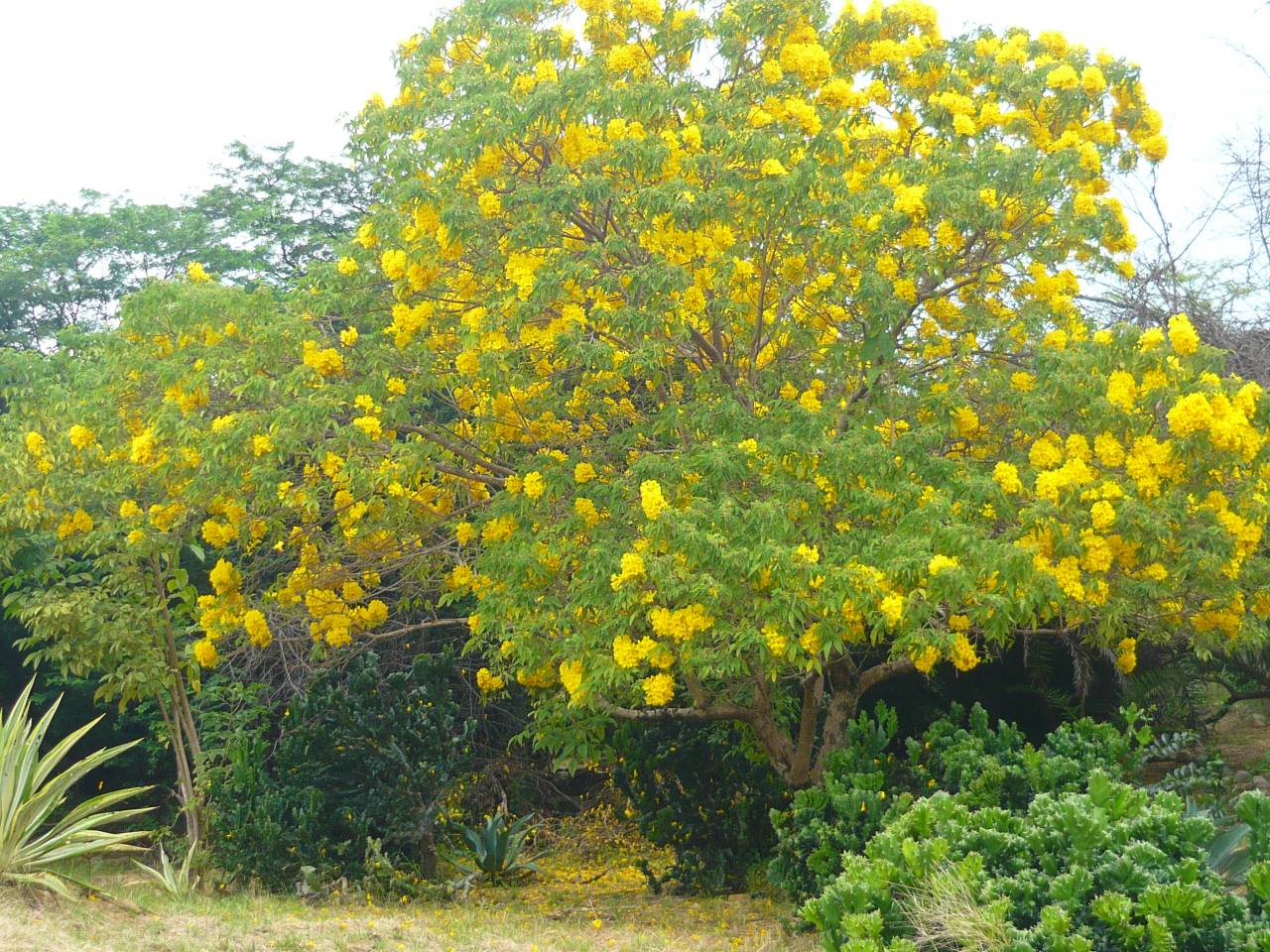
This is a tree that measures up to 35 m in height and can have a diameter of up to 60 cm, is deciduous (loses leaves under drought conditions), ascending branches scarce and thick; straight shaft. The bark is rough from gray to dark brown, has vertical and deep cracks and forms wide dark brown plates. Leaves alternate, with 5 leaflets, 5 to 25 cm long and 8 to 20 cm wide. Its bell-shaped flowers (bell shape), large, in groups of inflorescences, 5 to 12 cm long, light yellow, very showy with red lines on the neck. The fruits are cylindrical capsules, narrow, 11 to 35 cm long and 0.6 to 2 cm wide, dehiscent (which opens spontaneously at maturity). Winged seeds, flattened, 1.5 to 2 cm long and 1 cm wide, silver gray.

It is a strong plant and has the gift of growing almost on any soil, even in those that are poor in organic substances.
The araguaney is green almost all year, but for a few days, the araguaney is covered in yellow, goes unnoticed until its yellow flowers are born, between the months of February and April, when it is totally devoid of leaves.

flowers of araguaney a few days after having rained in the middle of the dry season, it is common to observe that all the araguaneyes of a sector flourish at the same time. The flowers of this tree last a few days and it is an attraction for the bees that pollinate them, and for the birds that look for the nectar.

Ecology
The araguaney grows in the trophophile forests of the Venezuelan plains, in areas of Aw climate and even BS (semiarid intertropical) according to the climate classification of Köppen, in the semi-arid zones of northern Venezuela, as well as other American countries. Its flowering, which leaves a carpet of yellow flowers, as well as its fruiting, occurs during the dry season (from February to April), so that the seeds of the legumes can take advantage of the first rains, although in Ecuador the upwelling takes place. end of the dry season from the end of October to December.
State of conservation
Its wood is considered one of the hardest and heaviest in the Neotropics. It is difficult to brush and cut, durable and very resistant to termites and salt water. It is used in furniture constructions, bodies, floors for industrial use, sleepers, fine crafts. This species has been used in urban arboriculture, decorative living fences, for shade and embellishment of farms. It is an excellent mellifera species.

Araguaney national tree of Venezuela
The araguaney (Tabebuia chrisantha) was declared National Tree of Venezuela on May 29, 1948 and is given throughout the national territory.

https://es.wikipedia.org/wiki/Handroanthus_chrysanthus
http://arboles.foroambientalista.org/2010/10/12/araguaney-arbol-nacional-de-venezuela/
http://www.venezuelatuya.com/natura/029.htm