What Does An Editor Do?

Image from Pixabay.
There is some confusion online about the difference between an editor and a proofreader, so I'm going to take a little time and try to clear up that confusion.
First, let's talk proofreaders. What do they do?
A proofreader is someone who reads a body of text and looks for errors before it is published. They are a pre-publication quality control expert whose sole function is to catch errors before they go public. The term comes from the age-old practice of reading galley proofs, which are initial versions of a publication page printed out for the sole purpose of catching errors before the pages are published.
This practice dates back to the 17th century when publishers operated on letterpresses. Over time, the operational process for creating published material has changed technologically, but proofreaders are still used in many publishing houses to help catch errors in manuscripts before they are finalized for publication.
Many people have the impression that an editor and a proofreader are the same. That is actually not the case. A good editor should be a good proofreader, but the best editors actually have others do the proofreading so that the editor can focus on the big picture of publishing. An editor's job is to make decisions about content, style, and layout in publications that lead to a positive reading experience for the end user. Let me break that down by its individual component.
Editorial Content
A few years ago, I was a newspaper editor. While I wrote stories for publication, and I also proofread stories that other writers submitted for publication, my primary responsibilities included:
- Planning the content for each edition of the newspaper
- Making photo and writing assignments to various staff photographers and writers, and freelancers
- Ensuring each photo and article submitted for publication met the quality standards of the publication and were ready for publishing
- Check facts and analyze content to determine inconsistencies or lack of clarity
- Ask writers and photographers to revise and resubmit content, if necessary
- Lay out each issue of the newspaper to make it easy for the reader to find the content they wanted to find and to demonstrate importance of story and graphic content by its placement
- Write headlines, kickers, and captions to go with articles, photos, and other graphics
- Select which stories should have top billing based on priority of news and impact to the community
- Receive reader feedback and incorporate into publishing cycle as necessary (for instance, letters to the editor)
- Proofread all content prior to publication to ensure minimizing errors (and I'd like to point out that I was only one of three people in our office required to proofread each page of each newspaper we published every week)
- Make corrections and publish clarifications as necessary (I'm proud that I didn't have to do this too often)
Editorial Style
In any publishing environment, editors and publishers will discuss style. Editorial style includes decisions regarding word usage, punctuation, acronyms, and a host of other stylistic expressions as they appear on a page. In the newspaper business, we used the Associated Press Stylebook as our guide, also called AP Stylebook, with some modifications for house style.For instance, it is common in the newspaper business to spell out numbers one through nine while using numerals for anything above the number nine. There were exceptions, however. Numerals would be used when writing out percentages.
The AP Stylebook covers all sorts of different rules for how newspapers style their text to make it easier to read. These include but are not limited to writing headlines, titles of honor, naming conventions, abbreviations, and more. Book publishers have their own style guides; magazines and academic journals also have their own style guides. Popular style guides other than AP include Chicago Manual, MLA Handbook, and American Psychological Association. These are popular in the U.S. Other countries have their own.
An editor is responsible for ensuring a publication and all its text, photos, images, etc. conform to the standards of the styling convention used by that publication.
Editing Layout
Layout refers to the visual appeal of a page. It deals with such things as the placement of the masthead, where photos go when accompanying an article, whether every word of a headline is capitalized or if lowercase lettering is used, how many columns appear on a page, how captions are used, and whether kickers (text above photos) are used or not, and other elements of a page--textual and graphic--and how they play together.In other words, page layout is all about putting the elements of a page together in a visually appealing way in order to make it easy for the reader to find content of interest and to make it easy to read.
With newspapers, page layout involves columns, margins, photos and images, and text as well as certain editorial decisions such as whether to jump a story from one page to another. In a book, page layout might include size of the margins on the top and bottom and each side of the content, whether images are aligned right or left with text wraparound or whether placed above or below the text it accompanies. Every editor of any publication must deal with the layout of the pages of their publication. It's a part of the role.
Editing Publications Online
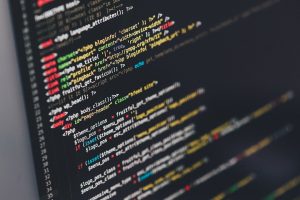
Editors for online publications deal with the same concerns that editors have always dealt with, but the tools are a little different. Editors still consider which fonts and font sizes to use, where photos and other images go on the page, and so on. But online publication editors must also understand a little something about code. It helps if they have some understanding of HTML at the very least. They may also be familiar with CSS, JavaScript, PHP, and a host of other coding languages because it may happen that the editor must clean up the code, change code, or even write code in order to design attractive web pages and deliver a high quality publication.
After reading this, I hope you have a better understanding and appreciation for the role an editor plays in delivering a high-quality publication, and if you find yourself in need of a capable editor, I hope you consider me.
Allen Taylor is editor of two web-based niche publications and an email newsletter including Blockchain Times, Lending Times, and Inside CFO.
Posted from Taylored Content with SteemPress
I never knew the distinctions. Makes sense given all the tasks. It is interesting that in most cases these days with scientific papers that there is very little of any of this done. So little is done, that it would be best if each journal simply provided a LaTeX style and asked authors to use that. Instead, many still cling to word, then they have someone typeset the document, usually introducing all sorts of errors, especially if math is involved.
A lot of people don't know the distinctions. As a freelancer, I can't tell you how many times I've been asked to "edit" something only to find out what the customer really wanted was a proofreader. As a general rule, I don't take such assignments. I find it really annoying for someone to ask me to proofread a 500-word article. What they really want me to do is make sure all the commas and periods are placed correctly and they've spelled the words right. That's about a 10-minute job, or less, if they're half way decent at writing. And what am I going to charge? Not much.
On the other side of that coin, if the writer is lousy, I end up re-writing most of the article. In that case, I should just write the article for you and charge my usual premium writing fee, which most people who ask for proofreading services don't want to pay.
For these reasons, I usually have a minimum order that I expect so that I can ensure my time is valued.
I can see the issue with scientific papers. Most academic science writers aren't good at writing. They need proofreaders, but they can't afford to pay them. A proofreader for such documents would need to be a specialist in the academic discipline, which means they would charge more for their specialty. In my experience, academics don't want to pay for people to proofread their writing. I'm not even sure that most of them understand the value of a proofreader. I've seen some poorly written academic texts.
I didn't know editors had so much work to do. Thanks for sharing. We can be a lot more appreciative about the work that is done and the people that do them.
Posted using Partiko Android
Editors are very busy people. You'd be surprised at how much we can get done in very little time.
How closely did you work with authors at the paper? I'm referring to the "ask authors to revise and resubmit" point. Do articles go through several revisions for quality, or is it more to match the agenda of the publication? Such a tough job, behind every great author is an even better editor.
I was in direct line communication with them. Some of them sat next to me in the office. In most cases, I simply revised an article if it needed it. But revisions were occasionally requested. In our case, we had a managing editor who read every article before it got to the news editor, which was me, and they'd request revisions if need be. Another level of quality control.
Our publication didn't have an agenda. We were a community newspaper. You can't serve a community of 5,000 with an agenda. I was known for my unbiased reporting and would often get compliments from both sides of an issue for the way I handled the news.
I found this article to be very informative.
Thank you, @blockurator,
Thank you, Frank.
Hi, @blockurator!
You just got a 0.54% upvote from SteemPlus!
To get higher upvotes, earn more SteemPlus Points (SPP). On your Steemit wallet, check your SPP balance and click on "How to earn SPP?" to find out all the ways to earn.
If you're not using SteemPlus yet, please check our last posts in here to see the many ways in which SteemPlus can improve your Steem experience on Steemit and Busy.
Congratulations @blockurator! You have completed the following achievement on the Steem blockchain and have been rewarded with new badge(s) :
You can view your badges on your Steem Board and compare to others on the Steem Ranking
If you no longer want to receive notifications, reply to this comment with the word
STOPCaught your article just in time to give an upvote. I always enjoy your informative posts about writing or bitcoin.
I see you on narrative which is expansive,
though your Blockchain Times looks informative too.