Constructive Criticism & Feedback: Critique The Work, Not The Person
Hello everyone. This education post is focused on constructive criticism and feedback to students. My background comes from math tutoring and teaching assistantship experiences and work (along with my online stuff on Steemit and my website).
The contents of this post can be applied to education, the workplace and in life.

Sections
- Introduction
- Critique The Mistakes And Not The Person
- Some Ways To Critique Work
- Being Mindful Of What You Say
- Notes
Introduction
Education for the most part is a social activity where information and knowledge is transferred. A large part of education involves communication, presentation, and interaction between educators and students. To further assist students with learning, constructive criticism is needed to help students learn from mistakes and improve.
Critique The Mistakes And Not The Person
When it comes to learning, mistakes happen all the time. Nobody gets it right the first time and there are times when we are not at our best. Patience is a virtue in this case as learning takes time and a lot of trial and error. This should be kept in mind as it will help in avoiding judging people.
For the most part, critique involves an assessment of work with advice on how to improve. Critique should not be an assessment on the person as the person's work should NOT fully represent the person's character. It is important to critique to work and not the person. You want to encourage not humiliate.

Some Ways To Critique Work
The examples in this section are mathematics based. You can use a variation of these examples for your subject(s)of interest.
Example One - Number Sense
The early stages of mathematics involves number sense, addition, subtraction, multiplication, division, fractions and the like. To make sure students are comfortable with numbers, many drills are required.
If a student is asked to multiply 8 x 7 together and says 54 you want to avoid saying just "Wrong". You could say something like:
- Almost.
- A little higher.
- You are very close. Let's try again.
Example Two - Negative Signs
At around the high school algebra level and above, mistakes with negative signs are common. These mistakes happen from time to time and are somewhat comparable with spelling mistakes. People who make these mistakes should not be judged too harshly. Help them fix these mistakes.
Negative signs mistakes can occur in:
- Subtraction
- Negative exponents
- Multiplication Of Negative Numbers
- Math Notation
Although I chose this example on negative signs, you could replace this example with integral signs, derivatives notation and other math notation.
Example Three - Problem Solving Type Questions
There are times when the student(s) don't have the right answer but most of the steps leading to the answer are correct. Mistakes near the end can be big or small. You want to point out (politely) which steps are correct and which steps need to be fixed.
Sometimes the starting step(s) of the answer is incorrect. This may lead to the entire answer being incorrect. Avoid harsh judgement here as some problems are actually hard to solve in terms of getting started.

Being Mindful Of What You Say
Educators have a very large influence on students whether they realize it or not. They have to be careful of what they say to students. Obvious things that should not be done include swearing, shouting out loud, saying offensive jokes and the like. Criticism should not be spoken in aggressive or loud tones. Judging statements such as "I don't think you will pass." should be avoided as well. Learning should be enjoyable and not something to be feared.
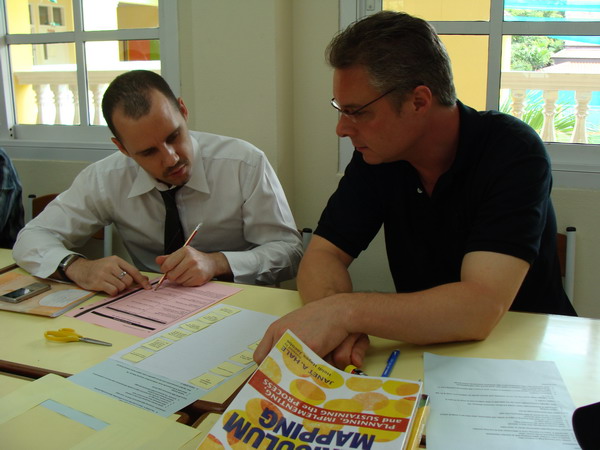
Notes
- Some effort is better than no effort. Praise the effort.
- It is easier said than done to be composed while teaching.
- How you say things matter too!
- Patience is a virtue.
- If you have made similar mistakes as the student(s), you can understand why the mistake was made.
- People have off days and there are times when we are not at our best.
Great post. These are important lessons to keep in mind when teaching anything. Even if you are experienced, if you are tired or have your mind elsewhere you can say things that impact the student. As a stats lecturer I always try to stay mindful of what I'm saying.
Form is another factor along with skill, knowledge, personality, work habits and experience.
I watch tennis, soccer and e-sports (Counter Strike). Any player that is not in form (on that day) is not likely to win regardless of skill or experience.