Our mind is a machine? Part 1
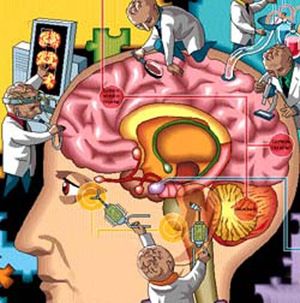
The mind is a complicated structure, physically located in the brain, which receives influences from the whole organism. It is in continuous activity and only during sleep enters a phase of relative rest, as it continues to operate at minimum levels.
Source
Our brain is still practically a mystery today, but science does not stop advancing in its study and the techniques to discover its operation are increasingly specialized and precise. Its functions affect everything we are and do; any activity performed by the body, such as looking, touching, digesting, moving, smiling or talking, is caused by a cerebral order.
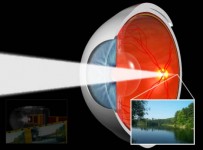
Everything that arrives from the outside has as its end point the brain; We see the images we see, through the eyes, but we recognize them and know that they are, thanks to the cerebral cortex. The same goes for the rest of the sensations.
Source
Its psychic functioning is even more complicated. The mental activity, the psychic life, lies in the brain and the rest of the structures of the central nervous system. Our mind is a machine that thinks, is attentive, oriented, has memory, is intelligent communicates with the outside, remains conscious.
Personality also derives from mental activity. A part of it is inherited from the parents through the genetic load, it is organically marked; other aspects of personality are, instead, the fruit of learning, which starts from the moment of birth and continues later throughout childhood; other traits are the result of the environment, or acquired and developed by the individual. The psychological aspects are stored in the memory and they act over time.
The mind is the set of cognitive faculties that encompass processes such as thought, consciousness, memory and attention.
The thought

Source
The ability to think is the characteristic, generic and peculiar to the human being. Conscious to relate two or more ideas so that a new one is obtained from this combination.
It acts as a mediating process between everything we perceive from the outside and the response we give. Its basic manifestation is the reason, which consists of integrating stimuli, perceptions, information and memories and creating new concepts. The development of a concept requires two processes: abstraction and generalization. To abstract is to mentally separate one quality from another, and consider it in isolation. When the abstractions are related to each other, the opposite mechanism is produced, generalization.
The activity of thinking integrates other mental functions. The signs, signals and symbols of the exterior act as a stimulus, which sets in motion the mental activity. Perception acts as a source that causes thought. Memory is essential for logical reasoning and the concepts stored in it are related to new ideas and stimuli. Language is the most natural form of expression of thought, although not all thought is expressed through language, nor does it always through it.
Types of thoughts

Non-rational thinking
This thought is based on the appearance of images that, coming from outside, have been recorded in memory and can be reactivated by a mental effort to think.
a.The imaginative games (those that the child makes when linking colored cubes with others)
b.Fatastas diurnas (daydreaming)
c.The dreams
Source
They are forms of non-rational thinking in which fantasy appears as a reality.Rational thinking
It is the one that follows a logical reasoning that is obtained by deduction, induction or analogy. That of the adult man is a rational thought that tends to look for concrete solutions.

SourcePensamieto creator
It is the combination of reasoning and imagination, which results in a concrete work. To judge thinking there are two factors to assess: the course and the content.
The course of thought is the way in which mental processes are linked to one another. According to the laws of association of ideas, formulated by Aristotle, ideas similar to each other, or those that have a temporal or spatial relationship are more easily associated with each other; likewise, an idea can, by association, elicit the opposite.
the bradypsychia; is when the course of thought becomes slow.
The inhibition of thought, is when the delay is accentuated and delayed to the maximum degree, "when it is impossible to think," is the blockade of thought: (the subject is talking, suddenly interrupted and remains motionless for a few seconds before continuing with what I was saying.)
Perseveration is the tendency to reiterate an idea, the same theme over and over again.
The prolixity is a form of perseverance in which the basic elements of the accessory are not distinguished, the person does not speak and speak are to say insignificant details.
The tachypsychia is when the thought is very fast and the ideas are many and the subject does not control them going from one to another and there is a flight of ideas.
Delirium consists of an erroneous judgment firmly rooted in the subject and irreducible to the logical arguments that other people can formulate.

Source
I think that the mind is a machine. We are like infants looking at a computer. Our ability to comprehend, and understand, how the computer works is beyond our capacity at this point. One day mankind with grow and we will be able to understand it better. Upvoted and followed. Thanks.
Wow. Our minds, thought processes and actions are linked. Thank you for i learnt a lot from this.
Nice post
Actually, the brain activity is very complex, so that nowadays studies and research continue to be able to understand it, all the actions or reactions that an individual can carry out come from the brain, even when we are sleeping, very interesting your post, I will be reading the second part to continue learning, greetings!