Fortune 1000 Companies are Bleeding Data
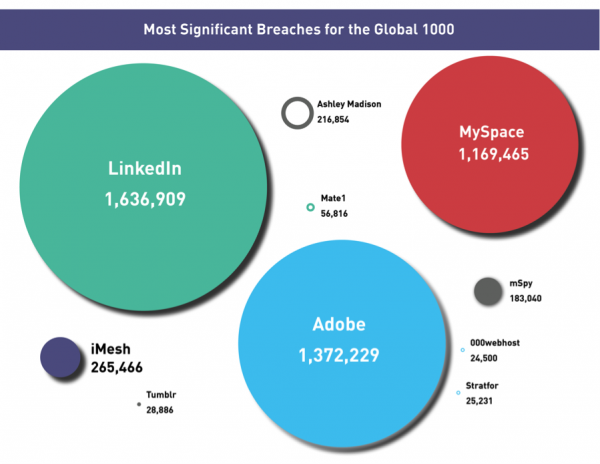
97% of Fortune 1000 companies have lost data in recent attacks according to a recent report from Digital Shadows. Think about that for one moment. Even companies with significant resources have been hacked. We are NOT winning. Security must fundamentally change if we want to keep pace with the threats.
What I find most concerning is that data breaches are not new. The tools, perspectives, and processes for protecting data have been around for a long time. But attackers are getting faster, better, and more creative. They are simply outpacing security. This, coupled with the meteoric rise in Ransomware, make for an ugly situation for those wanting to protect their data. It seems like every story in the cybersecurity news is either information being stolen or held for extortion.
The report, which did not include the recent Yahoo breach revelation (which we will discuss in a moment), highlighted big breaches by LinkedIn, Adobe, and MySpace. Most of the accounts were from North America, with Europe and the United Kingdom taking the next spots.


Data breaches are at an all-time high, exceeding last’s years’ nightmare that some thought couldn’t be topped. Well, hold on to your hats, because we are in for what looks like to be the worst year ever. In fact, we may have the largest data breach of accounts ever seen, verified this year. Although the breach occurred in 2014, Yahoo only confirmed in Sept 2016. The size number is staggering, with half a billion accounts compromised. Some unconfirmed reports say the breach could be much bigger, potentially reaching upwards of 3 billion! Even compared to other major data breaches, the Yahoo incident stands out.

It is time to start crafting a better strategy, which must be sustainable in the face of rising risks. First, companies must take cybersecurity seriously. Customers are having less tolerance for losses and therefore businesses must step-up to protect sensitive information. Second, the software security solutions must be more comprehensive in protecting the breadth of information as well as adapt faster to new tactics from attackers. Operating Systems must be designed to improve isolation of applications, critical functions, file transfers, and web browsing functions.
Lastly, the hardware vendors better bring what they do best into the game. Hardware is great at improving performance which can then contribute to more security without impacting user’s experiences. Most importantly, the hardware is the foundation of all trust. Systems must turn on securely, load the OS securely, which in turn can launch applications securely. Hardware can assist with all these functions by providing trust, isolation, and performance to assist security.
As it stands, the trend is looking worse every year. With the growth of even more devices on the Internet (IoT), the problem will get exponentially worse if we maintain the status quo. There must be a change if we don’t want to be victimized to ruin. It is time to make a stand. We must work together and change the course of cybersecurity.
Image Sources:
- http://www.informationisbeautiful.net/visualizations/worlds-biggest-data-breaches-hacks/
- http://news.softpedia.com/news/97-percent-of-top-1000-orgs-have-lost-sensitive-credentials-in-recent-hacks-508625.shtml


Interested in more? Follow me on Twitter (@Matt_Rosenquist) and LinkedIn to hear insights and what is going on in cybersecurity.
This is all intentional so the New World Order can require the chip implant mark of the beast. Upvoted and followed.
Why force some implant, when people will voluntarily carry a smartphone? Why spend billions of dollars on spy technology and sophisticated human networks, when people will voluntarily post their personal information and list their friends/workers in social media? Who is the real enemy of privacy? ....the mirror.
Yes, people are careless with their data, but that is not enough for the powers that be. They want complete control.
great insights @mrosenquist
very good congratulations