Early Morning Snake Rescue
Our herpetology team has already had quite a busy morning. While preparing diets to feed our exhibit animals, I got a phone call from a local resident who was concerned about a snake. Upon stepping outside this morning, they had found a small snake in their garage, however it was stuck in a trap and unable to escape. I told the homeowner to bring the snake and the trap to us and we would try to get it free. He showed up about 15 minutes later and surrendered the juvenile eastern ratsnake to me.

From what I could see, the snake appeared to be in good health. Its eyes were darting and alert, and it was still making some effort to escape meaning that it hadn't been in the trap so long it was exhausted. Getting the snake out would be quite the task for everyone involved so knowing the snake was doing relatively okay gave us a boost of confidence. We were also lucky in that only the tail and head were caught; I'm not sure how he got himself caught in such an odd position, but this meant that we didn't have to unstuck the majority of his body.

I absolutely hate sticky traps. While I am not against using traps to stop pests, sticky traps do not target any particular animal and can be devastating for any small creature. As often as I have seen them catch bugs I have also seen them capture lizards, frogs, salamanders and of course snakes. They are also not as humane as other traps; anything caught in the traps can suffer for hours or even days until killed by starvation, thirst or exposure. Unfortunately (though probably very fortunately in this snake's eyes), removing snakes from these traps is something we are fairly familiar with thanks to plenty of practice. When a snake gets stuck in a sticky trap, it REALLY gets stuck. They trash about wildly, until their entire body is stuck to the pad. In an effort to escape, they flatten out their body, but this only gets them more stuck (you can see where this little snake tried to flatten himself). If you haven't ever used a sticky trap (thumbs up to you!), they are astoundingly sticky, and we have be careful not to get our own hands stuck when freeing animals.
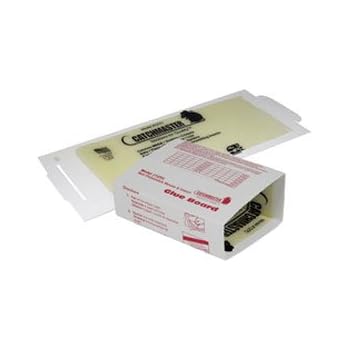
In order to remove the animal, we create a solution made up of water, oil (vegetable or canola) and some form of adhesive remover (we use the brand Goof Off). Using a q tip, we dab the solution around the animal quite liberally and this neutralizes the trap's stickyness. Getting under the animal is an incredibly slow process; we have to dab the animal constantly while applying the smallest amount of pressure, otherwise scales or skin could be easily torn or ripped off. Even with this snake only having his head and tail stuck, the process took almost an hour and a half (I have no photos videos of the process though). Great care has to be taken around the head as it requires quite a decent amount of solution to unstick, but we cannot allow the animal to swallow any. It's a long, challenging process that takes an incredibly deal of finesse and patience.

So we managed to remove the snake and only a couple scales were lost in the process. Considering being caught in a sticky trap is generally a death sentence, this is a huge success for us. By the time the snake was removed from the trap, it was exhausted and lying limp; if it weren't for the shallow breathing and eye movements, it would be easy to mistake it as dead. It is now set up in a tank on a heating mat to recover its energy; while we do try to release animals as quickly as possible, in its current state, the juvenile snake would be easy prey for just about any animal that happened across it. We also periodically dab it with a bit more of the solution to clear up any residual stickyness. Once the snake has recovered, it will be released as close to where we found it as possible (though well away from any more traps!). By the time it sheds, any remaining residue will be sloughed off with the skin, and new scales will grow in to replace the few that were lost.

For this snake, it's a happy ending, but these traps kill hundreds of animals everyday. When dealing with pests, always consider your options, and try to select a plan that will have minimal impact on the environment and other species. If you catch a non-target animal, try to call professionals for assistance. No matter how frustrating the process is, we are always happy to take on rescue projects like this!

It's really small.. is it dangerous?
Not in the slightest. This is a nonvenomous eastern rat snake. When it's fully grown it can be pretty large (up to 7 feet) but they are a harmless and, in fact, an incredibly beneficial species.
I hate sticky traps!
Poor little guy!! I can't stand those sticky traps, they really are the worst thing ever. He's so lucky to have happened upon someone like you with the patience to get him unstuck.
Awesome story. While this is commonplace for you and team, it's really unique and interesting to civilians like me. The theme of rescuing animals from common traps could be a good blog category to help the community save the critters that are safe enough to save.
Thanks for sharing. Good Job! Followed. Pls follow me...
wow snake and awsome snake my friend😊
keep it up😊
Wow...awsome snake
Thnx @herpetologyguy for putting this info all together.
Thanks for sharing these pictures of NOPES!