Novas and SuperNovas
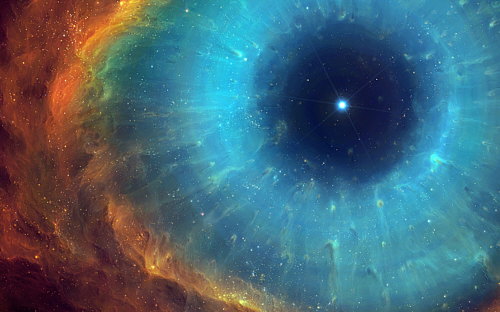
Formerly when a star appeared suddenly in a place where there was nothing they were called "nova" or also "new star", but this has been discarded because the stars existed since Long before they could be observed with the naked eye.
The nova like the supernovas at the time of their explosion release a large amount of their material.
The nova are suddenly increasing their brightness and then it slowly fades, but it can continue to live for a longer time
During a year it is possible to appear between 10 and 12 nova in the Milky Way, but it should be noted that some are too far away to be able to observe them.
However the novae can be seen more easily from other galaxies close to ours, than our galaxy itself. The new ones in a few hours or days increase their brightness thousands of times.
After a transition process these become pale again and then returns to get brighter and again paler little until it obtains its original brightness.

The nova explode because its outer layers form an excess of helium which occurs through the nuclear reactions and expands at such a rate that it can not be contained.
The star explodes and in doing so leaves a small portion of its mass as a layer of gas, this increases its brightness and then returns to normal, resulting in a white dwarf.

On the other hand the supernovas, is much more destructive and visually spectacular compared to a nova, and also much more rare. Like the novae, supernovas have to be seen more frequently in other galaxies.
In our galaxy is rare this event and despite generating an incredible sparkle this can not be seen with the naked eye.

The most well-known supernova emerged in the year 1054 whose explosion left behind remains now known as the crab nebula.

The stars that are very big explode in the last stages of its evolution product of a gravitational collapse, when the pressure by the nuclear processes is created it no longer supports the weight of its outer layers and therefore the star explodes, to this it is him Denominates "Type II Supernova".
A type I supernova is formed in a similar fashion to a new one. During the explosions of the supernovas they leave few remains, but leaving a layer of gases that little by little is expanding, and as a result these gases can form nebulae like the one named above.
Congratulations @freddbrito! You have completed some achievement on Steemit and have been rewarded with new badge(s) :
Click on any badge to view your own Board of Honor on SteemitBoard.
For more information about SteemitBoard, click here
If you no longer want to receive notifications, reply to this comment with the word
STOP