Diamond - mineral at 10
Diamonds – friend of a woman
Women love diamonds. Diamonds are said to be women's best friends. Diamonds are unique stones which add style, class and emphasize feminine beauty. We often can hear that diamonds are eternal. Are they eternal? Not quite, because in XIX century French physicist and chemist Antoine Lavoisier burned diamonds under glass shade, used only solar rays focused with a lens. However, diamonds are the hardest know mineral. It is in 10th place (hardest mineral) in Mohs hardness scale. But, what is this scale ? And what present? Today we will delve into the world of mineralogy.
Mohs hardness scale
Mohs hardness mineral (Mohs) present mineral resistance to scratches. It was created by German mineralogist Friedricha Mohsa in 1812. This scale have comparative nature not linear. Minerals are set from the most soft to the hardest. It means that e.g. the third mineral in this scale is harder than second mineral. It also means that mineral on third position we are be able scratch mineral in the same position or lower. So, if diamond is the hardest mineral we can scratch it only other diamond. If we can meet real hardness scale those minerals above graphics will be perfect. Additionally, thanks to her we can meet how hard mineral we can scratch e.g. fingernail.
Representatives from the Mohs scale
Mohs hardness scale descrice ten minerals. It doesn’t mean, that exist only these minerals. They are only representative selected by the author. There are exist quite characteristic, so I will try to show you briefly.
The minerals described in scale are:
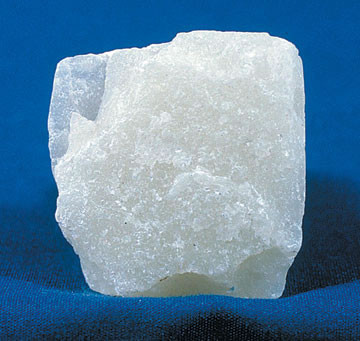
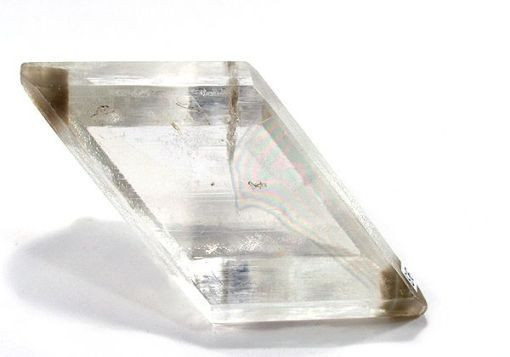
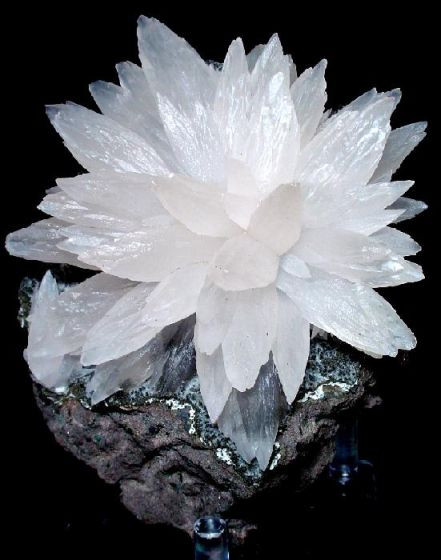
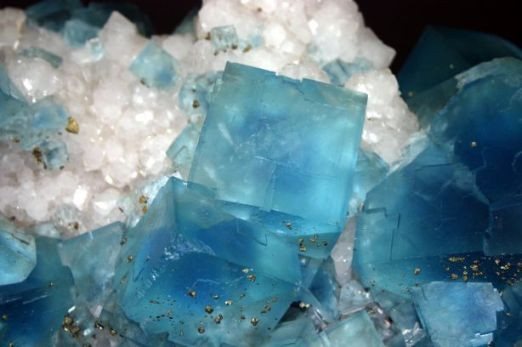
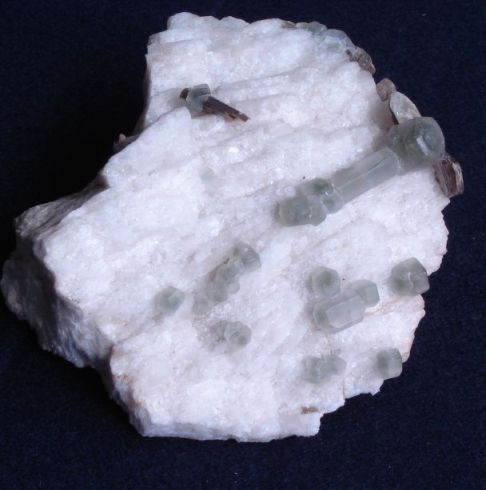
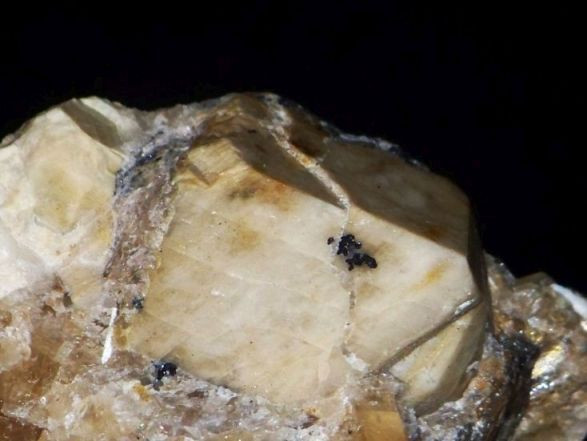
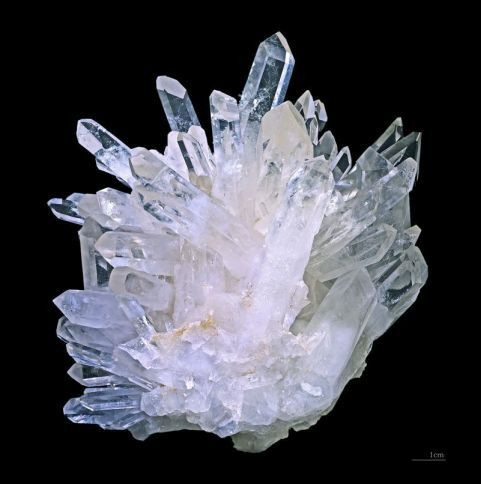
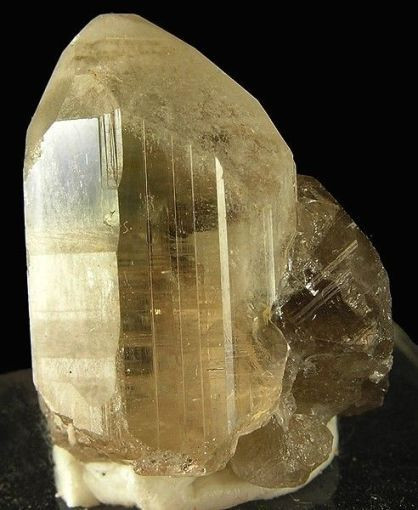
(1) Talc – Is the most soft mineral. It belong to silicate and is very common. It is so soft, that we can scrach him fingernail without any problem. Ii is used in the cosmetics and pharmaceutical industries.
(2) Gypsum – Is a mineral from sulfate group (hydrated calcium sulphate). It is very common mineral, which is used in construction or as a sculptural raw material.
(3) Calcite – Is a mineral from carbonate group (calcium carbonate). Is very common mineral-scale mineral. What interesting in clear calcite crystal we can see the phenomenon of double refraction of light. As its predecessors have a number of applications including it is used for the production of lime, cement, fertilizers or in the optical industry.
(4) Fluorite – Is a mineral from halide group. Is use in production of hydrofluoric acid and enamel, the manufacture of plastics, in the optical industry and sometimes in jewelry.
(5) Apatite – Is a mineral from phosphate group. It is very common in all types of rocks. It is mainly used for the production of fertilizers and jewelery.
(6) Orthoclase – Is a mineral from silicate group. It is the main component of granite (igneous rock). It also occurs in sedimentary and metamorphic rocks. It is used in the production of glass and porcelain as well as in jewelry.
(7) Quartz – Is a mineral from the cluster of spatial silicates (silicon dioxide). A pure, colorless quartz variety is called a rock or rock crystal. It has a very wide application, but the most interesting use of this mineral takes place, among others in electronics (e.g. quartz clocks) or the optical industry.
(8) Topaz – Is a mineral from silicate group. Occurs in acidic igneous rocks. It is a valuable stone by collectors and jewelers.
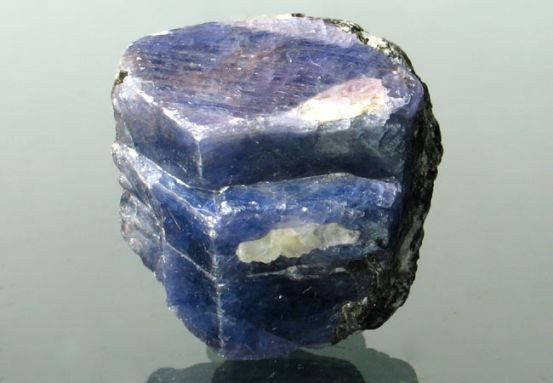
(9) Corundum - This mineral is an aluminum oxide. There are many known varieties of this mineral including (ruby - red, sapphire - blue or other, amethyst - purple). Occurs in igneous and metamorphic rocks. It is a valuable stone jewelry. Its synthetic form is used, for example, for the production of abrasive materials.
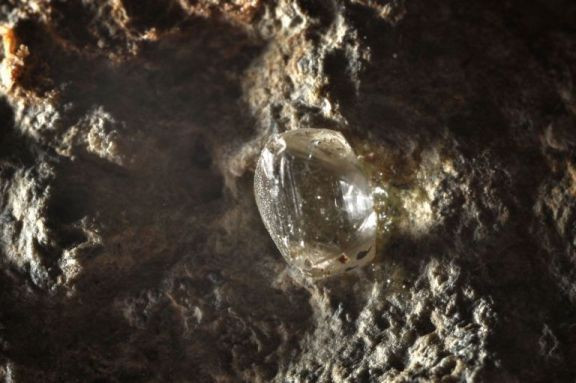
(10) Diamond - It is a very rare mineral from a cluster of native elements (it is a variety of coal). His Latin name means "invincible, indestructible." In nature, no harder material has ever been observed. The industry uses mainly synthetic diamonds, among others for the production of abrasive materials and cutting tools. It is also used in medical and scientific equipment. However, the most widely used public use of this mineral takes place in jewelry. There, after proper polishing, the diamond changes its name to a diamond. However, the largest diamond found was weighed up to 3106 carats (621.2 g) and was found in South Africa. However, he did not survive to this day in one piece and was divided into as many as 105 stones.
Summary
We should remember that each mineral have a lot of variant. Mineral can differ in many details. However, today is the end. I invite you to familiarize yourself with my previous entries. If you liked it, I am waiting for your vote. Regards.
Based:
„Minerały, skały, ich praktyczne znaczenie i piękno”, Andrzej Manecki, wydawnictwo AGH, 2011
The sources of graphics:
https://pl.wikipedia.org/
https://www.geocaching.com/geocache/GC6D6W6_niedzwiedzia-gora?guid=4ffe64e2-a5a2-4214-9b68-f86dee69ce52
https://pixabay.com
Congratulations @arabson1990! You have completed some achievement on Steemit and have been rewarded with new badge(s) :
Click on any badge to view your own Board of Honor on SteemitBoard.
For more information about SteemitBoard, click here
If you no longer want to receive notifications, reply to this comment with the word
STOPI only poop on tuesdays