Samovar
It may seem that the samovar is a primordially Russian invention, but in fact it is not entirely true. Devices based on the principle of the samovar were known even in the days of antiquity: in a container filled with water, they threw a large red-hot stone, which made the water boil. We can say that this was the first samovar. Later in Europe began to appear similar devices, already more advanced designs. In China there is a related device to the samovar, in which there is also a pipe and an ash-pit.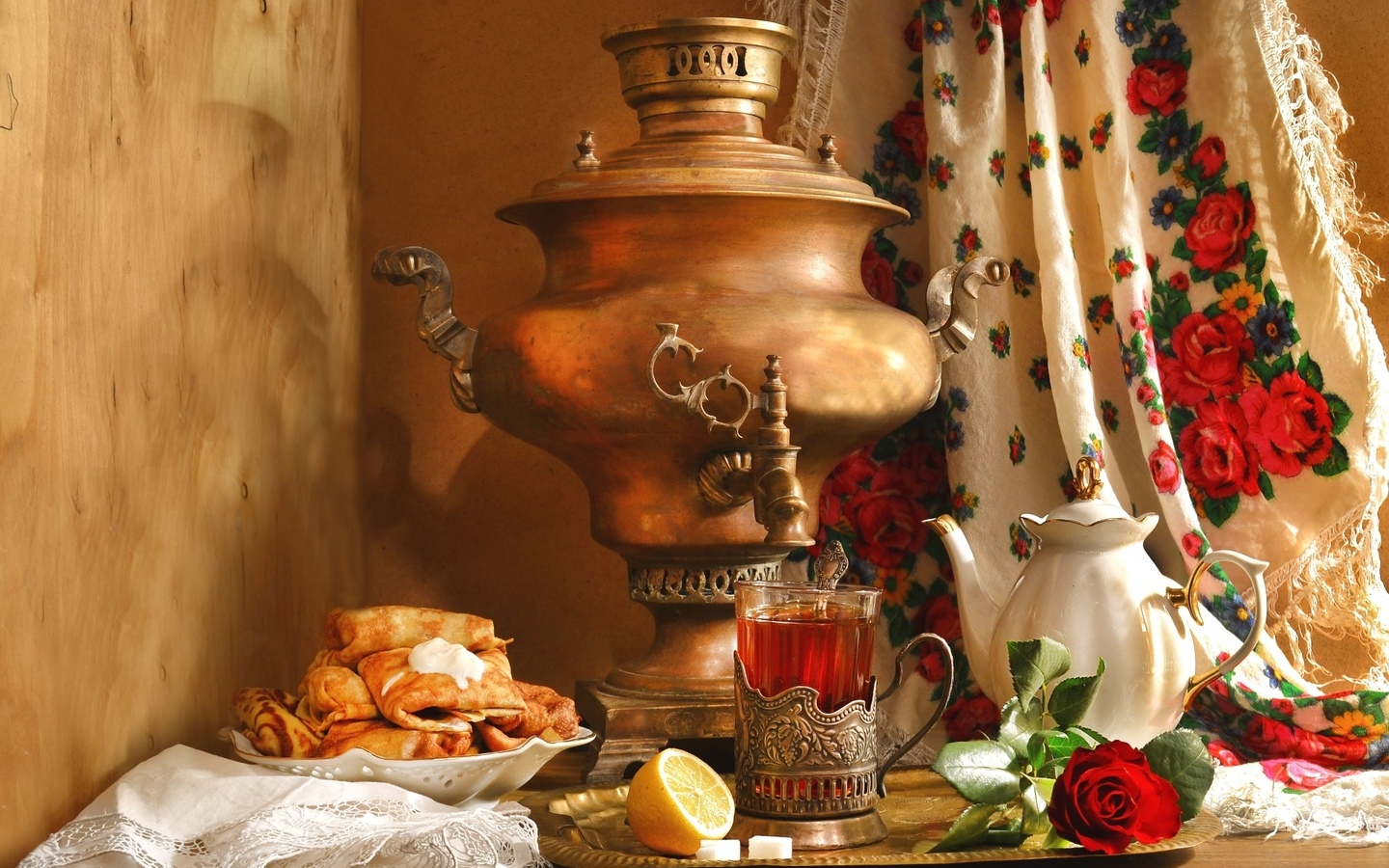
The history of the samovar is quite entertaining. It appeared in the time of Peter the Great, who brought the first samovar from Holland. It was during the reign of Peter that the industrial advance of the Urals began, on which many metallurgical and copper smelters appeared. These plants master the techniques of making household utensils made of copper. Already in the 30th years of the 18th century, teapots with a pen began to be made there. Later, the Ural plants began to produce kazanov with pipes and distilled cubes with pipes. And, in all likelihood, it was these forms that gave impetus to the manufacture of "sbitennikov" - instruments for making an ancient Russian drink made from honey with spices. "Sbitenniki" was a kettle with an internal pipe and an ashtray. It was "sbitenniki" that laid the foundation for the invention of the Russian samovar.
History of the Samovar
The first document, in which the samovar is mentioned, dates back to 1746. Where and when the first samovar appeared is impossible to say. But it is true that by the end of the 18th century the samovar was completely formed, the principles of its operation remain unchanged to this day.
The first samovars differed from modern brothers. They were intended for use in field conditions, so they were small, with removable legs, of unusual shapes. The most common were 3-8 liter samovars. But there were samovars for a large number of people, 12-15 liters, so-called "army" or "gypsy". Since the Russian climate is not hot, people have been drinking a few cups of tea to keep warm. And the heat from the samovar could heat up the room. All this contributed to the fact that the samovar occupied a solid place in the life of the Russian people, despite its very high cost. By the way, the cost of the samovar was determined by its weight: the heavier the samovar, the more expensive it was.
Making a samovar is a laborious process. In its production, workers of various specialties were involved: supervisors, who bent copper sheets and asked for shape, tinners, turners, locksmiths, assemblers and cleaners. Masters in the villages made separate parts of the samovar, brought them to the factory, where they assembled the finished products. Entire villages were engaged in the manufacture of samovar parts all year round except for the summer, when the work was conducted in the fields.
In the history of samovars there is a period when samovars were made only of red (pure) and green copper, nickel silver. However, later they began to use cheaper alloys such as brass. Samovars of gold and silver are known. The forms of samovars are very diverse. In Tula alone, there were about 150 species, and their manufacture involved well-known artists and sculptors. Many of these products have now become exhibits in the museum of Tula samovars.
There were many large and small factories producing samovars. In order to be able to recognize the manufacturer's firm, the stamps on the samovars were branded, developed by each factory. These stamps were trademarks, which were preserved throughout the history of the existence of factories. Later, these brand names began to be complemented by the image of medals from exhibitions, in which samovar factories participated.
The history of the Russian samovar is not too long - about two and a half centuries. But today the samovar is an integral part of Russian tea drinking.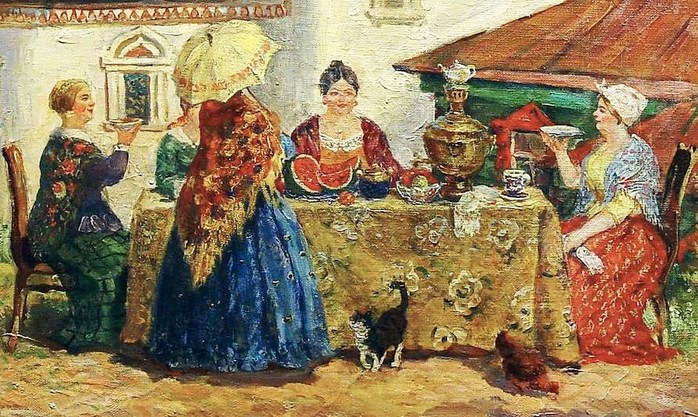
That is so brilliant. I am very grateful for that! Love it.
i love it too))