Training in Gestalt Therapy

Greetings my dear readers, on this occasion I would like to share with you a little about an introductory course I did on the Gestalt Therapy.
I really enjoyed what I have learned so far, so I will most likely continue to deepen my study. Besides being interesting, I think it is a very important self-help and self-healing tool, whether you are a therapist or not.
To get down to business, I will tell you a little about the essence of what I perceived.
CONCEPTUALIZING
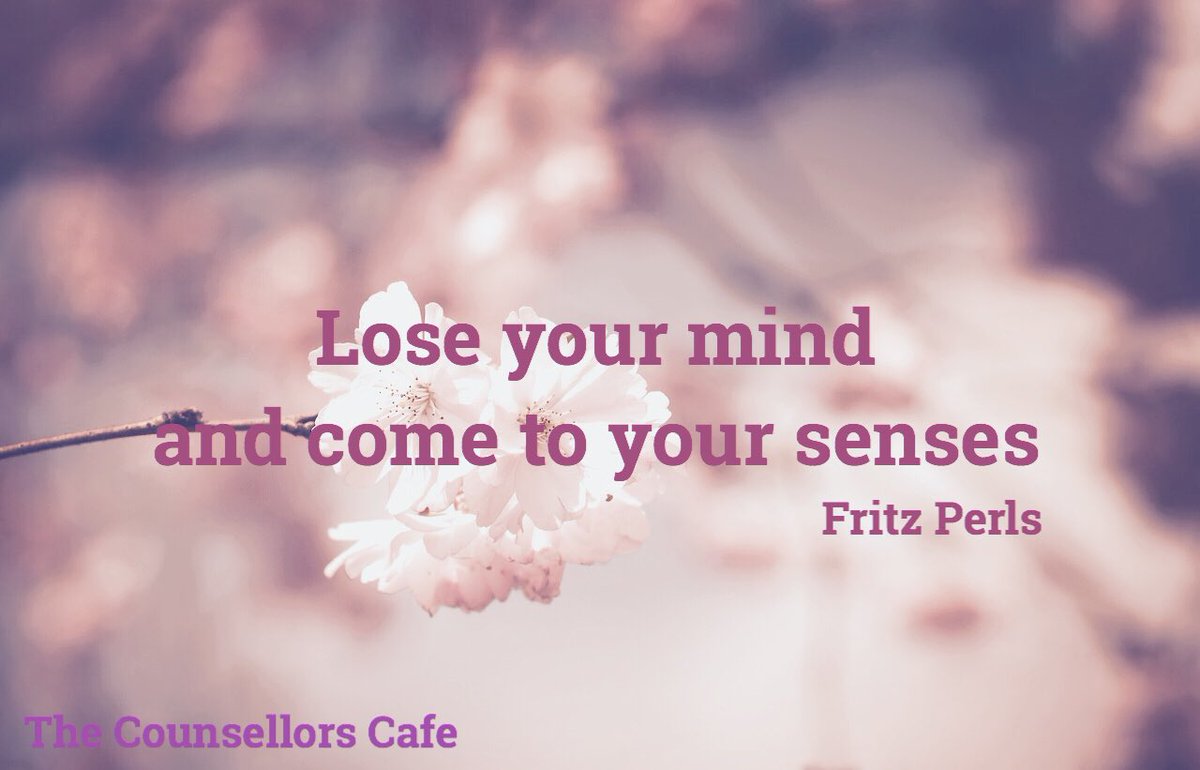
Gestalt is a therapeutic movement born in the United States in the 1950s, created by Frederick Perls. At first it was directly related to humanistic psychology. Something I like very much is that Gestalt is not only a form of therapy, but it is an attitude towards life, a philosophy of life and both patients, therapists and those who study its principles in depth, must adopt it in their daily lives.
Awareness in and of itself is curative. (Fritz Perls)
BASIC PREMISES
Holistic
It is about the whole being. A holistic conception of the human being takes into consideration the activity or functioning not only of his emotions and feelings, but also of his body, his beliefs and even his social expressions, all in a unified framework, since they are aspects of the same element.
"Feelings, body, mind and soul are aspects of the whole organism" (Patterson).
Homeostasis
I hadn't heard this word, or at least I hadn't paid attention to it, but then I understood the process it refers to, I just didn't know the name "technical". Homeostasis is the ability of human beings to regulate themselves, to adapt to changing situations. This homeostasis process is very important because everything in life is characterized by continuous change, balance and unbalance in the body which must be able to be balanced through this process for optimal functioning as an individual.
And last but not least, we have...
Continuous awareness, or what is the same the realization
I love this principle because it seems to me to be the simplest and at the same time the most difficult thing to make us aware of the here and now, leaving aside future anxieties and past depressions.
For some scholars of Gestalt therapy, in order to realize this, one has to have an empty head and to have an empty head means to be open to all possibilities. It is then a matter of doing what we already know: living the present in a complete, emotional, sensory and integral way. In other words, it is emphasizing what is happening, what is being thought and felt at the moment.
"The wind is blowing, listen to the wind." (Pythagoras)

MY FINDINGS
Another thing I loved to know is that some of the most important influences on the work of the founder of the therapy are Taoism and Buddhism, currents that attract me. Finally, I recommend Gestalt therapy for those people who perhaps attend conventional therapies and have not been able to do so, or as a complement, since through gestalt therapy there is a self-knowledge and an overlapping of the symptoms themselves. And why study Gestalt?I recommend these studies if you consider that soul, mind and body act in synchronicity, if you are related to Gestalt principles or if you simply want an openness to new experiences as well as a depth of knowledge of yourself and others.
Thanks for the visit,
@astrea
