/ Dylan Thomas / essay

Dylan Thomas appeared in English literature at the time when the demarcation between the poetry of old poets who still lived and created and the poetry of a new generation of young poets, which sought not only to introduce new elements in literature, but also to confess their self to the whole set names that were still enriched with worldly glory. So two generations of poets met: one new, thin, dynamic, and the other old, wise, saddled.
The death of Dylan Thomas, in a way, symbolizes the eruption of modern poetic passion, which, like the enthusiasm of the nineteenth-century romantic, fried on its own fire. That is why many call Thomas "modern romantic" and a member of the "new apocalypse," as they called the group of poets of the 1930s who had certain touch points, although they didn't consciously build any style, and even many of them did not know each other.
A common feature of these writers, as Jeffrey Moore points out, that he would be "interest in words as such, the emphasis on poetic rhythms, visions that transcend but don't ignore everyday life". However, from the whole group, Tomas is most distinguished by his personality. The poets who have influenced him are Hopkins, Hart Crane, Swinburne, Arthur Rimbaud and Francis Thompson, and novel writers James Joyce and Henry Miller. Although, indeed, there are many similarities between Thomas and these writers, it seems to me that only Rimbaud, Joyce and France surrealists were influenced directly by him.
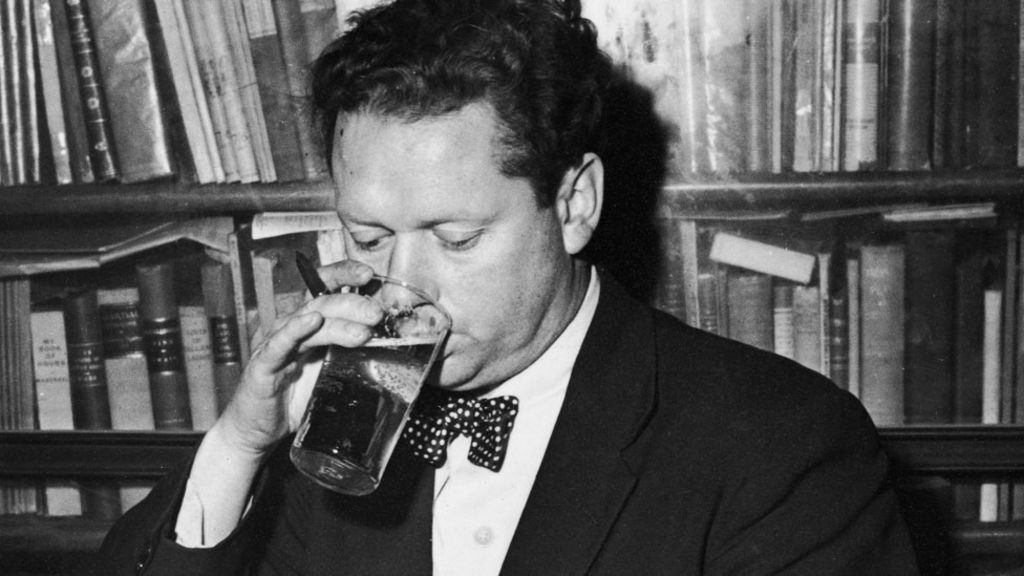
The drama of Thomas's poetry stems from, or at least, can be drawn in close connection with him, from his explanation of the process of creativity: "I allow an emotional image to be created in me so that I can then bring in the intellectual or critical power that I feel in it. I allow the resulting picture to surprise the other, which immediately opposes it and builds a third image through that conflict, from which, again, there is a fourth. Finally, I allow the images to collide, of course, within the limits that I have determined. Each picture carries the core of its own destruction, and my dialectical method of creation consists in the continuous construction and demolition of images that are seen from the central core, whereby it is only constructive and destructive at the same time. "
In addition to the above-mentioned surrealistic features of Tomas's poetry and prose, I think that Freud's significant influence on this writer and his interest in the subconscious life of man is significant. Dylan's quest for the dark, inaccessible parts of the human psyche remained his obsession throughout his entire life. By seeking poetic intuition to penetrate the subconscious areas and reveal the complex processes of the soul, he, as he himself says, cast light on what is in man for a long time concealed by darkness, trying to draw the secret to the pure nakedness of light.
Seeking for a link between human endeavor and natural processes, Thomas approaches the elitist enigma of "birth, copulation, and death," and descends to seemingly banal conclusions that "man, like every animal, is a part of nature." But this is just the starting point of his aspiration towards the "lake" and it's good that it's fundamental to such a degree. Putting himself "on firm feet", the poet concludes that only two things in life make sense: love for man and religion. These two categories have a very special meaning for Thomas. Love for man means for him, above all, friendship and understanding between two beings, as well as the adoration of child's purity and naivety, which is why he constantly returns to the visions of innocent childhood.
Religion for Thomas is a synonym for hope; it is, at the same time, some pantheistic pessimism and optimism, it is a belief in a good ending of everything, even the radiance of death, not because it transfers us to another world ("After the first death, the other is no more"), but because it signifies the change and the end of something that would become intolerable if it were forever.
This was my a part of my translation from Serbian to English from PULSE article ''Dilen Tomas-propovetke'' by V.Petric


Dylan Thomas died too soon.
He passed away in New York City on 9 November 1953, just three months after Elvis Presley’s first Sun Studio recording session.
But he left a legacy which was much admired by generations of musicians. His hell-raising lifestyle foreshadowed the many excesses of the rock ‘n’ roll era, while his words inspired songwriters and performers including John Lennon, Patti Smith and Bob Dylan.

INFLUENCE
Dylan Thomas's life and works have inspired many rock, pop and folk musicians since the 1960s. Here's a selection of performers who have referenced him
Bob Dylan
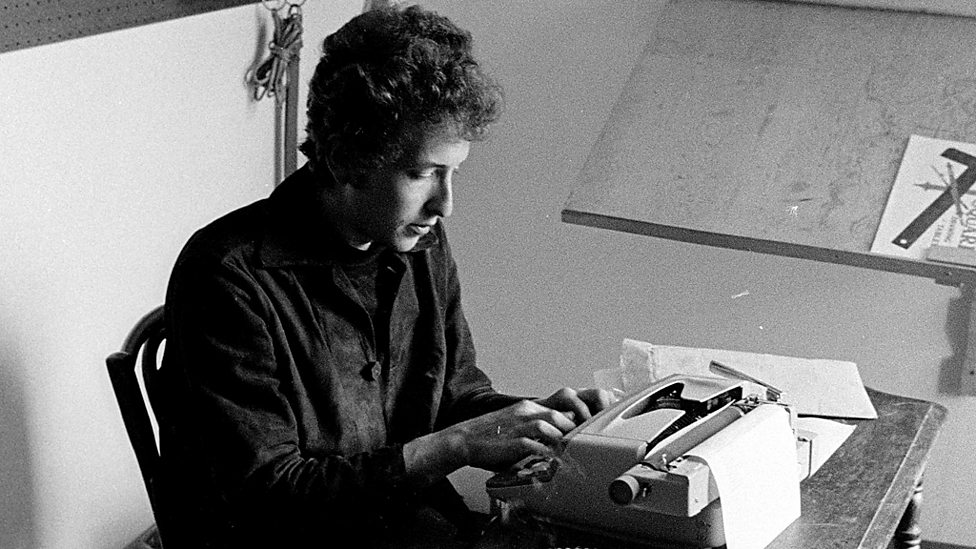
Bob Dylan, took his name from Dylan Thomas.
"Instead of Robert Allen it would be Robert Allyn," he wrote.
John Cale
The Garnant-born Velvet Underground co-founder John Cale, who spoke no language but Welsh up until mid-childhood, took it a step further when he recorded 1989's Words for the Dying, his eleventh studio album. Though it contains a few short orchestral and piano pieces, it has more to do with words than music — words written by Cale seven years earlier, during and in response to the Falklands war, that use and re-interpret Thomas' poetry, most notably his well-known villanelle "Do not go gentle into that good night."
Nick Cave
In the song There She Goes my Beautiful World there is a line ''While Philip Larkin stuck it out, in a library in Hull, and Dylan Thomas died drunk in, St. Vincent's hospital.