Sociality
Introduction
Sociality is the degree to which individuals in an animal population tend to associate in social groups and form cooperative societies.
Sociality is a survival response to evolutionary pressures.
For example, when a mother wasp stays near her larvae in the nest, parasites are less likely to eat the larvae. Biologists suspect that pressures from parasites and other predators selected this comportment pattern in wasps of the family Vespidae.
Solitary animals, such as the jaguar, don't associate except for courtship and mating. If an animal taxon shows a degree of sociality beyond courtship and mating, but lacks any of the characteristics of eusociality, it is said to be presocial. Although presocial species are much more common than eusocial species, eusocial species have disproportionately large populations.
Patterns of sociality

Presociality
An example of a species that exhibits presociality is the wasp species Philanthus gibbosus. Also called beewolf, theses exhibits presociality in that it lives communally only for a very short amount of time while establishing a new burrow and at other certain phases of the nesting cycle. Apart from those specific points in the nesting cycle, beewolfs has been observed to live completely solitarily.

(Female P. gibbosus)
Subsociality
Subsociality is common in the animal kingdom. In subsocial taxa*, parents care for their young for some length of time. Even if the period of care is very short, the animal is still described as subsocial.
If adult animals associate with other adults, they are not called subsocial, but are ranked in some other classification according to their social behaviours. If occasionally associating or nesting with other adults is a taxon's most social behaviour, then members of those populations are said to be solitary but social.
*In biology, a taxon (plural taxa) is a group of one or more populations of an organism or organisms seen by taxonomists to form a unit. African elephants are a widely accepted taxon from.

Solitary but social
Solitary-but-social animals forage separately, but some individuals sleep in the same location or share nests. The home ranges of females usually overlap, whereas those of males do not. Among primates, this form of social organization is most common among the nocturnal strepsirrhine species and tarsiers. Some examples of solitary-but-social species are mouse lemurs, lorises, and orangutans.

Parasociality
Sociobiologists place communal, quasisocial, and semisocial animals into a meta-class: the parasocial. What parasocial taxa have in common is that they socialize in a single, cooperative dwelling.
Here is how communal, quasisocial, and semisocial taxa differ:
- In a communal group, adults cohabit in a single nest site, but they each care for their own young.
- Quasisocial animals, however, additionally share the responsibilities of brood care.
- Semisocial behavior involves individuals of the same generation sharing a nest and cooperating in brood care. Semisocial merge communal and quasisocial properties.

(A digger wasp)
Eusociality
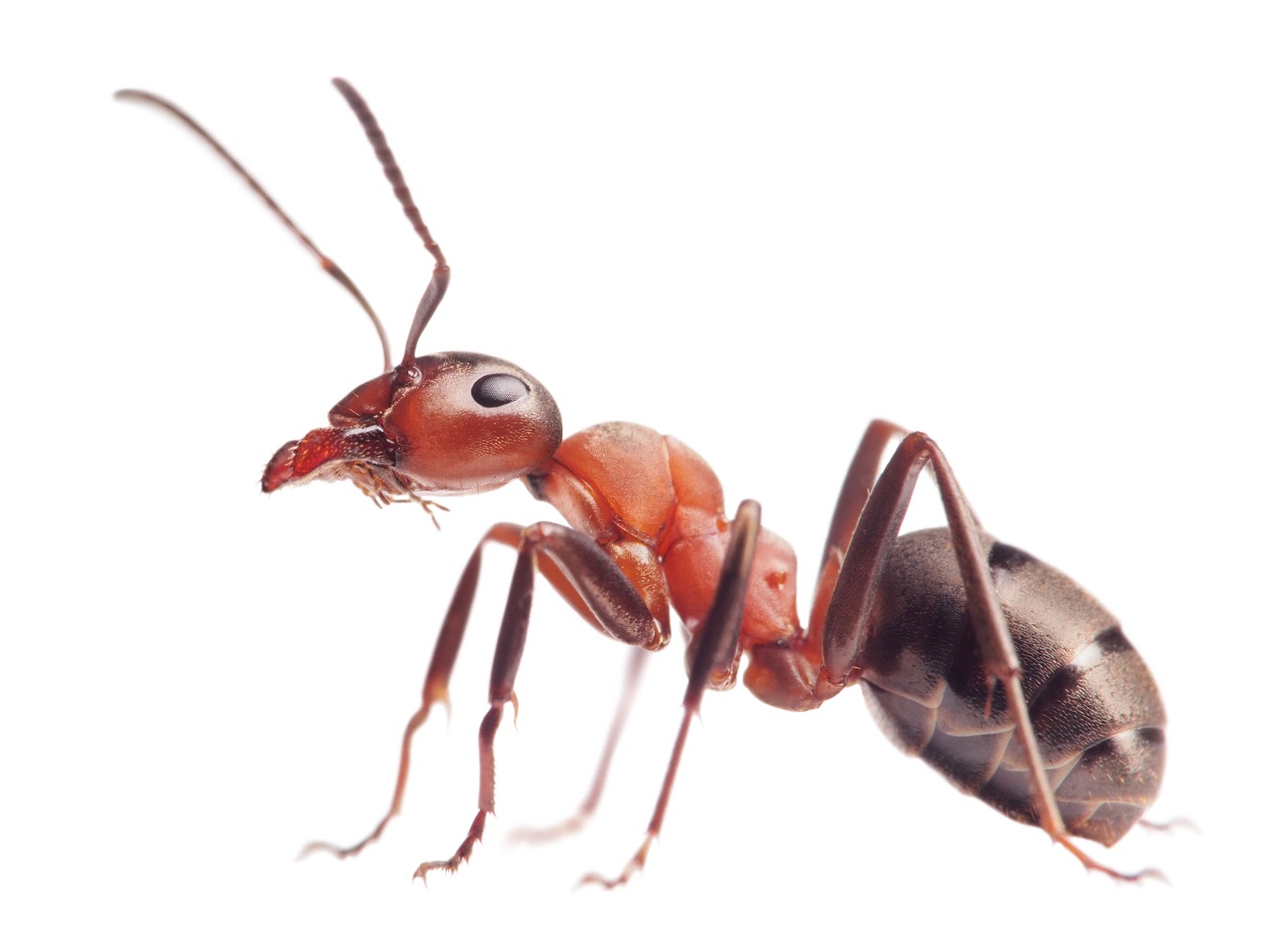
Eusocial societies have overlapping adult generations, cooperative care of young, and division of reproductive labor. When organisms in a species are born with physical characteristics specific to a caste which never changes throughout their lives, this exemplifies the highest degree of sociality. Eusociality has evolved in several orders of insects.
Common examples of eusociality are from Hymenoptera (ants, bees, sawflies, and wasps) and Blattodea (infraorder Isoptera, termites), but some Coleoptera (such as the beetle Austroplatypus incompertus), Hemiptera (bugs such as Pemphigus spyrothecae), and Thysanoptera (thrips) are described as eusocial. Eusocial species that lack this criterion of morphological caste differentiation are said to be primitively eusocial.

Human eusociality
E. O. Wilson and Bert Hölldobler largely controversially claimed that humans exhibit sufficient sociality to be counted as a eusocial species.
(A sawfly)
Conclusion
Each species have a different pattern of social organization more or less complex depending on the natural law pressure.
Theses sociality patterns are a result of convergent evolution.
Bonus



Source: Mostly Wikipedia