What Is Value Investing All About?
What exactly is value investing? Put simply, it is an investment strategy whereby investors purchase securities only when the price is trading below intrinsic value. This style of investing was popularized by the late Benjamin Graham, who taught classes on investing at Columbia University starting in 1928.
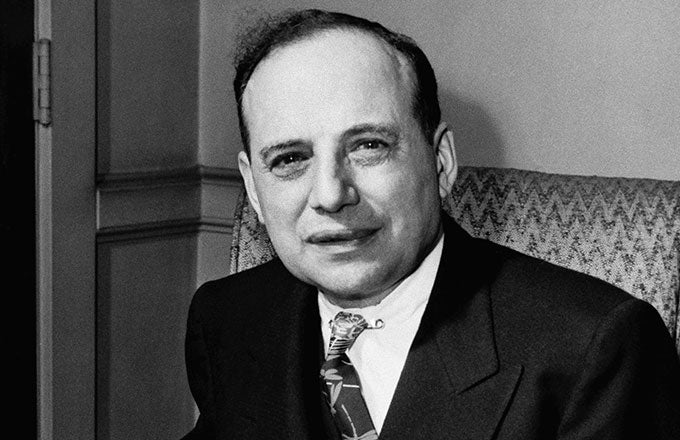
Graham was a pioneer in fundamental analysis, and his 1934 treatise "Security Analysis"(co-authored by David Dodd) is considered the holy text for all value investors. Security Analysis is a dense book at over 700 pages long, so Graham followed up on it by publishing "The Intelligent Investor" in 1949, which was a much more palatable book for the common person. Both books are still widely regarded today and have influenced every generation of investors since they were published.

While Graham was the godfather of value investing, his most famous pupil, Warren Buffet, is now regarded as the most successful and famous value investor of all time. Buffet was greatly influenced by Graham's books, which lead him to studying under Graham at Columbia, followed by working for Graham's investment firm after graduating.

So what exactly do value investors look for? Every famous value investor has variations in their style, but the main theme is finding stocks(or other securities) that are trading below their intrinsic value. I should mention that as an adherent of the Austrian school of economics, I don't believe in intrinsic value. This is because all value is subjectively placed on a thing by a human. So instead of using the term intrinsic value, I prefer to call it real value or actual value. The real value is simply the cash flows, assets, and future growth that a business contains.
According to the efficient market hypothesis(EMH), value investing shouldn't even be possible, since all relevant information is baked into the current price of a stock. The EMH is nonsense of course, because share prices of stocks deviate from their real value on a regular basis. Let's look at Visa for example:

In the past year, the company has seen it's share price be as high as 83.79 and as low as 66.12. This means that the market cap(the price of all outstanding shares) was 123.64 billion at it's lowest and 156.68 billion at it's highest within the past year. Now do you REALLY think that the value of the company as a whole changed that drastically during the course of one year? This shows us that the market is certainly not efficient, as share prices are routinely disconnected from the real value of the business.
The successful value investor is a contrarian, as they look to buy the companies and sectors that are the most unloved and then selling them when they return to favor again. Some of the best opportunities come when a great company with excellent long term prospects is caught in the middle of a short term crisis. The crisis causes a selloff, lowering the share price, which essentially is like having the company go on sale. Not everyone can be a a successful value investor, as it requires a contrarian spirit, tons of stoic research, and lots of patience.
Sources-
http://www.investopedia.com/articles/07/ben_graham.asp
https://www.amazon.ca/Intelligent-Investor-Definitive-Value-Investing/dp/0060555661
https://www.ukvalueinvestor.com/value-investing-books/
http://www.businessinsider.com/lessons-warren-buffett-learned-from-benjamin-graham-2015-5