Urbanization VS Ruralization
Not so long ago I listened to the session from an urban forum on urbanization and ruralization trends.
Of course, I will not shorthand or retell. I will highlight only the ideas that were shared by different participants.
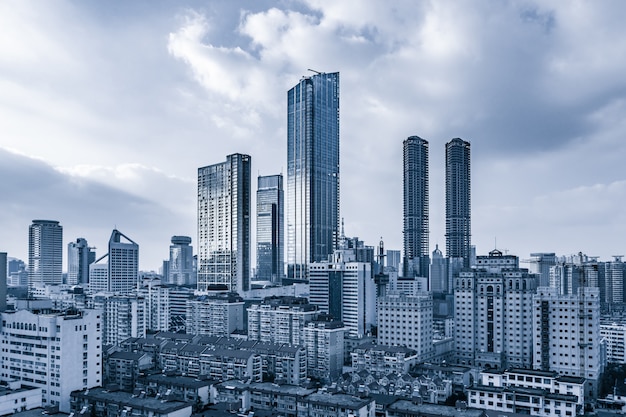
Background image created by Evening_tao - Freepik.com
In favor of urbanization
Labor productivity is higher in city agglomerations. According to some estimates, by 7-8%, some by 20%, if we compare the same enterprises.
We can associate this phenomenon mainly with greater competition in the labor market, but also with greater opportunities for improving skills. Less employment on acquaintance, as it is very popular in rural areas.
The trend of moving of industries from the cities was replaced by the trend of the return of production to the city, at least in suburbs following labor forces. Since enterprises still want to be located where they can find workers for themselves. There are a number of features that characterize making it more convenient to place production in a city (or suburb):
- 1. Entrepreneurial dynamics (more inherent in urban residents)
- 2. Innovative activity (also)
- 3. Consumer demand - everything is clear, since the inhabitants live in cities more densely, the delivery of goods from the plant is more competitive (Moscow region, which is the leader in the number of food production industries), is an example for Russia.
At the moment, a successful city is one in which industries are diversified or, say, the spheres of the national economy, since cities completely dependent on one industry (tourism, chemical industry, metal rolling, etc.) are at risk for both residents and investors.
The city of the future was depicted as an add-on over an industrial cluster, which in the cellars due to robots will 3D-print more and more new products.
Also in favor of urbanization is the developed infrastructure (transport and energy). The provision of water, sewerage, electricity, and heat supply in megacities are paid much more attention. Recent research has also shown that the infrastructure is much better organized where there is high centralization in decision-making.
From metropolitan areas it is easier to reach anywhere in the world due to the proximity of airports and the possibility to get there by taxi.
And, of course, a higher level of payment, because on average wages are higher, the more the number of residents in the corresponding city of the country.
Flower vector created by Ddraw - Freepik.com
In favor of ruralization
Large cities lose to small cities in ecology, crime rate and quality of life.
Antwerp (500 thousand inhabitants), Zürich (400 thousand inhabitants) were named good examples and cities that now occupy the best positions on the quality of life, the distinctive feature of which is that, with all infrastructure development, these are not megacities.
The development of telecommunications makes it possible to work remotely and people prefer to move to the suburbs or small towns, following the quality of life, although this new digital reality coexists with industrial and post-industrial. And the number of people employed in the relevant spheres flows not so rapidly as it used to be from agriculture to industry (up to now, up to 10% of workers work in agriculture, even in developed countries, simply with a very much changed character of labor at the expense of automation).
In Russia, the population is still not concentrated enough. In Canada, half the population lives in three large cities, in Australia - three quarters. Good examples, since both these countries are resource-rich and with huge territories uninhabitable.
But in Russia there are still artificially created barriers - the institute of registration and the "poverty trap" (when people can not afford to move to big cities, paying for relocation and renting housing, for example).
Undoubtedly everyone knows that urbanization is an objective process of the modern world, but one of the speakers sounded that even if the “city-people” return to the rural areas, they nevertheless remain “city-people”.
It is interesting in my case, since after being metropolitan for fifteen years, I came back to my native small town (maybe I will leave it soon, but a couple of years ago I also had the opportunity to work a bit in this town in a local hospital and in the agricultural enterprise (the world of accounting and economics quietly covers the most diverse spheres of the national economy).
And this difference was clearly highlighted, since my interests are very much tied to the knowledge of the world, I really do not have enough free time to read everything I want to read and learn everything that I want to study. Therefore, my lifestyle is about the same, in a big city or in a small one - I'm never bored, even if I stay alone for a long time.
Furthermore I am absolutely indifferent to how people are dressed and with whom they sleep. And I do not drink so much alcohol as considered to be normal here.
But we differed in the interests with others, their ways of entertainment, their standard volume of consumed alcohol (there were exceptions, but their percentages were up to 10, and mostly people who received higher education, for example in a metropolis, well, or on the whole very intelligent and inquisitive people) . It is also quite remarkable that the economists with whom I worked in a small town and even in villages, as we exchanged experience, I passed an internship in the village, etc., are surprisingly adequate (ie, just as I perceive the political situation and do not lead to populism and information debris). And between the accountants and economists there is a significant difference. Economists in general are all adequate, accountants sometimes :)
Congratulations @limnade! You have completed some achievement on Steemit and have been rewarded with new badge(s) :
Click on any badge to view your own Board of Honor on SteemitBoard.
For more information about SteemitBoard, click here
If you no longer want to receive notifications, reply to this comment with the word
STOP