Making Soap on the Homestead
Making your own bar soap is not difficult and many of the necessary ingredients are ones you may already have. The first step is to find a reliable recipe, as exact measurements are very important. We refer to www.thesage.com. where you will find the MMS Lye Calculator.
The ingredients we use are distilled water, lye, olive oil, coconut oil, castor oil, essential oils for fragrance, and coloring.
You will also need a digital scale, bowls, a candy thermometer, gloves and some type of mold to form your soap in.
You must carefully measure the lye, the water and the oils on your digital scale according to your recipe.
The first step is to warm the olive, coconut and castor oils together on the stove to a temp of around 100-125 degrees F.
We take the pre-measured water and lye outside and carefully add the lye to the water. Lye is caustic to skin and produces harmful vapors when mixed with water, so we do this outside while wearing gloves.
The lye and water mixture will immediately get very hot--you can see the steam produced here. It will be left outside for awhile to cool down to 100-125 degrees---the same temperature as the oil.
When the lye water and oil are at the same temperature, the lye is carefully poured into the oil. We use an immersion blender on and off for 15 second intervals until the mixture begins to set, or "to trace" as it is referred to in soapmaking. Tracing looks like a slightly thickened custard. As soon as it begins to trace, we pour in the fragrance and the coloring, then immediately begin to pour the raw soap into the molds.
We want the soap to cool slowly, so the filled molds are covered with cardboard, then with towels and left to cool for 48 hours. When the cooled soaps are hardened, they can be removed from the molds, and cut if desired.
These fresh soaps will be placed on trays and exposed to air for a few months until they are quite firm. Then they are placed into containers, with holes for air
circulation, and a record with the date and type of soap. After about a year, they will be ready for use. You can use them sooner, but the longer you let them cure, the harder the soap will become and the longer the bars will last.
Naturally handmade soap contains no detergents, chemical hardeners, foaming agents or artificial fragrances. It has no filler ingredients or chemical solvents.
Lye sounds a little scary, but all the caustic qualities of the lye are removed when the lye interacts with the oils or fats, and glycerine is created. Soap has been made like this for thousands of years.
Pretty cool video. I've always imagined making soap was much harder after growing up watching Granny make soap by stirring her cauldron over an open fire on The Beverly Hillbillies. But you make it look relatively simple.
That was awesome!
Interesting at this time in my country we are going through times where making your own soap is a good idea and cheaper
Making our own anything is a good idea 🙃
I agree. Making your own anything is far better! The body is like a fish tank be careful what one puts in it whether known or unknown.
Sounds like we're all on the same page!
Those ingredients used non of them are harmful !???? @brimax
Lye is caustic to skin and produces harmful vapors when mixed with water.
Nice post, although after few months soaps should be ready, at least from my experience :)
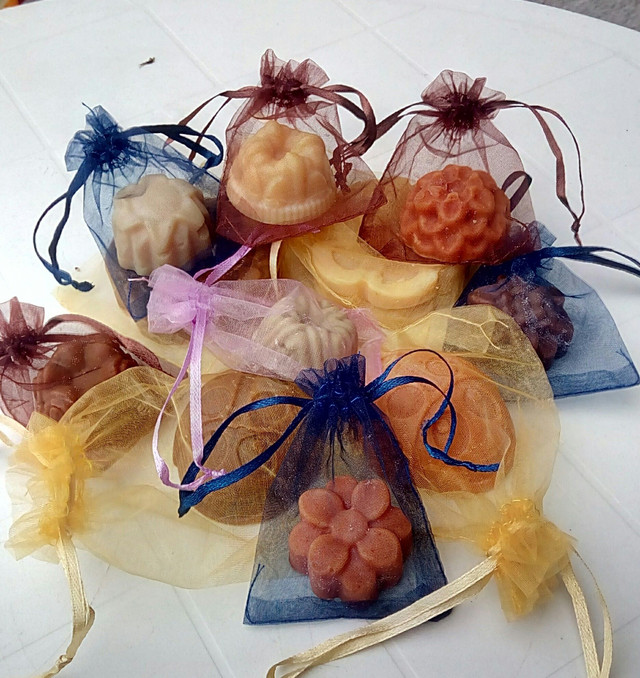
Those look beautiful.
I'll see this summer if a soap-steem exchange is possble :)
We agree, after a few moths they are definitely ready. We don't sell our soaps and prefer the a little harder which is why we let the cure much longer.
It looks like we use a few of the same molds....and I really like your packaging idea!
Me neither. I just live in busy area during the summer, there must be steemers :)
I have no words. Loved the video. Man you people have great amount of patience. :)
As a fellow guitar player I know you share patience as a skill out of necessity!
Do you have to make sure to use distilled water? @hebrewhousewife
We have seen evidence that if you do not use distilled water you can have problems with discoloration from minerals in the water. Everything we have learned about making soap has always put emphasis on this aspect. But, I am sure that many people do not have and in the past never had access to it......so, if you can get it use it. If not and you make some, let us know how it comes out.
Excellent idea, I think it is healthier as well as you say there are some that contain so many chemicals that dry the skin
It is much healthier, give it a try......
Hey @brimax. Un receta ancestral. Que bueno es saber que aún se prefiere el jabón artesanal con la fragancia que más guste.
Un abrazo, hermano
Gracias
This sounds like alot of fun! When you make the soap do you just do one scent for all of the bars?
It is a lot of fun and provides a great deal of satisfaction......especially in the shower haha!
We'll usually do two batches at a time and we always do different scents for each batch.
It sounds great. We recently got some handmade soap, and I love patchouli and frankincense mixed!
Those are some interesting aromas...might just give them a try!
Realmente interesante. ¿Desde cuando fabricas en casa tus propios jabones?
hemos estado haciendo jabones durante aproximadamente cuatro años.