Power supplied by an alternating current
Introduction
Continuing the content of science at the level of physics, in reference to the subject of alternating current, where as it appears a force on it due to the field where it is located, for the case of alternating electric current this is based on the magnitude and sense vary cyclically, remember that Kirchoff's lemma shows us that the sum of the f.em. of a mesh is equal to the sum of the products of the intensity, by the resistances of each branches, for this opportunity we have another level of circuit, where reference is made to instantaneous power is the product of the voltage of a generator by the total intensity circulating in a circuit, now well friend reader in the alternating current instantaneous power varies over time sinusoidally, since the for the case of resistance consume or absorb all the energy supplied by the same circuit.
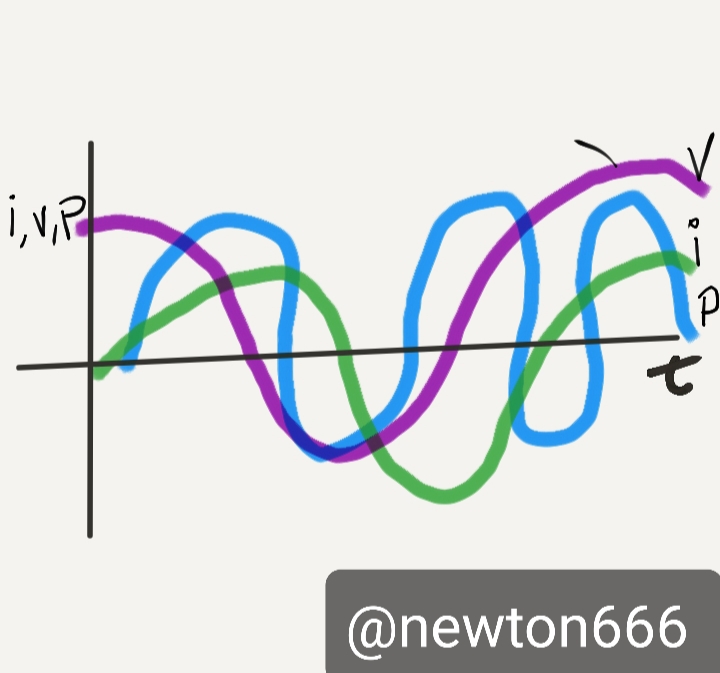
In this case the papers within the circuit are addressed, where instantaneous power and average power is evidenced, for the case of the first is evidenced how it varies the intensity that circulates is considered that P = v.i, where friends v represents the voltage generates a generator, I is the total intensity that circulates through the circuit, this intensity varies with time sinusoidally because this in turn generates positive values within the power circuit and the negative values represents the return of stored energy. On the other hand in this context the current and voltage have their maximum and minimum values simultaneously, since this generates waveforms are equal, which is assumed its difference in its amplitude.
For the case of the average power is assumed when this is calculated, so that it assumes it in a given time interval, since the amount of electrical energy delivered or absorbed by an element at a given time where : ∫ (t, 0) sin² ᦍ.t.dt = T/2
It is good to know about this two important powers, since the amount of electrical energy delivered or absorbed by an element at a given time, so that if a sinusoidal voltage v(t) with angular velocity ᦍ and peak value V0 is applied to a circuit so that we have the equation:
v(t)=V0 sen (ᦍ.t)
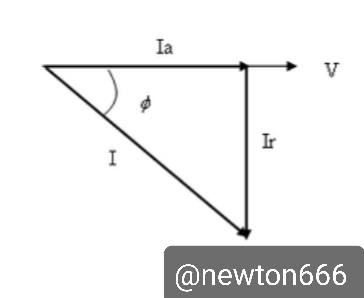
In this graph we have as it shows us under the scheme circuit of C. A. Assuming to the current and voltage have an offset φ, where this active component of the current, Ia, to the component of this that is in phase with the voltage, and tam is assumed the reactive component, Ir, which interacts the potentialities.
There are always many benefits derived from the alternative current especially in the world of electricity. I love your article!
Hello greetings mate I am very fond of physics and that universe of science.
Wow, this is beautiful. I love physics too but not to that extends
It refers to the study of all physical phenomena that occur for their explanation of cause and effect.
Interesting