Bizarre Beasts: Caecilians
Caecilians. If you've read any of my previous posts, you may have seen this word briefly mentioned in my amphibian articles (I think there was even a picture on my last post!). Outside the field of herpetology, the caecilian remains largely unknown, and most people have never even heard the name.So besides being some sort of amphibian, just what the heck is a caecilian?
This thing.
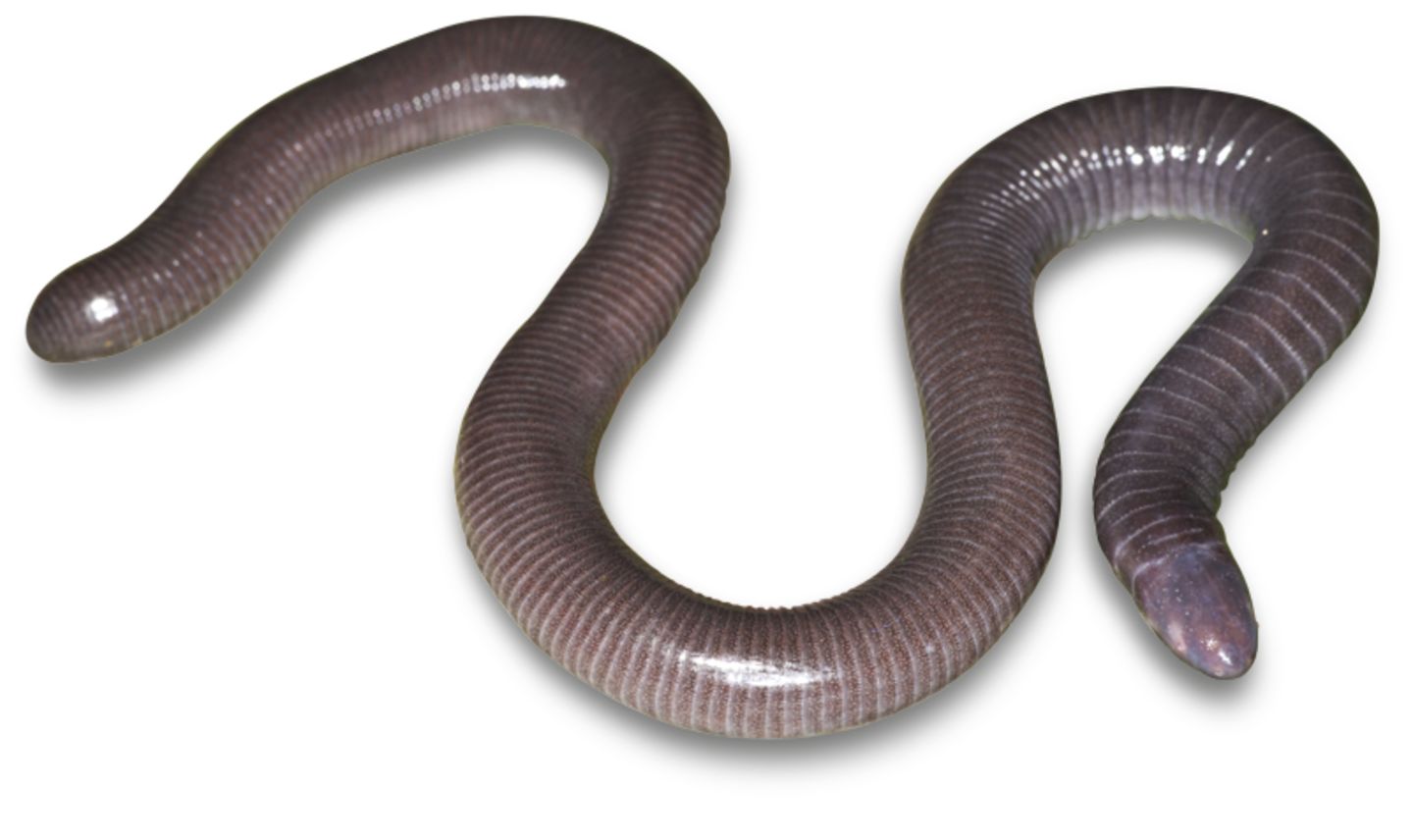
Caecilians (gymnophiona) are a class of amphibians that are limbless, appearing similar to snakes or large worms. They make up the third major group of amphibians alongside the anurans (frogs and toads) and urodela (salamanders and newts). They are a tropical species, found mostly in the tropical forests of Central and South America, Africa, and southern Asia.

If they're such a major group of amphibians, how come people aren't as familiar with them (like say frogs and salamanders)? Because while we have a general understanding of these animals, we still don't know a whole lot about them, making them the least-familiar order of amphibians. Their secretive lifestyle makes them hard to observe and very few specimens can be successfully kept in a captive environment. Their diet, communication methods, and reproduction remain largely unknown to herpetologists, save for a few documented species. We are still discovering new species, and even new families, of caecilians.

Some caecilians (such as the Typhlonectidae) are aquatic, using their fleshy fins to propel them through the water column similar to eels. These aquatic species are perhaps the most well known, with several in captivity at zoos and research centers. Most caecilians are highly adapted for a fossorial lifestyle, meaning they spend their life burrowing. Their name literally translates to "blind ones", as their vision is limited only to dark-light perception (meaning they can really only see if they are exposed or buried). They have thick skulls with pointed snouts that are build like (and used similarly) to a shovel. Using powerful muscles, these amphibians are able to plow their way through dense earth.
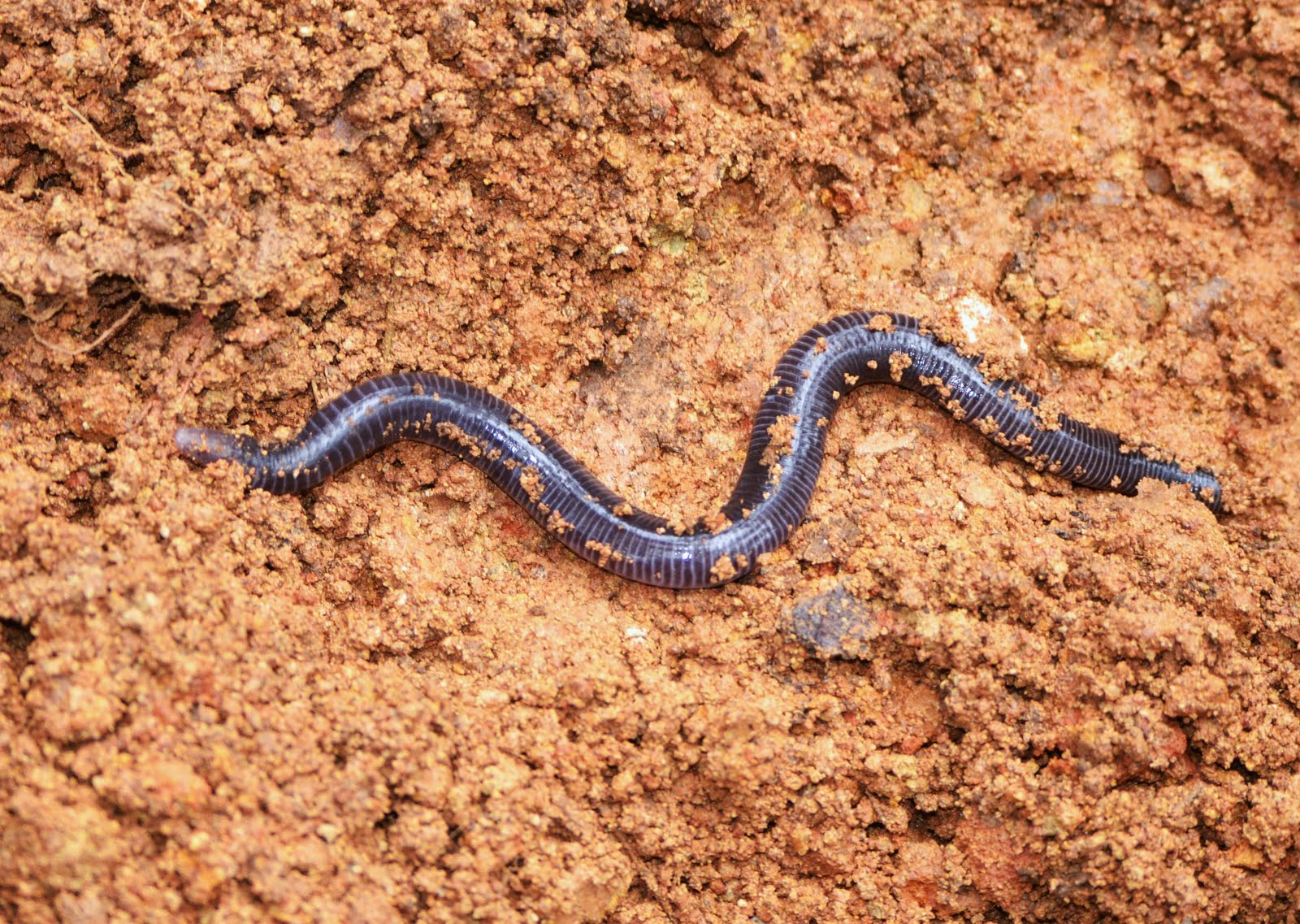
How do caecilians find food? Again, we are not entirely sure WHAT they eat, but we believe they are capable of sensing their prey through olfactory means. Caecilians have a pair of tentacles between their eyes and nose, which likely serve as a secondary olfactory sense, in addition to the normal sense of smell in their nose.

Caecilians are the only amphibian order that uses exclusively internal fertilization during reproduction. Approximately 25% of caecilians are oviparous, meaning that they lay eggs, the remaining 75% are viviparous, and give birth to live, well-developed offspring. Some of these offspring are born as larvae, while others are already metamorphosed when they are born, resembling a smaller form of the adults.

Surprisingly, researchers have discovered that some species of caecilians are very devoted parents and will protect their eggs right up until the time they hatch. One species, Boulengerula taitana, has evolved a rather radical means of providing for its offspring. The mother grows a special outer layer of skin, which is rich in fat and nutrients, which is peeled off by the young using modified teeth (maayyyybe don't watch the video below while on your lunch break). Viviparous caecilians (those that bear live young) feed the foetus special cells inside the oviduct, which they eat with specialized scraping teeth.
(Tell me those don't look like the chest-bursters from Alien.)
Caecilians are the mysteries of the amphibian world. They are not well documented nor understood (even by herpetologists) making them some of the least-familiar animals in the world. Like all amphibians, caecilians are at risk due to climate change, habitat loss, and other factors leading to amphibian decline world-wide. Though there is much we don't know, there is one thing we are sure of: the caecilian is an amazing amphibian we DON'T want to lose!

I dunno about you guys but the way she is talking in the video is making me hungry, she has a juicy voice.
Olso is pretty interesting that the mother is giving her skin to the babies... for mammals the mother is giving milk, I can see some kind or resemblance there.
Great. Could be that I've seen one of these guys in the Amazon, but I don't have a photo unfortunately.
Definitely possible! Caecilians themselves are not considered rare...they're just so dang secretive that we don't understand a lot of their natural habits!
Looks part worm, part snake. What a strange creature, never heard of these before!
They're segmented like worms and burrow like them, but their organ structure is closer to snakes. Definitely a weird animal!
good post again :) - we use to have 'slow worms' in our garden - very long. My girls loved them!
A worm with a nasty mouth...
How large are they?
Small species not much bigger than a worm. The largest are about the size of a small snake (around four feet is the largest).
They could be not too small then, but are always smaller than eels. Thanks!