FARMS: LADYBUG / CHARACTERISTICS AND ECOLOGICAL IMPORTANCE
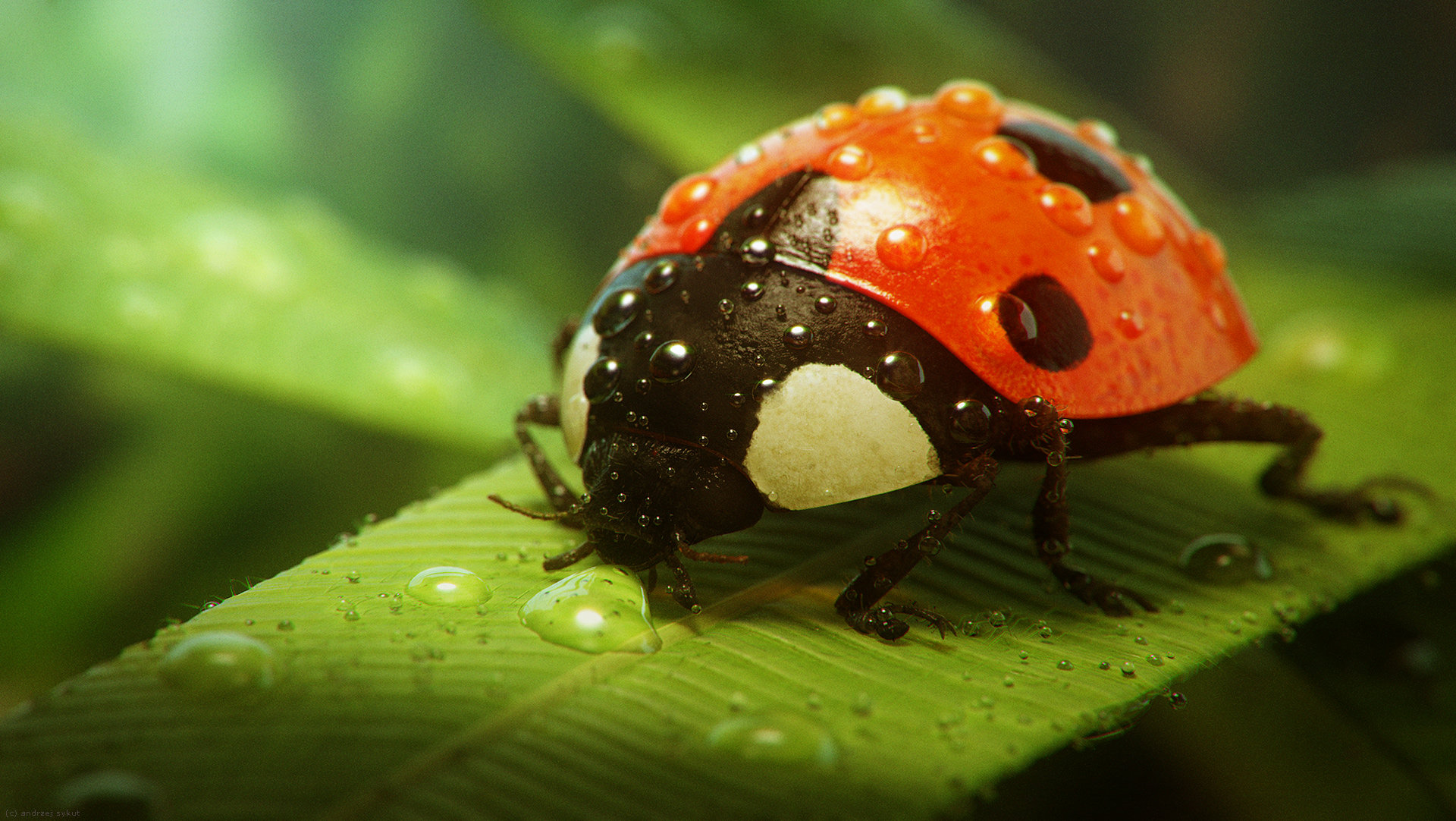
The ladybug or coccinellidae is a coleoptera insect, that is, a beetle related to other insects such as weevils, flying deer and even fireflies, whose size ranges between 1 and 10 millimeters, are invertebrate animals predominantly active during the day.
Source

Source

Source

Source

Source

Source

Source
Source

Source

Source

It is characterized by having a hard, round or elliptical shell or shell in the shape of a dome with a beautiful and striking yellow, orange or dark red color covered with black spots, spots, stripes or simply without any marking on the wing coverage, with six short legs, head and black antennae.
The ladybug is very appreciated and loved by the farmers because in addition to being beautiful, striking and harmless to people, they serve as predators of aphids, white flies and mites, which are pests that eat plants and destroy crops.
Origin of the Ladybug
Origin of the Ladybug
Ladybugs are native to Europe, but were brought to North America in the mid-twentieth century to control aphid populations. After the ladybugs came and ended with the invading insects, the farmers called them "Our Lady's beetle". This was eventually shortened to "Lady Beetle" and "Ladybug."
Origin of the Ladybug Name
Origin of the Ladybug Name
The name "ladybug" was coined by European farmers who prayed to the Virgin Mary when the pests eat their crops.
Life Cycle
Life Cycle
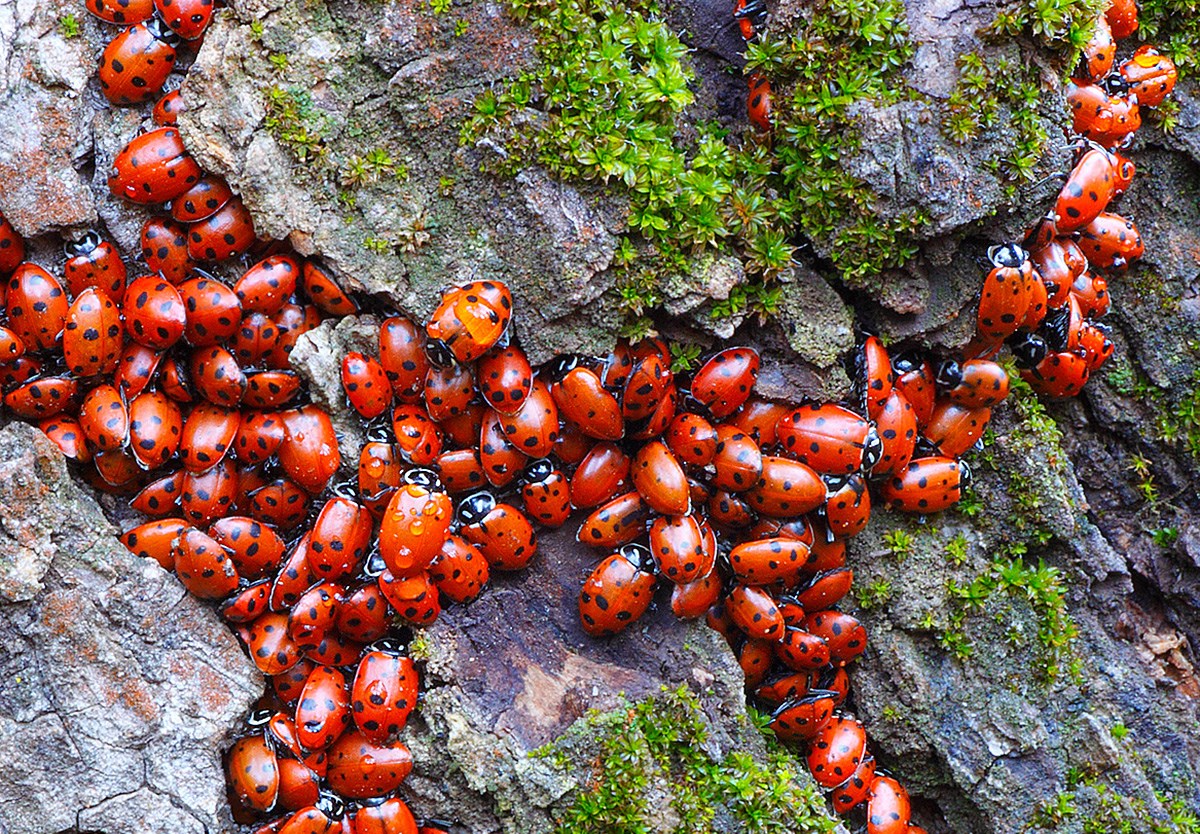
Ladybugs can be found in places where they have food available where plants, herbs, shrubs, trees or grass abound. Generally during the winter when the weather turns cold, they look for a warm and isolated place to hibernate, a shelter where they can withstand low temperatures, such as: small cracks, bark of trees, under the bark of trees or among piles of leaf litter When leaving their shelters they go in search of food and fly towards the vegetation to look for tender aphids. After satisfying his need for food, he starts the search for a partner.

The females secrete a chemical that represents a message that announces the beginning of the courtship ritual and the arrival of the mating season. Once the male-female encounter is made, the females lay hundreds of yellow eggs one by one or placed in groups in the lower part of a leaf, stems or clusters, usually very close to colonies of lungs for the larvae during their growth , a matter of weeks and after different changes, pupan (complete metamorphosis) becomes again in new ladybugs.

Physical Characteristics of the Ladybugs
Physical Characteristics of the Ladybugs
- They are cute, striking and very colorful.
- We can find them in a variety of shapes, with bright colors and black dots.
- The most common colors of this insect are: red, yellow and orange.
- The extremities are short.
- The head of the ladybirds presents a pair of sensory antennas, a pair of compound eyes and an exposed mouth.
- Their bodies have a round or elliptical shape.
- Its approximate size is 1 and 10 millimeters.
- They have very thick wings that look like a shell.
- The females are a little bigger than the males.
Curiosities of the Ladybugs
Curiosities of the Ladybugs
- Currently, approximately 6000 species of ladybugs have been described around the world.
- In some countries ladybugs are symbols of good luck.
- During its life cycle, it can eat up to 5000 insects.
- They have a maximum longevity of 1 year.
- In the process of reproduction, this insect can emanate up to 400 eggs in each laying, which hatch between March and April.
- They lay their eggs among colonies of aphids and other pests, so that they feed on them as they develop.
- They are diurnal, therefore they develop their activity during the hours when there is sunlight.
- During the winter season, between 10 - 15 ladybug are grouped among the grasslands or rocks.
- When they feel threatened, they secrete an oily fluid and an unpleasant taste in the joints of their legs.
- If they detect the presence of danger, these insects pretend to be dead.
- Its main predators are: Birds, frogs, wasps, spiders and dragonflies.
Common Names
Common Names
Depending on the country where the ladybug is found, it is known by different names. Its common name varies mainly in Spanish, the most common are:
Country | Name |
|---|---|
| Argentina | Mariquita - Catita - Vaquita de San Antonio |
| Chile | chinita |
| Norte de Chile | Catita |
| España | Mariquita |
| Ecuador | Mariquita |
| Colombia | Mariquita |
| Venezuela | Mariquita - Coquito |
| Puerto Rico | Mariquita |
| Bolivia | Coquitos o Cocos |
| Perú | Coquitos o Cocos |
| Honduras | Coquitos o Cocos |
| Islas Canarias | Sarantontón o Sanantonito |
| México | Catarina |
| Guatemala | Tortolita |
The Ecological Importance of Ladybugs
The Ecological Importance of Ladybugs
Ladybugs are very important for ecological balance and biological control because they act as a natural insecticide without the need for farmers to use pesticides and chemical insecticides in the orchards, since they have components that are poisonous and that of some or the other way they can be harmful to the health of humans or animals.
Ladybugs feed mainly on aphids, mealybugs and mites, which helps to control the pests that are already in the insects that eat the plants. The ladybugs leave hundreds of eggs and when the larvae hatch they feed quickly, that is why it is recommended to release ladybugs in harvests very affected by the pests so that the ladybug can eat.

Indeed this is an excellent article, and this picture has caught our eyes, thanks for this beautiful post
Resteem
(to be a part of this community; ensure to always use #farms and #steemchurch for agricultural related post)
SteemChurch Farm (@FARMS)