Leibniz's dream

Source
Our dreams have to do with our daily life, with what we do, with what we want to achieve; for example a young mother will dream of her adult son, an entrepreneur will dream of her new consolidated company, but what happens? with the dreams of a scientist or a mathematician.
Today I want to talk about Leibniz's dream.

Born in Germany in 1646, and died at age 70 in his own country, Leibniz was not only a mathematician, he was also: philosopher, theologian, logician, jurist, librarian and politician; in all those fields he made great contributions, but I want to highlight those he did in mathematics. I invent the infinitesimal calculus and the notation that is currently used in this area, was the one who invented the binary system, fundamental basis for the structure of the language systems that current computers use

Source
Let's see now what Leibniz's dream is about
The young Leibniz dreamed of machines for calculating, in 1670.

Source
Under the idea that
"It is unworthy of excellent men to waste hours as slaves in the work of calculation, because if machines were used, it could be safely delegated to any person."
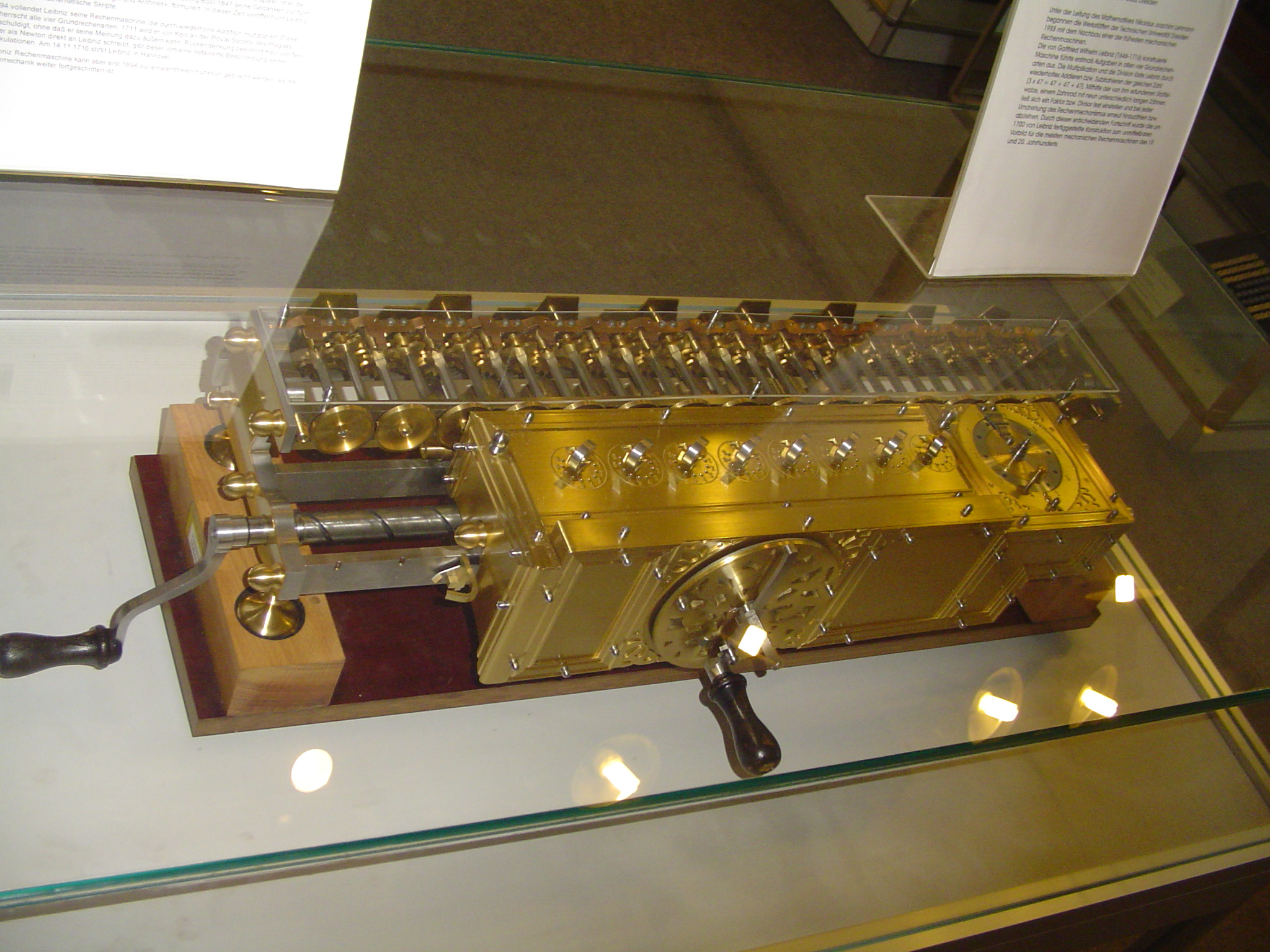
In 1671 he extended the ideas of Blaise Pascal[1], and built the Staffelwalze (Step Reckoner, also known as the Stepped Reckoner or Leibniz machine), with which he could add, subtract, multiply, divide and take the square root of a number. These were the ancestors of desktop computers and derivatives of these machines, including the Curta calculator[2], which continued to be produced until the early 1970s.[3]
As you can see Leibniz dreamed of the calculators that we use today, and with his work he gave a great contribution to the computer advancement that we have today in the world of computers.
Source