What is a smart property?
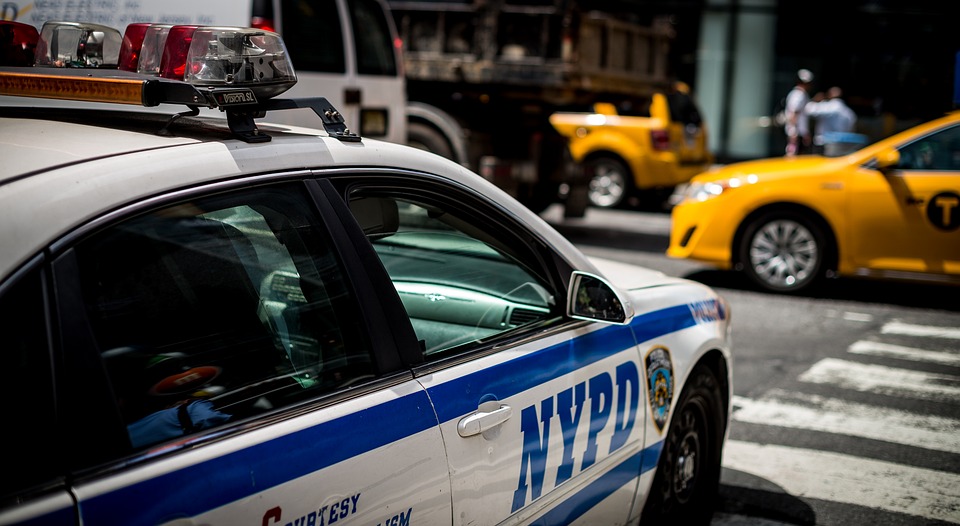
Imagine being stopped on a highway for speeding. The officer who stopped you from coming to the car window and said, "let me see your license and registration certificate".
Now imagine that instead of a pack of documents, you are presenting to the blockchain 105 officer, confirming that you are the owner of the vehicle. Blockchain, of course, will not save you from a fine, but it can simplify the negotiation process and confirm your ownership of the vehicle.
BlockchainAs we wrote earlier, Satoshi Nakamoto was able to solve an important problem in computer science: The so-called Problem of two Generals. This means that now two people can remotely reach an agreement by contacting through an unprotected network, and this agreement will be publicly recorded.
We launched this website because the use of this technology as a payment method (Bitcoin) has already revolutionized. But there are other kinds of agreements that people can reach with the help of blockchain, and not necessarily the subject of the agreement should be money.
Take, for example, ownership, as already wrote Nick Sabo in the "idea of smart contracts" in 1997. Smart contracts go beyond buying and selling, as they offer a way of fixing transactions on all types of property in the form of program codes, after which this information becomes available digitally.
Smart contracts confirm the owner's rights promptly, in a predetermined form, as well as provide more free access to data for obtaining information and verification in cases where proof of ownership is required immediately.
What Szabo did not have enough, so this technology for the realization of "Ideas", which, in the opinion of many, is the blockchain.
Here's how Adam Rothstein describes a smart property in Rhizome:
Unlike the database that stores data on ownership of intangible cryptographic monetary units in the space distributed between independent nodes, this database (blockchain) records data that provide access, for example, to cars, real estate, shares.
The certificate of ownership of your car, for example, is not just a pink piece of paper, it is access to the blockchain, in other words, kriptokoyn.

BitcoinWiki describes the steps to be taken to our imaginary police to verify the ownership of the offender:
The computer built into the machine requires authentication: the introduction of a special code confirming ownership. Code of the owner is a regular Bitcoin ECDSA-256 key. When the car comes off the Assembly line, it is assigned this unique ID.
A small, symbolic amount of bitcoins is transferred to this key, for example, 0.0001 BTC (let's call this amount T). This amount serves as a token of ownership of the machine-on whose account these specific bitcoins are, he has all the ownership rights (the concept here is the same as in the case of Colored Coins). In addition, the machine has an electronic certificate from the manufacturer and an identification key, which is public and specified in the certificate. This data allows the third party (police) to determine the owner of the car, its age and mileage.
Now let's look at how the transfer of ownership takes place in more detail. If the machine is sold, the following Protocol is activated:
The buyer generates a random number and asks the seller to enter it into the car's computer.
The seller enters this random number into the car and her computer returns the structure of the data signed by the car's identification key. The data structure contains this random number, the public certificate, the vehicle details, the public key of the current owner, and a reference to the previous transfer of ownership of the vehicle. Thus, the buyer knows what he buys, and knows what he buys from the real owner. At the same time, seeing his own random number in the data, he can make sure that it is not a copy of the data of the previous transaction (that is, there is no attempt to sell the same machine twice).
The seller selects the key to receive the payment (k1) and calls the price (P).
The buyer generates a new owner's key (k2)
The buyer creates a transaction with two inputs and two outputs. The first entry corresponds to the payment amount (P) and the second entry is the transfer of bitcoins confirming ownership of the machine (T) from the address of the current owner. In other words, this transaction simultaneously sends the payment to P on k1 bitcoin and specific bitcoin T from the address of the current owner at k2.
The buyer can not sign the entire transaction, only the first part — because he has no control over the address of the seller. By signing the first part, it sends this partial transaction to the buyer.
The seller can only sign the second part of the partial transaction. If he does not sign it until the end, the transaction will not be valid (that is, the seller can not take the payment, but not transfer ownership of the machine). The seller signs the second part with his private key, after which the transaction is transmitted to the network.
Participants will receive confirmation of the transaction.
The buyer presents to the machine a confirmed bitcoin transaction, the machine's computer makes sure that the transfer of the owner's rights occurred during the transaction, and now the machine belongs to another bitcoin address. For a computer it is not necessary to keep a full blockchain, it is enough only to keep the blocks transferring ownership of this machine. After making sure that the confirmations are sufficient to prevent the risk of cancellation, the system updates the owner data.
As stated in the wiki post, the smartphone can serve not only as a device for verification of the owner's key, it can also act as an ignition key, which significantly reduces the risk of theft.
Of course, the full practical implementation of this scheme is still far from it, but projects such as Ethereum are bringing this future closer.
This was a much more in-depth analysis of the smart contract than I was expecting! What inspired you to write about this very specific blockchain use case?
The idea of this is intriguing to me as it will serve as a definitive way to account for ownership, something that ends up on court cases on a daily basis.