# Animals: Eastern Emerald Elysia
"Plants are characterized by being autotrophic and producing oxygen through photosynthesis."
An appointment that surely we have all heard from our school biology teachers. But what would happen if I tell you that there is an animal capable of doing it?

Although it sounds incredible because if there is one, it is a sea slug commonly known as eastern emerald elysia because of its striking green color similar to that of the gem. It inhabits America, specifically from the coasts of Nova Scotia to southern Florida at depths of 0 to 0.5 meters. Its size is between 3 to 6 cm in length.
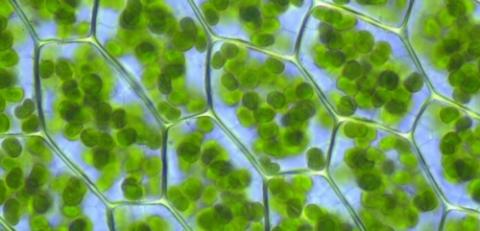
He can perform photosynthesis since he performs kleptoplasty, a type of endosymbiosis that allows him to capture the chloroplasts of the cells of the Vaucheria litorea, the algae from which he feeds, and then incorporate them into his body, which even allows him to camouflage himself from predators.
Taxonomy:
Kingdom: Animalia.
Phyllum: Mollusca (for its soft body).
Class: Gastropoda (includes snails and slugs).
Order: Opisthobranchia (because it has its gills backwards).
Family: Placobranchidae.
Gender: Elysia.
Species: Chlorotica.
It was discovered in 1870 by Augustus Addison Gould. Its genome began to be studied at the beginning of the 21st century and the results came to light in 2010 (yes, this process takes a long time).
Thanks so much for reading. Regards!
“Las plantas se caracterizan por ser autótrofas y producir oxígeno mediante fotosíntesis”.
Una cita que seguramente todos hemos escuchado de nuestros profesores de biología de la escuela. Pero ¿Qué pasaría si te digo que hay un animal capaz de hacerlo?
Aunque suene increíble pues si existe uno, es una babosa marina conocida comúnmente como elysia esmeralda oriental por su llamativo color verde similar al de la gema. Habita en América, específicamente desde las costas de Nueva Escocía hasta el sur de Florida a profundidades de 0 a 0.5 metros. Su tamaño es de entre 3 a 6 cm de longitud.
Puede realizar la fotosíntesis ya que realiza cleptoplastia, un tipo de endosimbiósis que le permite captar los cloroplastos de las células de la Vaucheria litorea, el alga de la cual se alimenta, para luego incorporarlos a su cuerpo lo cual incluso le permite camuflarse de los depredadores.
Taxonomía:
Reino: Animalia.
Phyllum: Mollusca (por su cuerpo blando).
Clase: Gastropoda (incluye caracoles y babosas).
Orden: Opisthobranchia (porque tiene sus branquias hacia atrás).
Familia: Placobranchidae.
Género: Elysia.
Especie: Chlorotica.
Fue descubierta en 1870 por Augustus Addison Gould. Su genoma empezó a estudiarse a principios del siglo XXI y los resultados salieron a la luz para 2010 (si, este proceso tarda bastante).
Muchas gracias por leer. Saludos!
hola hebert, sigueme ;) buen contenido de esa planta.
Congratulations! This post has been upvoted from the communal account, @minnowsupport, by omg-is-biology from the Minnow Support Project. It's a witness project run by aggroed, ausbitbank, teamsteem, theprophet0, someguy123, neoxian, followbtcnews, and netuoso. The goal is to help Steemit grow by supporting Minnows. Please find us at the Peace, Abundance, and Liberty Network (PALnet) Discord Channel. It's a completely public and open space to all members of the Steemit community who voluntarily choose to be there.
If you would like to delegate to the Minnow Support Project you can do so by clicking on the following links: 50SP, 100SP, 250SP, 500SP, 1000SP, 5000SP.
Be sure to leave at least 50SP undelegated on your account.
This post has received a 0.52 % upvote from @drotto thanks to: @banjo.
very good