𝔻𝕠 𝕀 𝕖𝕒𝕥 𝕚𝕥 𝕠𝕣 𝕕𝕠𝕟'𝕥 𝕀 𝕖𝕒𝕥 𝕚𝕥? The children's food.
Food is life, it orders and occupies much of our day. In breeding, concerns about food are very common.
𝔻𝕠 𝕀 𝕖𝕒𝕥 𝕚𝕥 𝕠𝕣 𝕕𝕠𝕟'𝕥 𝕀 𝕖𝕒𝕥 𝕚𝕥?

During child-rearing, children and adults establish ways of relating to each other when we eat. These ways of relating during meals are linked to our children's eating habits.
Routines established early in life often persist over time. This makes the first years of life the ideal time to help generate healthy eating habits and thus avoid overweight or other diseases.
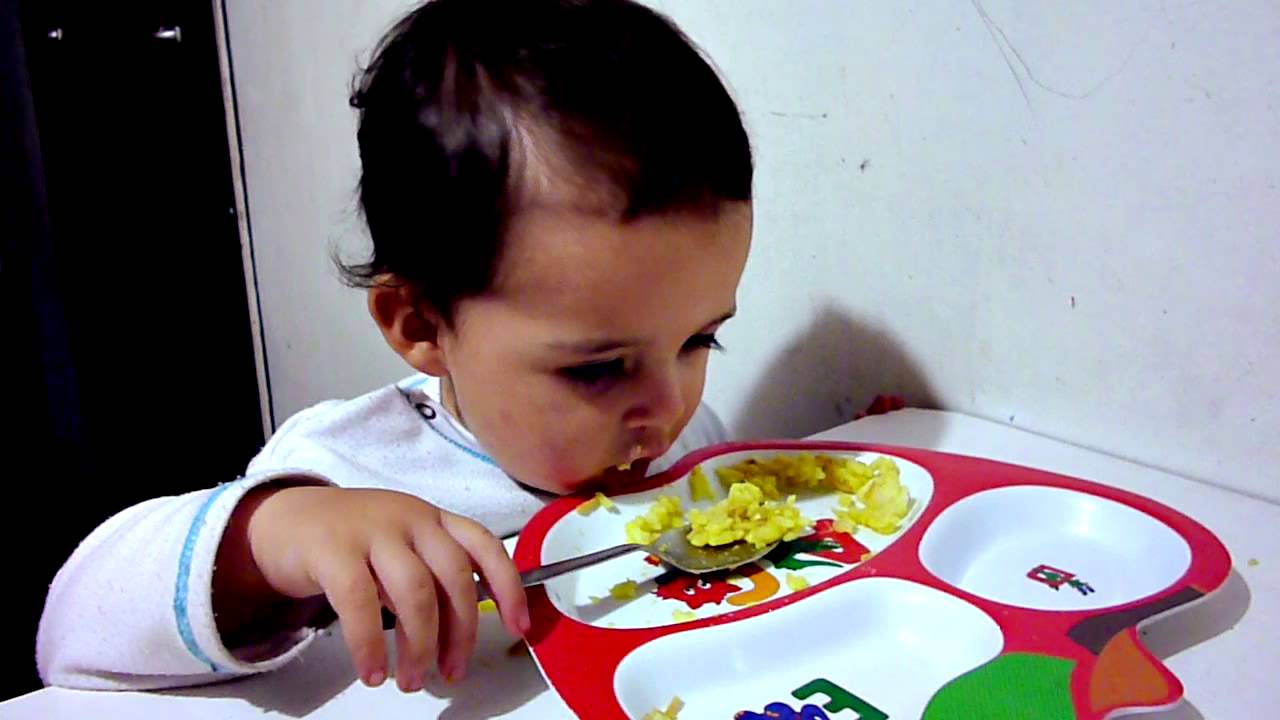
In the first year of life, there is rapid growth and high nutritional requirements. Also at this stage, oral, motor and digestive skills are developed in children. As they mature, their diet and eating behaviour undergo major transitions.

𝓑𝓪𝓫𝔂'𝓼 𝓯𝓲𝓻𝓼𝓽 𝓯𝓸𝓸𝓭.
Until the age of six months, the baby is fed primarily on breast milk - well, modernly, with some equivalent nutritional derivative. And then, complementary foods are added.

When the child can be seated, he is able to eat porridge, handling food of different colour, texture and consistency. It is very important that at this age, the child begins to participate at the family table and that this contact with food allows him to include play and experimentation.
Parents call many things inappetent, but we don't know what to do with food. So what to do?
Children and their caregivers can use words or gestures to establish different kinds of relationships around feeding. In this food-related link, adults can promote autonomy and help them model their own healthy eating habits. Sometimes, due to ignorance, they do not take this issue positively. But what we say is one thing and what we do is quite another; sometimes our eating problems are imposed on the desire to give the child the right food for the what, when, and how, the children eat.
The question is, how do we eat? What is the distance between us and our children between healthy eating and eating?

Why is it that when we think about our children's diet we think about diet and give little thought to family eating behaviors?
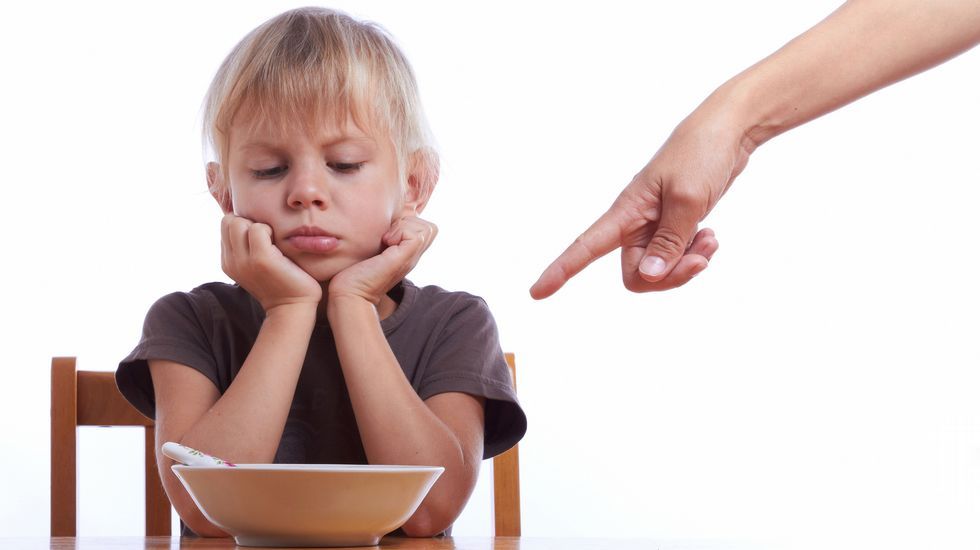
Many times, the style with control, pressure or forced feeding does not have the expected result; rather, it is related to eating less.
When the limits are too rigid, there is a lot of insecurity.
“The limit is rigid when a certain degree of flexibility is feared. It is very different to think of "Hard Parents" as "Firm Parents", the children and young people of today are as if they were configured with a much more challenging matrix, that is why they require a lot of skill, greater than that required before by adults to negotiate from a position of firmness. The point is, where is it made from? If from a place of weakness, then more is given than one would like to give or from a place of firmness, then it is possible to reach agreements that make an experience possible and lessen the risks.”Dr. Juan Vasen. Pediatrician.

𝓢𝓮𝓮𝓶𝓼 𝓵𝓲𝓴𝓮 𝓽𝓸𝓸 𝓶𝓾𝓬𝓱.
The energy content of food is handled in calories, the energy needs of children vary greatly according to age and circumstances. But the criteria that are generally used to assess the child's needs are the growth model and the sense of well-being.

Energy Balance.
One of the most important concepts to know and understand is the Energy Balance. In simple terms, it is the balance between the calories from food and drink and the calories that are burned through physical and intellectual activity.
What the parents eat should be eaten by the child so that the child feels included at the table.
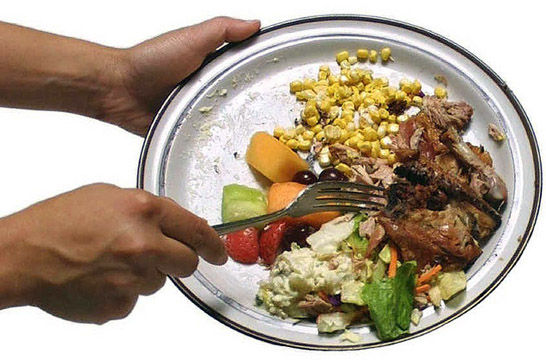
Selective eating is eating only what you like, that is, leaving foods you don't like, is very common in children. Offering everything, until the child's own curiosity makes him/her taste and eat, can be a path. Offering the least attractive foods in a fun way can also be a good tactic. Colors, shapes; foods that include games in their presentation.
The secret would be to teach your child to eat with love, patience and good humour, because it is very effective. Now, what happens when the issue comes up? Eating or not eating...? That is the question.
Food also has to do with popular or family customs, with the availability of different foods regarding the place where we live, with the preferences or tastes of the parents. With this in mind:
- How long does it take you to prepare and serve what your family eats?
- What is the pace of these activities on a busy day?
- Can you make him eat broccoli for your son if you don't like it?
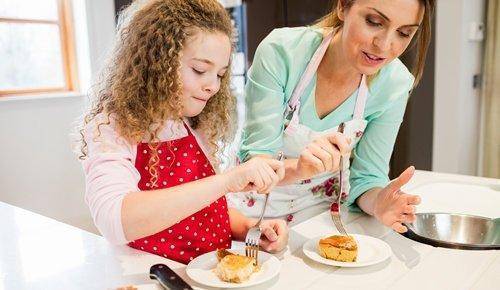
𝓔𝓪𝓽𝓲𝓷𝓰 𝓼𝓱𝓸𝓾𝓵𝓭 𝓫𝓮 𝓪 𝓹𝓵𝓮𝓪𝓼𝓾𝓻𝓮, 𝓷𝓸𝓽 𝓽𝓸𝓻𝓽𝓾𝓻𝓮.
Eating is always related to the family's emotional climate. Along with food, children should receive affection and acceptance from their caregivers in response to their signals. It is not a question of giving in easily to their whims, but of negotiations. If we don't make it a drama and patiently try again. I insist, with love and a great sense of humour.


The most important thing at mealtime is not the food, because otherwise, everyone would eat on their own, the father watching the game on TV, the mother watching the soap opera in the room and the child glued to the computer, DS or video game, playing with his doll....
The objective of the meal is the family gathering; it is not two adults watching the child forcing him to eat.... We have to prioritize the moment of the gathering to the act of eating.

Children are usually curious, so at some point, what's on the plate repeatedly for days, weeks, at some point I'm going to get curious and try it out; except that I'm getting overwhelmed.
No healthy child; having enough to eat, he dies of hunger.

𝓣𝓱𝓮 𝓴𝓮𝔂 𝓲𝓼 𝓽𝓸 𝓴𝓷𝓸𝔀 𝓱𝓸𝔀 𝓽𝓸 𝓮𝓭𝓾𝓬𝓪𝓽𝓮.

The cost of the hunger that the child may have, not having eaten at the right time, is hers, it does not have to be paid by the parents or caregivers.
If dinner is at seven o'clock at night and the child does not want to eat at that time, and then at eleven o'clock at night he says he is hungry, the parents must say sorry, it is not time to eat. Nothing happens, the child has to go through this situation to learn, but not as a punishment, he is simply educated, because this is not the time to eat.
How is teaching healthy eating to our children very important?
- You have to take it all the time.
- We must learn to perceive what happens when we eat as a family:
- Is it talking, is it watching TV, or are we all looking at the phones?
- Is it enjoyed or is it just an obligation to be fulfilled?
You see, food is a moment of encounter.
Learning to eat well is more complex than it seems. Hunger and satiety must be self-regulating. There are no good excesses and no good faults. But always remember, eating as a family is the best way to learn all these things.
Learning to eat well is more complex than it seems. Hunger and satiety must be self-regulating. There are no good excesses and no good faults. But always remember, eating as a family is the best way to learn all these things.
Bibliography consulted and support:
Bauer, A. (1990.). “Millers and grinders. Technology and household economy in Mesoamerica”, En Agricultural History, vol. 64 no. 1, Invierno, pp. 1-17.
Bauer, A. (1999). “La cultura material” en Carmagnani, Marcelo, Alicia Hernández Chávez y Ruggiero Romano (coords.) Para una historia de América. Las estructuras, Ciudad de México, Fondo de Cultura Económica-El Colegio de México, pp. 404-497.
Contreras S. E. (2000). La negociación para el bienestar. Una apreciación de la política social en Oaxaca (1992-1998), Ciudad de México, CEIICH-UNAM.
Contreras S. E. y Federico. M. R (coords.) (2010). Dar leche a la niñez pobre. Producción láctea nacional, ayuda y seguridad alimentaria en México, México, CEIICH-UNAM.
Contreras S. E. y Felipe C. M. (2008 ). “El consumo de alimentos básicos en los hogares 2000-2008 y la crisis alimentaria que se avecina en México”, en Sociedades Rurales, Producción y Medio Ambiente, vol. 23.
Contreras S. E. y Felipe C. M. (en prensa). Consumo físico de alimentos y percepciones personales en los hogares y procesos de exclusión social”, en Sociedades Rurales, Producción y Medio Ambiente, vol. 21 no. 11.
García. S, José A. R. K. Skaggs y Terry L Lean Ford (2011). “Evaluación de efectos del Programa de Apoyos Directos al Campo (PROCAMPO) en el mercado de maíz en México 2005-2007”, en Economía, Sociedad y Territorio, vol. XI, no. 36, pp. 487-512.
Giménez, G. (2002). “Paradigmas de la identidad”, en Chihu Amparán, Aquiles (coord.) Sociología de la identidad, México, Miguel Ángel Porrúa.
Goffman. E. (2011). La presentación de la persona en la vida cotidiana, Buenos Aires, Amorrurtu.
Hazuda H. P. (2008). “Overweight and diet among children of Mexican descent. Results of a binational study, Berkeley, UCLA, PROQUEST. Milenio Cultura en línea.
Mintz. S. W. (2009). “Toward a construction of modern foods”, European Association of Social Anthropologists”, vol. 17, no. 2, pp. 209-216.
Mintz. S. W. (2013). Sabor a comida sabor a libertad, Ciudad de México, CONACULTA, CIESAS, Colegio de Michoacán.
Mintz, Sydney W. y Christine Dubois (2002). “The Anthropology of Food and Eating”, Annual Review of Anthropology, pp. 99-119.
Montes de Oca Sicilia, María del Pilar (2016). “Apología del cerdo”, en Algarabía 141 año 15, junio, pp. 66-71.
Pensado Leglise, Mario. R. (2005). “Los cambios en la naturaleza social del consumo de frijol en México y criterios para elaborar una política de abasto alimentario urbano en el contexto latinoamericano”, tesis no publicada de doctorado en Estudios Latinoamericanos, Facultad de Filosofía y Letras de la UNAM.
Ramírez. G. D. A. (2013). “Salud America! A national Research Network to Build the Field and Evidence to Prevent Latino Childhood Obesity”. En American Journal of Preventive Medicine, vol. 44, no. 3, Supplement 3.


Van. P. Jan. D. (2008). The New Peasantries. Struggles for Autonomy and Sustainability in an Era of Empire and Globalization, Londres, Sterling, Va. Earthscan.
Vargas. L. (2003). “Comidas y bebidas de los pueblos mesoamericanos”, en Salas Gómez, Luz Elena, Educación alimentaria. Manual indispensable para la salud, México, Trillas.
Thank you for being here. If the information worked for you, spread the word.
Thank you for being here. If the information worked for you, spread the word.
There are countless things parents are doing ignorantly or may be they just do not care. Like you emphasized here,
food should be a pleasure, not a torturejust as every other life activities.This is a very educating post. Hope to see many parents read this. Thank you for giving us this @amigoponc.
ReSteemed!
I am @teekingtv and I write STEM.
que buen trabajo hermano saludos
Hola mi querido amigo @duque. Gracias por estar aquí. Le invito a participar a este sorteo, que dependiendo del azar, le dará frutos.
DISCLAIMER: dropahead Curation Team does not necessarily share opinions expressed in this article, but find author's effort and/or contribution deserves better reward and visibility.
to maximize your curation rewards!
with SteemConnect
12.5SP, 25SP, 50SP, 100SP, 250SP, 500SP, 1000SP
Do the above and we'll have more STEEM POWER to give YOU bigger rewards next time!
News from @dropahead: Are you a curator? Join our team! v1]]
Thank you, dear Community, for valuing my content. I wish you prosperity. A fraternal embrace and many blessings.