Electromagnetic Spectrum and its Practical Uses Part 1
Electromagnetic spectrum
First of all I am grateful for the time you take to read this post, if you are here, it is because somehow it has caught your attention, I hope it is to your liking and nurture your knowledge. Because the Electromagnetic Spectrum is wide and the applications in daily life it is necessary to divide the content into several parts.
The waves
Before entering the subject, it is necessary to know the most basic part of the Electromagnetic Spectrum, hence the need to know what a wave is.

The waves "From Latin unda, a wave is a movement that expands through a liquid. These are the peaks that are created by striking the surface of a fluid (when throwing a rock into a lake or putting sugar in tea, for example) or other means ". [1]
In physics, the word "wave" is used to designate the transmission of energy without displacement of matter, it is a disturbance or agitation that moves in a given environment and, after passing, leaves it in its initial state. The mechanism covers a wide range of situations: From the waves on the surface of a liquid to light that is itself a type of wave. [2]
Characteristics
All waves can be described by three characteristics::
- Amplitude: that corresponds to the height of the oscillations..
- Wavelength: which measures the distance between two oscillations.
- Frequency: which reflects the number of oscillations per second.
The Electromagnetic Spectrum
It is the great grouping of waves according to their length, each one has its use in science, and they are part of daily life, it passes through the visible spectrum, the audible spectrum, we can feel it in the body, and some others that, although we can not perceive them, they are there and we can not deny it.
The visible spectrum: It is comprised between 380 to 780 nm, these are evident when passing a beam of light through a prism, there we can see the decomposition of light in the visible spectrum, organized according to its wavelength we have:
| Red | 618-780 nm |
| Orange | 581-618 nm |
| Yellow | 570-581 nm |
| Green | 497-570 nm |
| Cian | 476-497 nm |
| Blue | 427-476 nm |
| Violet | 380-427 nm |
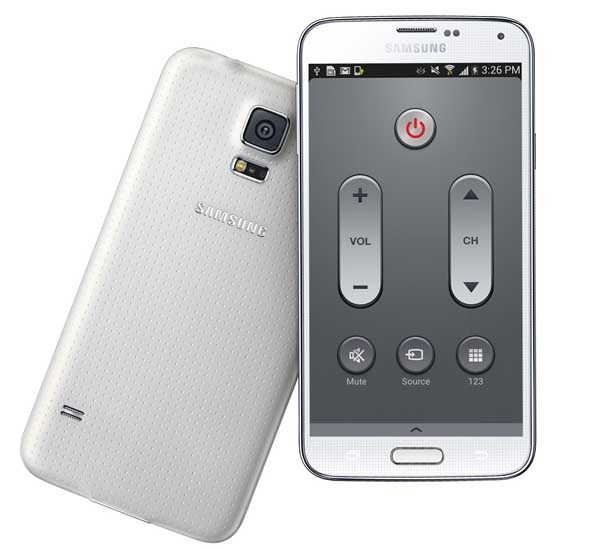
Infrared: Above 750 nm we have the infrared spectrum, widely used in controls of TV, DVD, Decoders, in cellular equipment for data transmission such as music, games in real time like the snaker in the Nokia 3320 disappeared by the appearance of other communication systems, more stable, and comfortable as bluetooth.
At present, companies like Samsung are betting again on the insertion of these elements into their telephone equipment, so that through their WatchON application, they can automatically tune into a TV channel, control Blue-Ray equipment and sound simultaneously, his competition LG is not far behind with QuickRemote expanding its use to image projectors, air conditioners, and a wide variety of TV brands.
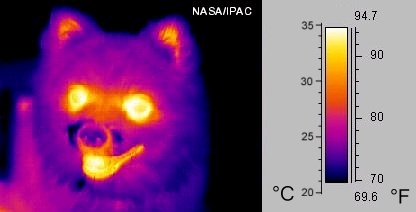
The Infrared spectrum has its field in the image based on the knowledge that animal and human bodies emit infrared energy, which is not visible to the human eye. This energy emitted from the body indicates the hottest areas expressed with the greatest amount of light, and the coldest ones expressed in the darkest.

In the field of health, great advances have been made, such as the invention of the AccuVein AV400, it is a device that emits a beam of light, which is absorbed by the hemoglobin of the blood, thus producing an effect of transparency in which, It shows the laboratory assistant where the veins are located for the extraction of the blood sample.
Some Benefits of Infrared Light
It helps in the loss of fat and toxins: thanks to the stimulation of cellular metabolism it helps to regenerate the body and eliminates the fatty and lactic acids that remain in our body after the consumption of certain foods.
Combat chronic fatigue: infrared heat helps improve circulation and cellular oxygenation, removing heavy metals from our body and making us feel more vitality. All this ends up affecting the mood of the patient.
Removes excess dead skin: with the use of this type of device, damaged skin is regenerated and excess dead skin is removed. This also affects infections as widespread as acne, because it removes bacteria from the pores of the skin. The results in these types of conditions can be easily verified in cases of blackhead or pimple removal.

- Reduce muscle pain: this is your best known advantage. Here the infrared lamp acts very effectively and gives practically immediate results. It is highly recommended to treat neck and cervical pain, muscle tension or arthritis and also sports injuries, as it stimulates the release of endorphins.
Improves blood circulation: infrared light helps to stimulate blood vessels to the point of dilation and this results in a marked improvement in blood flow, which allows a more fluid blood circulation and a decreased risk of blood flow. Clot formation.
Benefit for the heart: closely related to the previous point, blood circulation and fluidity improves after the application of infrared heat, which allows the pump blood to be correct and the heart does not have to perform an overexertion.
Recommended for diabetics: helps regulate blood levels. Thanks to the improvement of the blood circulation the cells rejuvenate and therefore, they will have a better functioning and will alleviate certain symptoms of the person suffering from diabetes. [3]

Ultraviolet light (UV): Found before the visible spectrum, it is between 400 nm (4x10⁻⁷ m) and 15 nm (1.5x10⁻⁸ m) approximately. Subdivide in UV-A or black light with a wavelength of 380 to 315 nm and UV-B medium wave from 315 to 280 nm when exposed for a long time can cause sunburn and skin cancer.
The UV-C short wave of UV rays, which ranges between 280 and 10 nm. Its practical function is like germicide, given that according to its properties it is capable of destroying the nucleic acids in these organisms so that their DNA is interrupted, which prevents them from performing cellular functions of reproduction, is used in the sterilization of containers of glass used in medical and biological research.
Ultraviolet light (UV) destroys more than 99.9% of bacteria, viruses and pathogens that are found in food, air and water in a way that does not change their properties, nor affects those who ingest it.
Sunbeds: All sunbeds use ultraviolet lights to stimulate the effects of sunlight against bare skin. As with natural tanning, those who use sunbeds are at risk of sunburn.
Hunting: Many hunters use an ultraviolet light, such as a black light, to locate and track a wounded animal. This is achieved by lighting the ground with light and following the path of illuminated blood.
Forensics: Forensic scientists also use ultraviolet lights to search for clues at a crime scene.
CD / DVD players: CD and DVD players use lasers, which are a form of ultraviolet light, to read disc information.
- Security: To combat counterfeiting, many confidential government or other documents contain some type of ultraviolet verification. In other words, if you shone a real US $ 20 bill with a black light, you would see marks on it that you would not find on a counterfeit bill. [4]
Referencias
[1] https://definicion.de/onda/
[2] http://www.ondes-radio.orange.com/es/acerca-de-las-ondas/que-es-una-onda
[3] https://www.belibe.es/blog/los-beneficios-de-la-luz-infrarroja.html
[4] http://www.ehowenespanol.com/cuales-son-usos-luz-ultravioleta-hechos_55357/
So far our first post about the Electromagnetic Spectrum, in our next installment we will be talking about the audible spectrum, the ultra sound and much more, so I wait for you, do not miss it.