Bitcoin News
Coincheck Faces Pressing Questions in the Wake of the World’s Biggest Hack

It was, by any reckoning, a huge haul. Between $400 million and $534 million dollars of NEM stolen, depending on whether you go on its value at the time or once the market had reacted to the news. At a press conference on Friday afternoon, the stunned Coincheck team painted forlorn figures as they came to terms with being on the receiving end of the greatest heist of all time. In the inevitable post-mortem, questions have been raised about the security practices of the Japanese exchange.
Also read: Coincheck Halts Operations Amidst Hacking Rumors
Gox II: Goxxed Harder
 Japan thought its days of being the focal point for record-breaking cryptocurrency heists were behind it. Less than four years on from the Mt Gox hack, which heralded the end of Japan’s and the world’s largest exchange, the country is back in the spotlight. Over the past few years, Japan has earned praise for its measured approach to cryptocurrencies, having encouraged their use in a regulated environment. Only this week, the Bank of Japan gave crypto a mild endorsement. But on Friday January 26, the nation’s 127 million citizens awoke to the news that another seismic cryptocurrency hack had occurred on home soil. At around 3am local time, someone withdrew all of the NEM held by the exchange in a single transaction.
The identity and origin of the hacker is unknown at this time, but what few details have emerged suggest serious flaws in Coincheck’s security procedures. It appears that the 500 million NEM were stored in a hot wallet with no multi-sig. If so, the exchange has learned nothing from recent history, for it was a similar setup that resulted in Mt Gox losing around 850,000 bitcoins in 2014. At a press conference on Friday, when asked about Coincheck’s security practices, there was an awkward pause before president Wakata Koichi Yoshihiro batted the question away, electing to issue an apology instead.
The Coincheck Hack by Numbers
The magnitude of the Coincheck hack, a haul which exceeds any other, can be seen by comparing it alongside real world record-breakers.
Securitas Depot Robbery, $83 million: Disguised in wigs and prosthetics, a gang did over a security depot in Britain in 2006. They would have made off with more, only there was no more space for cash in the lorry. The Securitas robbery was worth one sixth of the NEM hack.
Knightsbridge Security Deposit Robbery, $97 million: A safety depot raid in London in 1987 netted a huge load of cash and jewelry but it was still only worth a fifth of the NEM cryptocurrency hack.
 Baghdad Bank Heist, $282 million: Iraq’s Dar Es Salaam bank was relieved of hundreds of millions of dollars in 2007, with two guards alleged to be the instigators. The bumper robbery was worth around half the NEM stolen from Coincheck.
Mt Gox, $450 million: The tranche of bitcoins stolen from the world’s largest cryptocurrency exchange in 2014 was worth around $80 million less than the value of NEM that was taken.
An Irredeemable Fortune
In reality, the thief may find themselves struggling to shift their hot property. Within hours of the attack occurring, the NEM team had contacted cryptocurrency exchanges seeking to have the wallet address blacklisted. One thing NEM won’t be doing is emulating Ethereum and hard-forking. If the blockchain were to be rolled back and the stolen coins forked away, it would do Coincheck a favor, but would do little to demonstrate the immutability of blockchain ledgers.
 NEM’s president is against a hard fork.
Japan’s Financial Services Authority has confirmed it is “looking into the facts” surrounding the matter. Meanwhile, Coincheck has promised that it is seeking to compensate its customers who had their NEM stolen. Despite its hefty dollar value, the NEM hack is unlikely to put a discernible dent in the cryptocurrency markets. It raises serious questions though about Coincheck’s fitness to operate a cryptocurrency exchange.

The company had previously reported being approved by the Financial Services Agency, but it’s emerged that Coincheck was not registered with the FSA. The only way for Coincheck to pay back its customers may be for it to be allowed to continue trading. Whether regulators will allow the beleaguered exchange to stay in business – and whether customers will trust it again – is another matter entirely.
Do you think Coincheck should keep trading or wind up its operations? Let us know in the comments section below.
Images courtesy of Shutterstock, Twitter, and Coincheck.
Need to calculate your bitcoin holdings? Check our tools section.
The post Coincheck Faces Pressing Questions in the Wake of the World’s Biggest Hack appeared first on Bitcoin News.
Coinsquare to Launch IPO on TSX — Hopes to Compete With Coinbase

This week the well known Canadian digital asset exchange, Coinsquare announced its plans to launch an initial public offering (IPO) hoping to raise $150 million CAD ($120Mn USD). Coinsquare hopes the funding will help the platform be a direct competitor with cryptocurrency brokerage services like Coinbase and other U.S. based exchanges.
Also read: Russia Finalizes Federal Law on Cryptocurrency Regulation
Coinsquare Plans to Launch Public Shares On the Toronto Stock Exchange
 The Toronto-based digital currency platform Coinsquare has seen enormous growth over the past year, according to the company. The exchange considers itself a “coin management system” that enables the trading of cryptocurrencies like bitcoin core, ethereum, bitcoin cash, dash, and litecoin. The company was founded in 2015 by Virgile Rostand, and in 2018 the platform has acquired over 100,000 verified users. Coinsquare has been swapping roughly $10Mn USD worth of BTC, BCH, LTC, and ETH on a daily basis.
Now the firm is shooting for a $120Mn IPO in order to expand the company’s resources overseas. Coinsquare will sell its IPO shares on the Toronto Stock Exchange (TSX) in order to gain much broader attention. This is in contrast to much smaller cryptocurrency focused businesses in Canada utilizing a reverse takeover (RTO) scheme to be listed on the stock exchanges’ smaller subsidiary TSX Ventures.
“We’re racing, but racing to do it right,” Coinsquare’s Chief Executive Officer Cole Diamond stated in a recent interview.
We’re going to take the old-school route as an IPO to the Toronto Stock Exchange.
 Coinsquare dashboard.
Coinsquare Hopes to be a Strong Competitor to Coinbase
The Canadian exchange plans to expand to other countries like the U.S. and UK by the second quarter of 2018. Additionally, the company announced plans to list ripple (XRP) this February, and each following month the platform will list one digital currency per month. Coinsquare thinks the expansion will help it compete with much larger exchanges in the world.
“The United States and the U.K. market are next,” Diamond explains. “We believe that we will be a strong competitor to Coinbase and other exchanges in the U.S. by the end of the year.”
Being a competitor against the San Francisco based exchange Coinbase will be a tall task for Coinsquare, but the company thinks the expansion and IPO will help. Just recently Coinbase raised $100Mn creating a $1.6B valuation for the firm, and has also begun listing more coins. Additionally, this past December the Coinbase president, Asiff Hirji, said in an interview that the company would likely go ‘public’ some day. “The most obvious path of Coinbase is to go public at some point, but there’s a lot for us to do between now and then, whenever that date is,” Hirji hinted in 2017. Coinsquare’s IPO just may give it a competitive edge against brokerage giants like Coinbase by enabling the company’s growth through public investment.
What do you think about Coinsquare launching an IPO to be listed on TSX? Do you think it can help it compete with Coinbase? Let us know what you think in the comments below.
Images via Shutterstock, and Coinsquare.
Need to calculate your bitcoin holdings? Check our tools section.
The post Coinsquare to Launch IPO on TSX — Hopes to Compete With Coinbase appeared first on Bitcoin News.
Fintech Company Mogo Plans to Launch Bitcoin Mine in British Columbia
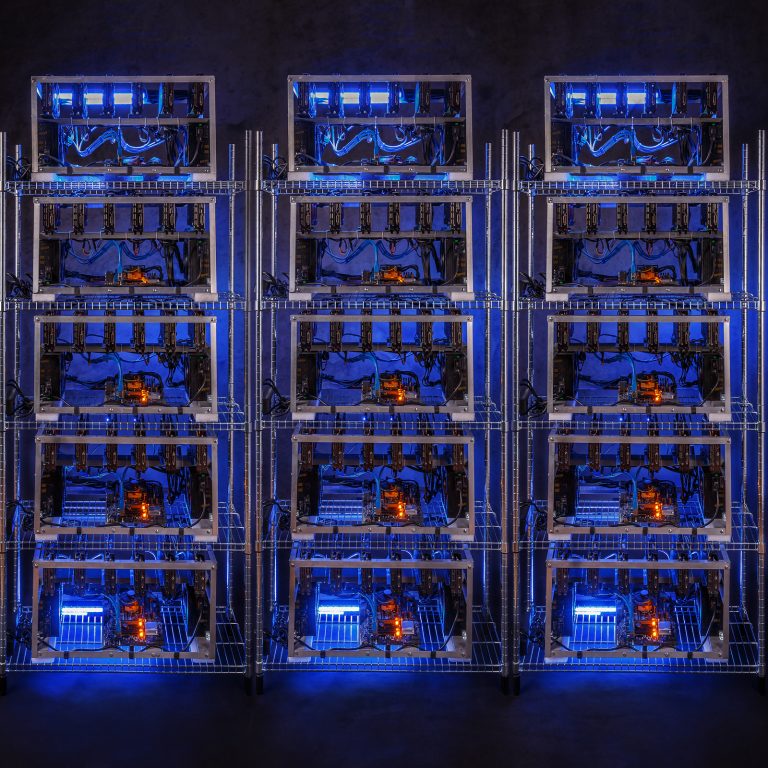
This week the publicly traded firm Mogo Finance Technology Inc. (TSX: MOGO) announced the creation of a new subsidiary called Mogo Blockchain. The fintech company’s new endeavor is a partnership with the firm DMG Blockchain Solutions in order to launch a bitcoin mining facility in British Columbia.
Also read: How to Protect Your Bitcoin and Your Privacy When Passing Through Customs
Mogo Finance Is Building a B.C. Based Bitcoin Mine With DMG Blockchain Solutions
 The fintech firm Mogo Finance Technology believes that cryptocurrencies are the future and the company’s latest venture will enter the world of bitcoin mining. Mogo Blockchain has created an alliance with the Vancouver-based company DMG, as the two firms have plans on opening a new mining operation in British Columbia. The facility will focus on bitcoin mining, hosting (mining as a service (MaaS), and blockchain platform development. Mogo says the firm will begin by leasing 1,000 bitcoin mining rigs and expects the facility to be fully operational by the end of this quarter.
“We’re excited to work with DMG given their extensive mining experience and attractive mining as a service model,” explains Greg Feller, CEO of Mogo Blockchain. “We believe that gaining exposure to mining cryptocurrency such as bitcoin is an important part of building our competency around blockchain.”
In addition, this mining venture will enable us to generate our own supply of ‘freshly minted’ bitcoin for our Mogo members once we introduce ‘Mogo Crypto’ later this quarter.
The Launch of the Mine and ‘Mogo Crypto’ Aims to Make Cryptocurrencies More Accessible to Canadian Citizens
 Mining rigs will be maintained by DMG using the firm’s MaaS model. Mogo explains the new facility is just the beginning as the Mogo Crypto launch is expected to allow Canadians to easily buy and sell bitcoin through their Mogo account. DMG explains that its alliance with a well-established fintech company such as Mogo will create more cryptocurrency accessibility for Canadian citizens.
“Mogo is well positioned to make cryptocurrencies accessible to more Canadians,” Dan Reitzik, CEO of DMG emphasizes. Additionally, Reitzik spoke with news.Bitcoin.com about how the firm initiated its mining operations located in Canada.
“In early 2016, DMG decided to explore industrial scale bitcoin mining in Canada — As industrial-scale crypto-mining is a very complicated endeavor, DMG brought on Sheldon Bennett as a partner to provide his expertise,” Reitzik explains. “Previously, Sheldon had been in charge of developing industrial-scale mining for Bitfury, the world’s second-largest bitcoin mining company.”
Reitzik adds, “As a diversified blockchain and crypto-mining company, DMG then added a blockchain software team, currently working on various supply chain platforms for clients including Element Fleet Management, and a data analytics and forensics division, now working with accounting clients, helping them understand the financial aspects of this new crypto-environment.”
DMG has two bitcoin mining facilities currently operating in Canada, and a new facility expected to be operational in the first half of 2018. As far as I’m aware, this will be the largest crypto-mining facility in Canada.
Canada has become a favorable region for cryptocurrency entrepreneurs, businesses, and mining operations lately. Recently there’s been reports of Chinese miners looking to set up shop in Canada. Meanwhile, the government has been more friendly towards the cryptocurrency economy, and the firm Evolve Funds is hoping to get approved for a bitcoin-based ETF in the country. The latest venture from Mogo and DMG shows even more companies are flocking to this area in great number.
What do you think about Mogo and DMG building a bitcoin mining facility in British Columbia? Let us know in the comments below.
Images via Shutterstock, Mogo, and DMG.
Do you agree with us that Bitcoin is the best invention since sliced bread? Thought so. That’s why we are building this online universe revolving around anything and everything Bitcoin. We have a forum. And a casino, a pool and real-time price statistics.
The post Fintech Company Mogo Plans to Launch Bitcoin Mine in British Columbia appeared first on Bitcoin News.
Chairmen of SEC and CFTC Co-Author Article on Crypto Regulations

Jay Clayton, the chairman of the United States Securities and Exchange Commission (SEC), and J. Christopher Giancarlo, the chairman of the United States Commodity Futures Trading Commission (CFTC), have co-authored an opinion piece recently published by The Wall Street Journal. The article outlines a number of perceived problems facing the cryptocurrency sphere from the perspective of market regulators, in addition to discussing whether the prevailing regulatory norms are applicable to the virtual currency economy.
Also Read: CFTC Files Against ‘My Big Coin’ for Scamming $6 Million USD
“Caution is Merited”
 The WSJ article describes distributed ledger technology (DLT) as comprising “the advancement that underpins an array of new financial products, including cryptocurrencies and digital payment services.” The officials state that “Many have identified DLT as the next great diver of economic efficiency,” adding that “some have even compared it to productivity-driving innovations such as the steam engine and personal computer.”
The officials state the cryptocurrencies were initially promoted as “a payment-facilitation alternative to traditional currencies such as the dollar and the euro.” Now, however, “their purported utility as an efficient medium of exchange” comprises “a distant secondary characteristic,” overshadowed by their current promotion and employment as “investment assets.”
The recent explosion of interest in cryptocurrencies is compared to the over-exuberant bullishness that accompanies the dot-com bubble of the nineteen nineties. The article states that “Countless companies chased the dot-com promise, yet only a fraction survived,” adding that “Fewer still provided their investors with life-changing returns.” Of cryptocurrencies, the authors assert that “Experience tells us that while some market participants may make fortunes, the risks to all investors are high,” adding that “Caution is merited.”
Officials Hope Not to Discourage “Investments in Innovation”
 Jay Clayton, Chairman of the SEC
The article states that “Earlier this month, the collective market capitalization of cryptocurrencies topped $700 billion,” with direct investment from U.S. investors comprising a “significant” share of the market cap. The officials note that “as market regulators,” their job requires that they “set and enforce rules that foster innovation while promoting market integrity and confidence.”
Their warning, the authors insist, should not be construed as “a statement against investments in innovation,” emphasizing that America’s “regulatory efforts should embrace [innovation].” It is argued, however, that a “substantial “portion of “DLT-related market activity shows little or no regard to our proven regulatory approach.” The officials claim that many platforms through which cryptocurrencies are exchanged are “based offshore,” adding that “none are registered with the Commodity Futures Trading Commission or the Securities and Exchange Commission.”
Regulatory Amendments Needed
 The article advocates that policy-makers revisit the pertinent regulatory apparatus’ imposed on business operating with cryptocurrencies. The officials assert that “Many of the internet-based cryptocurrency-trading platforms have registered as payment services and are not subject to direct oversight by the SEC or the CFTC,” as question the “effective[ness] and efficien[cy]” or the corresponding regulatory frameworks “for the digital era.”
The officials also point to a lack of clarity regarding the regulatory jurisdiction of U.S authorities, arguing that while “In some areas, federal authority to police cryptocurrencies is clear […] In other areas, […] federal authority is murkier.”
The Launch of Bitcoin Futures Expands CFTC’s Regulatory Mandate Regarding Cryptocurrencies
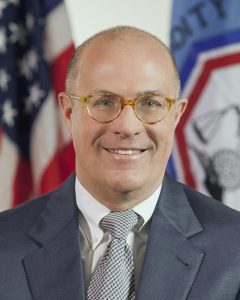 J. Christopher Giancarlo, Chairman of the CFTC
The article also discusses the recent listing of bitcoin futures products by “two of the largest CFTC-regulated exchanges,” CBOE, and CME. The authors state that “Although the exchanges are permitted to ‘self-certify’ and commence trading futures products without CFTC approval,” significant time was spent “engaging with CFTC staff” in order to develop and “implement risk-mitigation and oversight measures.” The officials assert that as a consequence, the CFTC has “gained oversight over the U.S. bitcoin futures market and access to data that can facilitate the detection and pursuit of bad actors in underlying spot markets.” The piece also states that “The SEC is devoting a significant portion of its resources to the ICO market,” emphasizing that “The SEC will vigorously pursue those who seek to evade the […] requirements of our securities laws.”
Ultimately, the officials recognize that the cryptocurrency “markets are new, evolving and international,” and as such demand a “nimble and forward-looking” regulatory response. The article concludes by conceding that “[DLT] may, in fact, be the next great disruptive and productivity-enhancing economic development,” that is “likely to be followed by many more life-changing innovations.”
What is you response to Jay Clayton and J. Christopher Giancarlo’s letter on cryptocurrencies and regulation? Share your thoughts in the comments section below!
Images courtesy of Shutterstock
At news.Bitcoin.com all comments containing links are automatically held up for moderation in the Disqus system. That means an editor has to take a look at the comment to approve it. This is due to the many, repetitive, spam and scam links people post under our articles. We do not censor any comment content based on politics or personal opinions. So, please be patient. Your comment will be published.
The post Chairmen of SEC and CFTC Co-Author Article on Crypto Regulations appeared first on Bitcoin News.
South Korean National Pension Fund Indirectly Invests In Crypto Exchanges

The South Korean National Pension Fund has been indirectly investing billions of won in cryptocurrency exchanges such as Upbit, Bithumb, and Korbit. This was revealed amid the country’s regulators continually releasing regulatory measures for cryptocurrencies.
Also read: South Korean Officials Caught Trading On Insider Knowledge of Crypto Regulations
Investments In Crypto Exchanges
 Amid South Korean regulators pushing to regulate the country’s cryptocurrency market and the Ministry of Justice drafting a bill to ban crypto trading, local media report that the country’s National Pension Service (NPS) has been indirectly investing in cryptocurrency exchanges.
South Korea’s NPS is the world’s third-largest pension fund. It was established in 1987 to “help secure the retirement benefits of Korean citizens with income security, thereby promoting national welfare in the case of retirement, disability or death,” its website states.
Lee Chan-yeol, an NPS officer, was quoted by News1 on Thursday:
The National Pension Fund invested 2.6 billion won in four cryptocurrency exchanges through two venture capital funds.
The first fund invests in the operators of Upbit and Coinplug, Newsis detailed. The second fund invests in the operators of Korbit and Bithumb.
Government’s Warning
 The Korean government has also been discouraging small and medium-sized funds from investing in companies operating cryptocurrency exchanges. According to Yonhap, there are approximately 700 medium-sized funds registered in the country, but only 28 of them invest in cryptocurrency exchange operators. These funds are operated by 16 venture capital firms.
The Ministry of Strategy and Finance issued an official notice last week confirming that “The investment amount of 41.2 billion won [~USD$38.7] million is the total amount invested by the 16 venture investment firms in the virtual currency market.” The ministry then warned that “It is inappropriate for the 16 investment ventures to invest in the 28 venture funds.”
The Korean National Pension Fund
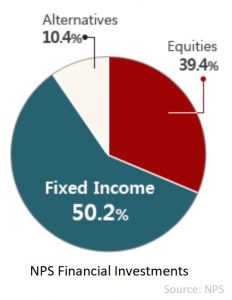 The NPS website states that the entire National Pension Fund “is valued at approximately KRW 618 trillion as of the end of October 2017.”
According to an NPS officer, many institutions invest in the same funds the Pension Fund invests in and fund managers have “an exclusive right to make investment decisions,” not the NPS.
Recently, the regulators released their cryptocurrency measures as well as anti-money laundering guidelines. They are in the process of overseeing banks converting from the current virtual account system into a real-name system which is expected to be implemented on January 30.
What do you think of the Korean National Pension Service indirectly investing in cryptocurrency exchanges? Let us know in the comments section below.
Images courtesy of Shutterstock and the NPS.
Need to calculate your bitcoin holdings? Check our tools section.
The post South Korean National Pension Fund Indirectly Invests In Crypto Exchanges appeared first on Bitcoin News.
PR: Game Machine – Exciting Time to Be an Investor in Gaming Industry
This is a paid press release, which contains forward looking statements, and should be treated as advertising or promotional material. Bitcoin.com does not endorse nor support this product/service. Bitcoin.com is not responsible for or liable for any content, accuracy or quality within the press release.
Video games industry is making a name for itself in the global market. According to ESA, in 2017 profit was more than $36 billion in US alone and $116 billion worldwide. The other booming part of economy nowadays is cryptocurrencies’ mining. The idea of combining two was developed by Game Machine project, which already has a working product and conducting Token Sale.
Game Machine client
Game Machine is a system, based on blockchain technology and smart-contracts, where players are providing their gaming PCs for mining, developers get their base for crowdfunding and inviting target audience, and investors can choose a promising project faster.
Gamers receive items for their beloved titles. For now, Game Machine client provides support for 8 games, but the library will grow in time. More than 30,000 gamers showed their interested in this concept and got their hands on a variety of skins, weapons, and items for such popular games as Dota 2, CS:GO, PUBG, WoT and more.
One of the first products of Game Machine is the client for gamers, which has a build-in miner. On the concept stage of this app, the team decided not to use Bitcoin, because of the high competition of its pools. Also, there wasn’t a good alternative currency to maximize the efficiency of the gamers computers. So the team created a system, where currencies for mining will be decided based on specific PC. For example, most of NVIDIA’s video cards are used for mining Ethereum. This analyzer is implemented on the server side. It chooses the currency for every Game Machine client. By mining, existing coins gamers receive GMC, which they simply exchange on a cool skin or item.
Also, the team was experimenting with pools. The idea to use own pool was scratched off after some closed tests. Later the miner was tested in Nanopool, and it wasn’t fast enough on showing balance for gamers, which could lead to some confusion. Suprnova pool wasn’t stable for Game Machine workers. So the team continued the search and found a good pool with PPLNS model and immediate information about workers. Game Machine is now running on 120 000 kH/s speed and about 1,200 workers at the same time without any difficulties.
Developers and investors
What’s good about Game Machine is the transparency of developed ecosystem. Everyone involved will get what they need. Developers will be able to attract investors by selling their own tokens. The audience will find their project faster and it will help to find what players are really interested in.
Investors will be able to contribute to projects without spending money on analyzing the market because Game Machine is collecting all the data and provides a huge amount of information, analytics, and interest ratings straight from gamers. The first tier will get you access to the crowdfunding platform. By investing 5 ETH you will join the investors club with discounts and sales in the system. Top-tier investors will get their hands on 10% of all tokens issued.
Token Sale
Game Machine’s token sale had already sold more than $1,300,000 in tokens. The sale will be on until January, 31. You still have a chance to become a part of the technology that will push industries forward and get a profit from it.
More details are provided on the official site: gamemachine.io
Contact Email Address
[email protected]
This is a paid press release. Readers should do their own due diligence before taking any actions related to the promoted company or any of its affiliates or services. Bitcoin.com is not responsible, directly or indirectly, for any damage or loss caused or alleged to be caused by or in connection with the use of or reliance on any content, goods or services mentioned in the press release.
The post PR: Game Machine – Exciting Time to Be an Investor in Gaming Industry appeared first on Bitcoin News.
Source: https://news.bitcoin.com/
You got a 2.36% upvote from @minnowvotes courtesy of @cryptoseeds!
You got a 1.90% upvote from @bid4joy courtesy of @cryptoseeds!