The Anthropological way: Doing fieldwork - Research (Part 2)
The Anthropological way: Doing fieldwork - Research (Part 2)
Fieldwork methodology, methods and techniques
We have already indicated that fieldwork or ethnographic research is one of the characteristic features of anthropology and that it specifically involves firsthand, direct ("face to face") contact with the people being studied. Anthropologists use a particular methodology (research strategy, including a specific approach, theoretical orientation and certain methods and techniques) to collect information or data in the field.
"Field" in anthropology has attained a much broader meaning than the original remote "tribal" village. It now refers to every place or context where there are human beings working, functioning, interacting or living. Institutional or other settings are now anthropological research sites, and the people in the different environments include: combatants in war zones, the elderly in hospices, HIV patients, firefighters, drug dealers, religious movements, athletes, tourists, factory workers, gay club members, land claimants, teenage single mothers, itinerant circus performers. Crazy though it may sound, for a number of years now in America there has been a speculative "space and extraterrestrial anthropology" preparing for future fieldwork on space stations, spacecrafts, possible settlements on the Moon, Mars and beyond, including the possibility of fieldwork with intelligent nonhuman extraterrestrials!
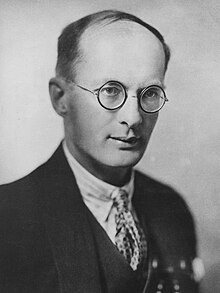
Probably the hallmark of anthropological methods is participant observation. Bronislaw Malinowski, who did fieldwork in the Trobriand Islands, is the anthropologist who first properly adopted this strategy and his work has become the classical model for others to follow. Participant observation entails a "peculiar combination of subjectivity and objectivity, adventure and work, romanticism and pragmatism". To be simultaneously a participant and an observer is a skill not easily mastered. As participant observers, we take part in community life as we study it.
Participant observation requires that the researcher immerse him - or herself in the daily lives of the people being studied. The "participation part" implies that the researcher has committed his or her thoughts, emotions, feelings, etc to the real-world fieldwork setting. The "observer part" implies that the researcher has recorded his or her observations in an objective, scientific and systematic manner. The combination of these two roles (ie participant and observer) requires a very delicate balancing act. Malinowski stressed that the anthropologist should not only live in the host group or community, but should also learn the local language. Neither observation nor participation alone will be enough, however, simply because an observer cannot know the true meaning of the actions of the others until he or she has had an opportunity to participate in them: "...participation [alone] is sufficient for, without the ability to step back and observe objectively, we are unable to grasp the meaning of our actions" (Friedl & Pfeiffer 1977:333).

"Anthropology is the most humanistic of the sciences and the most scientific of humanities"
Alfred L Kroeber (1876-1960)
Thus, one of the main objectives of participant observation consists of encountering research subjects in their everyday context. Rather than putting people into artificial or "experimental" situations, the anthropologist observes them - often by just "hanging around" for lengthy periods of time, or talks to them in their ordinary, everyday situation. Instead of interviewing them via questionnaires, anthropologists have long conversations with their research subjects, at least partly on their own terms, in order to obtain their versions of the issues at hand and their reflections about their own existence (rather than trying to formulate concise answers to specific questions).
The importance of participant observation as a method used during ethnographic fieldwork should now be clear. Anthropologists obviously have to keep a record of their impressions, observations and information gained throughout this process. Many still prefer to use a notebook, but laptop computers, audio recorders, digital and video cameras are proving to be invaluable additional or alternative ways of documenting images and data in the field. A personal diary is also a useful way to record the researcher's day-to-day experiences, feelings and perceptions - and thus often helps to contextualise the data obtained on a particular day.
Needless to say, anthropologists also use other research methods and techniques, the following will give you some idea of what these methods entail:
- In participant observation, the anthropologist speaks constantly with people whom he or she is studying and asks questions about the things they observe. In the process, the anthropologist will identity certain knowledgeable persons (specifically concerning the research topic). The anthropologist will then conduct interviews with these people, and this will include in-depth or intensive interviewing about matters relevant to the research problem.
Although anthropologists often use quite strict guidelines for selecting informants or research participants, more flexible measures are sometimes more appropriate. The obvious route to go is to opt for prominent and knowledgeable individuals: community leaders; government administrative or tribal officials; "outsiders" who through long and intensive involvement with an organisation or group, have become well-informed; and persons who have become conversant with certain areas of activity (eg politics, religion, education or food production) -so-called key informants.
Still, nobody can provide more useful information than the people concerned. The conventional anthropological inclination to go to the people at grassroots level produces the best results. The opinions of those directly involved are the most important and most useful (eg members of a faction in a conflict situation, the poor informal settlement, street children, factory workers and those in need of medical treatments or health care facilities).
- The genealogical method, as an ethnographic technique, was developed by early anthropologists in their study of the principles of kinship, descent and marriage. Anthropologists record genealogical data in order to reconstruct family history and to gain an understanding of relationships among the people they are studying. According to Kottak (1994:25): "Everyone is related to, and spends most of his or her time with, everyone else, and rules of behaviour attached to particular kin relationships are basic to everyday life". The genealogical method essentially entails questioning informants about their relatives (kin), naming all those they can remember, living or dead, and indicating the nature of the nature of the relationship ("relatedness") between them.

Genealogical diagrams (kinships diagrams or a family tree) are then drawn and, at the same time, anthropologists discover the kinship terms used by the people (father, mother, cousin, mother-in-law etc), marriage conventions and descent or succession rules.
Initially, anthropologists mainly studied preliterate communities in rural areas and, for these people, kinship was extremely important because it determined an individual's status and position. Also, succession and inheritance were according to kinship relations. For anthropologists, therefore, kinship was the key to understanding the structure and function of a community economically, politically, ritually, etc.
- Life history method. It is not unusual for anthropologists to ask an informant for an autobiography or life history. As an individual recounts the things that have shaped his or her life, he/she interprets life's events by reference too his/her sociocultural system. In the process, he or she will reveal insights into the ways he or she, and by extension, other members of the community, perceive their world. Life histories also provide data about how individuals adjust to the restraints placed on them by their sociocultural system and to the things that have happened to them. The matter of personal response is particularly important to those interested in psychological anthropology.
Disorientation and "culture shock"

We have said, several times, that the experiences of an anthropologist when he or she first arrives in the field is similar to experience of moving to a new neighbourhood or job. There is a feeling of disorientation because much is unfamiliar, the people, the environment, finding your way around and the local practices, rules, etiquette or customs. Malinowski famously wrote about his impressions when he first arrived on the Trobriand Islands in the South Pacific:
"Imagine yourself suddenly set down surrounded by all your gear, alone on a tropical beach close to a native village, while the launch or dinghy which has brought you sails away out of sight"
You can easily "translate" this into an experience you have had:
You stepped off the plane in a foreign country, collected your luggage and then faced the unknown
or
Your parents dropped you off at your new school with your school case and waved goodbye. You turned around and saw a strange building and other children whom you did not know.

Anthropologists have also called this feeling disorientation culture shock, a psychological condition of uncertainty and stress. This is what anthropologists often experience in the initial stages of their fieldwork and this is as a result of strange circumstances and people and things that, at first, they do not understand. Even experienced anthropologists endure culture shock during their first few days in the research field. The anthropologist is, in fact, a stranger who has to adapt to another way of doing things, and the contrast between the known and the unknown can sometimes be very big indeed. You are often far away from familiar people, you cannot speak or understand the language at well and, this, in itself, makes communication difficult. Nor do you know how to behave in any set of circumstances.
Whether or not he or she can deal with culture shock may well depend on the anthropologist's personality. Some have been known to hastily return home. However, once the anthropologist has adapted him or herself to unfamiliar circumstances he/she will reap the reward, not in terms of money or material reward, but in terms of an "investment" in people. People will interrupt essential work in the fields or excuse themselves from important meetings in order to keep an appointment with you. This is why having an interpreter, at least initially, is so important - it is the interpreter who will establish communication between the anthropologist and his or her research subjects. Ideally, however, it is best to learn the language of the people he or she is studying. In this way many doors are often involuntarily opened to the anthropologist. Bear in mind that there might be more subtle nuances of communication, such as body language, or "corporate speak" that the anthropologist must be sensitive to.
End of Part 2
Images are linked to their sources in their description and references are stated within the text.
Thank you for reading
Thank you @foundation for this amazing SteemSTEM gif

This is exactly what quantum field theory is :D
Joke aside, field works is really when you take the time to learn from the environment (i.e. the field?) in a way that is as much un-biased as possible, IMO. There you learn, there you meet, and you discover :)
Hi @lemouth!!!!!
I can't agree more:)
I was not able to upvote this one. huhuh! Anyway, I learned a lot from you again. I totally agree with you that during fieldwork, people experience disorientation. In our field, we also call it culture shock. I could have taken anthropology and sociology instead because contrary to what I used to believe, it is indeed interesting. Yay!
Hi @gailbelga, I am truly honoured that I was able to spark an interest and change your thoughts regarding the subject.
Thank you for the comment and support!!!
You are always welcome @zest. 😍
Very interesting thank you! I took a course in anthropology but you write a lot nicer and easier to read. It is a nice subject with a fascinating history to it when we go back to the colonial period.
Hi @samve!!!
Thank you so much for that compliment!!!!
You made my day!!!!
Every day your publications are fascinating. You really are an excellent blogger, I do not know much about anthropology but I have a lot of fun reading your posts, congratulations, you are a great friend @zest :D
My dear friend @carloserp-2000!!!!!
This really means a lot to me, Thank you so much:)
I admire people like you, if via the Internet is an excellent human being, meet him in person you should be much better @zest
bravo
Thank you