Difference between bitcoin oil and gold

It is easy to compare bitcoin oil and gold extraction activities. All of these beings - the abstract meaning for Bitcoin - are the sources discovered. It is also seen that these assets have a rolling price history and are destructive in their time.
Bitcoin has different in terms of oil and gold supply
There are significant differences between bitcoin oil and gold, especially in terms of seeing what the supply is after the price increase. The Twitter user @WallSt_Dropout has created a series of impressive charts to help show these differences perfectly.
When we first examine the petroleum graph, it appears that there is a significant intervention in oil production when the price of oil begins to rise. The reason for this is that the price increase leads to an extra incentive to invest in infrastructure features.
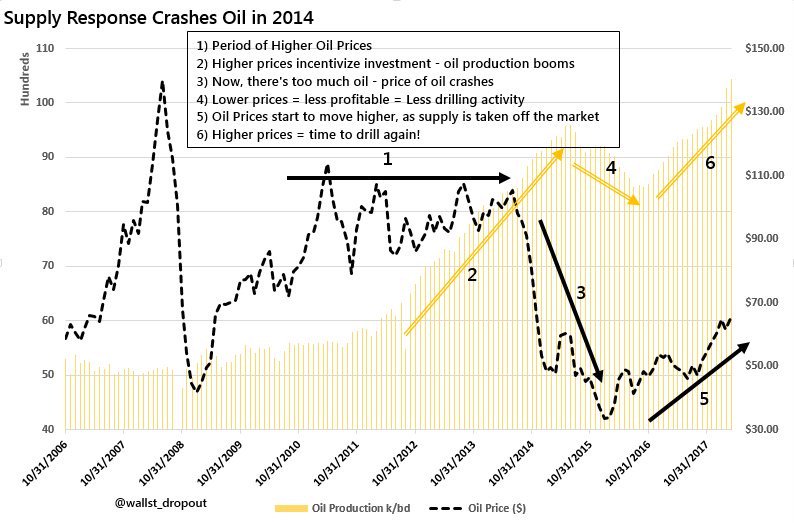
As oil production begins to meet demand, the price of oil decreases. After the price drop, removing the oil is not as profitable as the old one. This makes production even easier. As the oil prices begin to recover - thanks to restrictions from the last cycle - the extraction of the oil starts again and more oil production takes place.
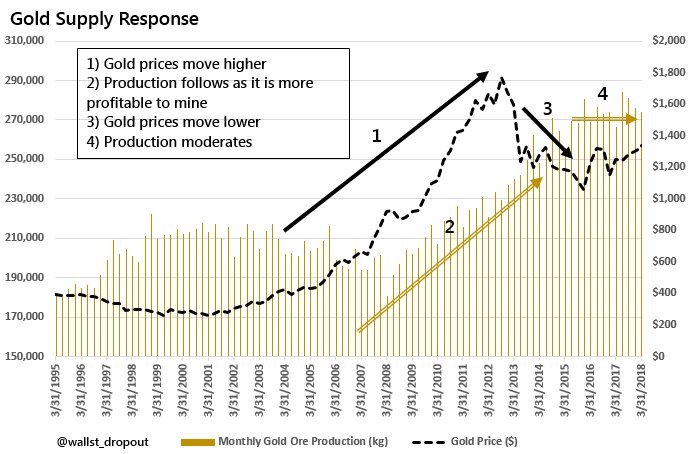
The same applies to gold. As of 2008, monthly gold ore production is also lower due to the continuous low prices in the previous decade. As the market forces begin to raise the gold price, the amount of production following the prices also increases. Gold prices are at bottom levels in 2012, while ore production levels are bottoming out.
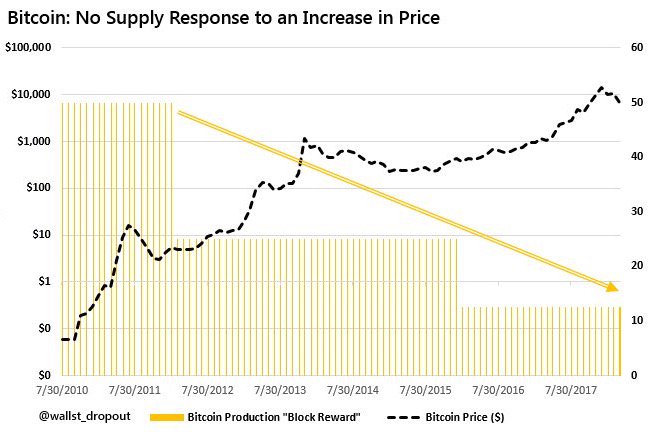
If we look at Bitcoin's situation, we are facing the opposite. In 2010, block prizes for production are higher, Bitcoin prices are quite low. As prices go up, mining awards are down. In this case, we see that the cyclic relationship between oil and underlying supply and demand is not in Bitcoin.
Bitcoin dynamics work differently than other underground sources
The current situation is a fundamental function of how Bitcoin works. The Bitcoin block mining prize drops every 210,000 blotches. At present, the coin award is set at 12.5 coins. According to Bitcoinblockhalf.com, the prize will be reduced to 6.25 coins by May 2020.
It's a matter of curiosity how the miners will earn money after the end of their block rewards in 2140. While gold miners do not control the purchase or sale of the product, Bitcoin miners collect transaction fees for their completed business approval. Thus, they will be the equivalent of an oil platform that requires a small fee for the fuel that individuals use in their cars.
The current situation is an essential part of the system. Think of the miners as a constant part of the land every 10 minutes. People want to propose a transaction to a piece of this land. The sale of a tiny piece of that land protects miners' activities.
While bitcoin inflation is steadily declining, the need for transaction fees will continue in the future to encourage miners to continue their operations.
Oil and gold are assets that have no "real" end date. ie there are still resources lying under the ground. Despite the fears of petrol and gold ceilings, companies are able to identify the sources of resources with the help of technology and make it more accurate. Along with this, it is known how much Bitcoin can be removed. This turns Bitcoin mining into a very different proposition than the mining of other real world resources.