Using "Problem based Approach" in solving Mathematics - Sample Question & Solution Included
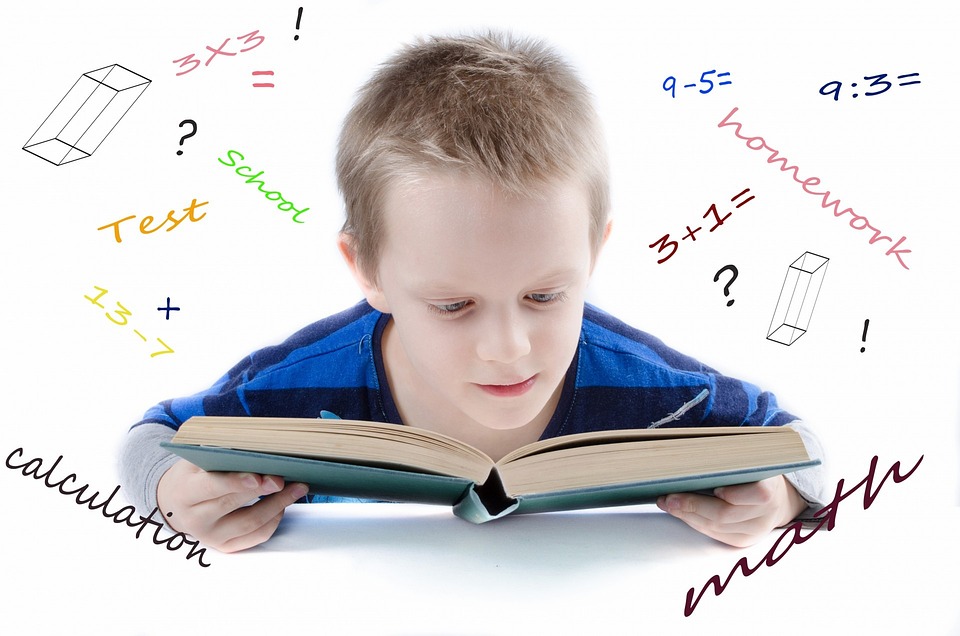
Hello teachers, students, and researchers, I am here again today, Wednesday, 2nd April, 2020, to share this guide on how to use Problem based Approach" in solving Mathematics.
Teaching in today's mixed-ability classroom can be a challenge. These days, it's common to find a wide range of abilities in the one classroom — from students struggling to grasp new concepts, to those who are way ahead of their peers from day one.
Mathematics’ teachers have a nuanced job. They must teach the building blocks of Mathematics, such as number sense and operational skills, as well as boost students' ability to think about problems. Additionally, Mathematics’ teachers must motivate students to try and teach them to persevere when problems are challenging.
An educator needs to use appropriate teaching styles when teaching elementary students. Many times teachers rely on demonstration to help their students comprehend material. One of the most common ways that teachers accomplish this is by showing, instead of just telling, by way of computer-based displays and experiments.
Problem based learning is a model which centered on students, develops active and motivated learning, problem solving skills and broad field knowledge, and based on the deep understanding and problem solving.
The suitability of the problem method for the teaching of mathematics is based on the fact that Mathematics is a subject of problems.
A typically representation of the set of procedure towards using the problem-solving method in teaching mathematics is explained below. Similar to the project and inductive-deductive method, teaching using the problem method involves the following steps:
- Recognising the problem or sensing the problem.
- Interpreting, defining and delimiting the problem.
- Gathering data in a systematic manner.
- Organising and evaluating the data.
- Formulating tentative solutions.
- Arriving at the true or correct solution.
- Verifying the results.
A Case Study
Let us look at a typical scenario which the problem method can be used as a method of instruction in mathematics.
Problem
To find out the number of tiles that can be used for covering the floor of the Classroom.
The Solution
Step 1: The formula should be developed by the student from their previous knowledge of Geometry and Mensuration.

Step 2: The area of the tiles should be calculated by collecting data from the recommended sample.

Step 3: Measurement of the classroom floor should be carried out and its area calculated by taking cognizance of the developed formula.

Step 4: Finally, the number of tiles needed can be found by the quotient of the two formula.
From the above, the teacher has been able to present the knowledge to be learned in the form of a problem. When the problems are presented naturally and practically the students would be interested in solving them.
Advantages of Problem Method
The merits of using the problem method in teaching mathematics as follows:
- Problem-solving in schools prepares the pupils to solve the problems of life.
- The method involves reflective thinking. Therefore it stimulates thinking, reasoning and critical judgment in the students.
- The pupils learn by problem-solving which is the method of learning by self-effort.
- It develops qualities of initiative and self-dependence in the students as they are to face the problematic situations themselves.
- It is a stimulating method. The problem is a challenge. Once it is properly recognised, it acts as a great motivating force and directs the students’ attention and activity.
Disadvantages of Problem Method
The limitations of using the problem method in teaching mathematics as follows:
- Its limitations are large due to its ineffective use. There are otherwise, no limitations inherent in it. ‘’if the teacher is not able to think reflectively, does not have the attitude of critical enquiry; or when the classroom situation is dominated by him, and the atmosphere is that of recitation and of readymade answers, the problem-solving method is going to fail.’’
- It is difficult to organise the contents according to the requirements of this method. It is difficult to frame really good problems and to introduce them at every step’
- It is time consuming method. The progress of the students is bound to be slow.
- All the topics and the subject areas cannot be covered by this method.
- The method does not suit the students of lower classes. They do not possess enough background for scientific approach to problems.
Conclusion
Having sequentially discussed the problem method as an instructional method and its possible application in teaching mathematics, it can be concluded that using the problem method helps students to be involved in the learning process. The scenario created for their participation opens up the students to see a realtime application of the subject taught other than an imaginary picture created if taught using the lecture method. Moreover, this methods would help to develop interest especially for students who feel they lack the cognitive ability to work with formulae and numbers.
References
- Aina, J. K. and Keith L. (2015). Teaching method in science education: the need for a paradigm shift to peer instruction (pi) in Nigerian schools. International Journal of Academic Research and Reflection 3 (6): 6-15.
- Eng, C.S. (2001). Problem Based Learning-Educational Tool or Philosophy. University of Newcastle, Australia. [Online] Available: http://edweb.sdsu.edu/clrit/learning tree/PBL/PBLadvantages.html (April 10, 2009).
- Gallagher, S. A., Stephien, W. J., Sher, B. T. and Workman, D. (1999). Implementing Problem-Based Learning in Science Classrooms. School Science and Mathematics, 95(3), 136-146.
- Sidhu, U. S. (2006). Methods of Teaching In: The teaching of Mathematics. India: Sterling Publishers Private Limited.
- Tick, A. (2007). Application of Problem-Based Learning in classrooms activities and multimedia. 5th Slovakian Hungarian Joint Symposium on Applied Machine Intelligence and Informatics. [Online] Available: http://bmf.hu/conferences/sami2007/36_Andrea.pdf (April 23, 2009),
- Wilson, P.S. (1993). Research Ideas for the Classroom: High School Mathematics. National Council for Teachers of Mathematics, Research Interpretation Projects, Vol. 3, Macmillan: New York, USA. 154-158.
- Yuzhi, W. (2003). Using Problem Based Learning and Teaching Analytical Chemistry. The China Papers, July, 28-33.
- Image source - Pixabay
I am your Research Assistant @Uyobong. We hope to meet again tomorrow for some helpful educational research tips. Feel free to use the comment section of this post to ask questions so we can interact the more.