Gadgets – TechCrunch
Xiaomi is bringing its smart home devices to the US — but still no phones yet
Xiaomi, the Chinese smartphone maker that’s looking to raise as much as $10 billion in a Hong Kong IPO, is continuing to grow its presence in the American market after it announced plans to bring its smart home products to the U.S..
The company is best known for its well-priced and quality smartphones, but Xiaomi offers hundreds of other products which range from battery chargers to smart lights, air filter units and even Segway. On the sidelines of Google I/O, the company quietly made a fairly significant double announcement: not only will it bring its smart home products to the U.S., but it is adding support for Google Assistant, too.
The first products heading Stateside include the Mi Bedside Lamp, Mi LED Smart Bulb and Mi Smart Plug, Xiaomi’s head of international Wan Xiang said, but you can expect plenty more to follow. Typically, Xiaomi sells to consumers in the U.S. via Amazon and also its Mi.com local store, so keep an eye out there.
Xiaomi just announced during #io8 that our smart home products will work with the Google Assistant. The initial selection of compatible products includes Mi Bedside Lamp, Mi LED Smart Bulb and Mi Smart Plug, which will be coming to the U.S soon! https://t.co/f65lj2jNej pic.twitter.com/nEXMiIyyZ8
— Wang Xiang (@XiangW_) May 10, 2018
Smartphones, however, are a different question.
Xiaomi CEO Lei Jun — who stands to become China’s richest man thanks to the IPO — previously said the company is looking to bring its signature phones to the U.S. by early 2019 at the latest.
There’s no mention of that in Xiaomi’s IPO prospectus, which instead talks of plans to move into more parts of Europe and double down on Russia and Southeast Asia. Indeed, earlier this week, Xiaomi announced plans to expand beyond Spain and into France and Italy in Europe, while it has also inked a carrier deal with Hutchinson that will go beyond those markets into the UK and other places.
You can expect that it will take its time in the U.S., particularly given the concerns around Chinese OEMs like Huawei — which has been blacklisted by carriers — and ZTE, which has had its telecom equipment business clamped down on by the U.S. government.
Researchers create a real cloaking device
Researcher Amanda D. Hanford at Pennsylvania State University has created a real cloaking device that can route sound waves around an object, making it invisible to some sensing techniques.
From the report:
Hanford and her team set out to engineer a metamaterial that can allow the sound waves to bend around the object as if it were not there. Metamaterials commonly exhibit extraordinary properties not found in nature, like negative density. To work, the unit cell — the smallest component of the metamaterial — must be smaller than the acoustic wavelength in the study.
Hanford created an acoustic metamaterial that deflected sound waves under water, a difficult feat. In testing she and the team were able to place the material in water and measure sound waves pointed at it. The resulting echoes in the water suggested that the sound waves did not bounce off or around the material. This means the new material would be invisible to sonar.
Obviously this technology is still in its early stages and the material does not make the objects invisible but just very hard to detect in underwater situations. However, the fact ship captains could soon yell “Activate the cloaking device” as evil, laser-toting dolphins appear on the horizon should give everyone a bit of cheer.
Tech devices that make for great last-minute gifts for anyone
        </div>

    <div class="contributor-byline__bio">
    Makula Dunbar is a writer with <a href="https://thewirecutter.com/">Wirecutter</a>.     </div>

</div>
Editor’s note: This post was done in partnership with Wirecutter . When readers choose to buy Wirecutter’s independently chosen editorial picks, it may earn affiliate commissions that support its work.
 It should be easy to give a gift. But it can be hard trying to choose which gift to give. That’s especially true with technology, where products tend to be more functional than emotional. Here’s what matters most: finding a present that connects to the recipient, creates a sense of enjoyment, and that they’re actually going to use. Here are five tech gifts that will appeal to almost anyone.
Jaybird X3 Wireless Sport Earbuds
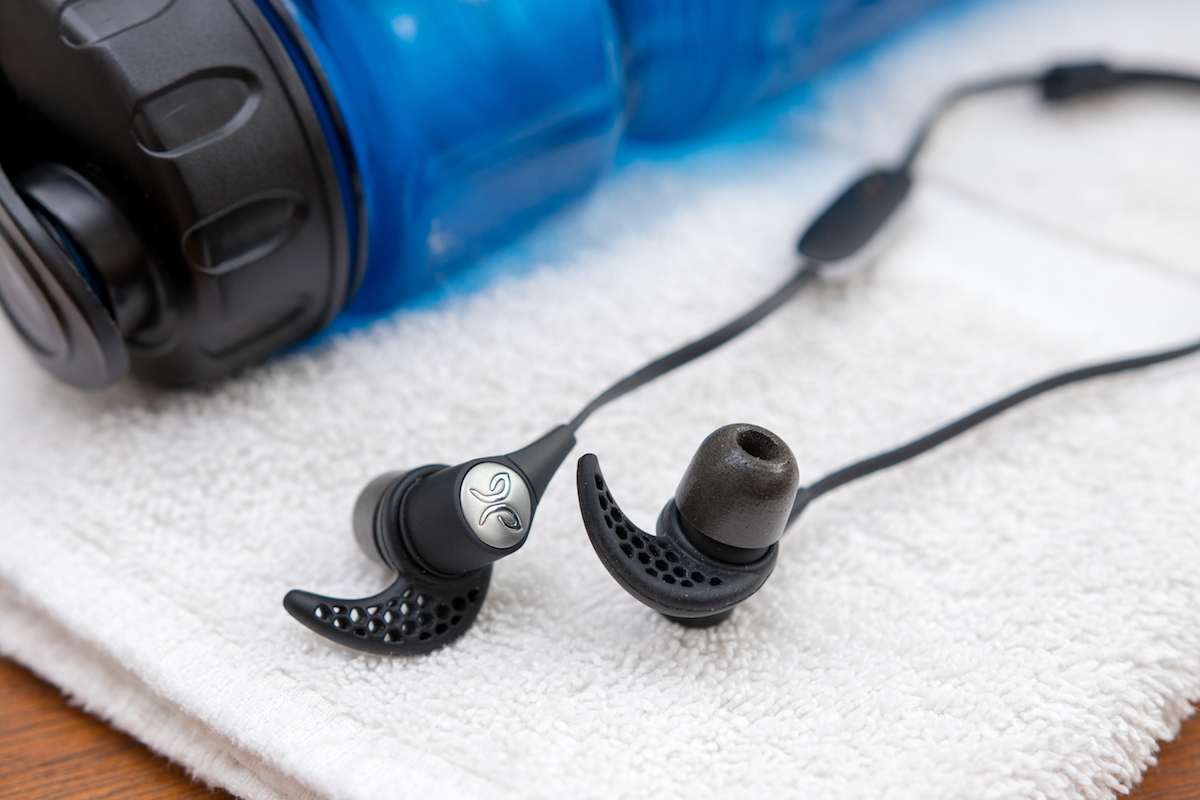
The Jaybird X3 earbuds are designed for working out, but their design and great audio makes them perfect for anyone on the go. The X3’s interchangeable tips and fins offer a highly customizable, comfortable fit. Overall sound is high quality out of the box, but we like that the companion Jaybird app allows a tailored listening experience. Eight hours of playback time means you’ll be set throughout multiple workouts or a full work day.
Amazon Echo (2nd generation) Voice-Controlled Speaker
While there’s more than enough buzz surrounding voice-controlled speakers, they’re not yet considered a standard home item. But we think they’re helpful, and we know that a lot of folks find them incredibly useful for ordering food, listening to audiobooks, streaming music, or controlling their appliances and lighting. Our favorite is the Amazon Echo (2nd generation), which does more (and does it better) than any other current model. It supports a huge list of smart-home devices—including thermostats, light bulbs, and vacuums, and it has a set of skills, including offering custom weather, news and calendar alerts. (Note: If you’re giving one of these devices as a gift, make sure the recipient’s preferred music service is supported; Amazon’s devices, for example, work with its own Prime Music service, as well as Spotify, but not with Apple Music.)
Jackery Bolt USB Battery
A convenient device (which at times doubles as a lifesaver) is a gift that anyone would consider a necessity. We researched more than 300 USB power banks and battery packs and tested 40, naming the Jackery Bolt as our top pick. The Jackery Bolt is made out of aluminum and is the perfect size for carrying around in your bag or pocket every day. It has two connector cables (one Lightning and one MicroUSB), and its 6000 mAh battery has enough power to charge a medium-sized smartphone twice.
Nixplay Seed Digital Photo Frame
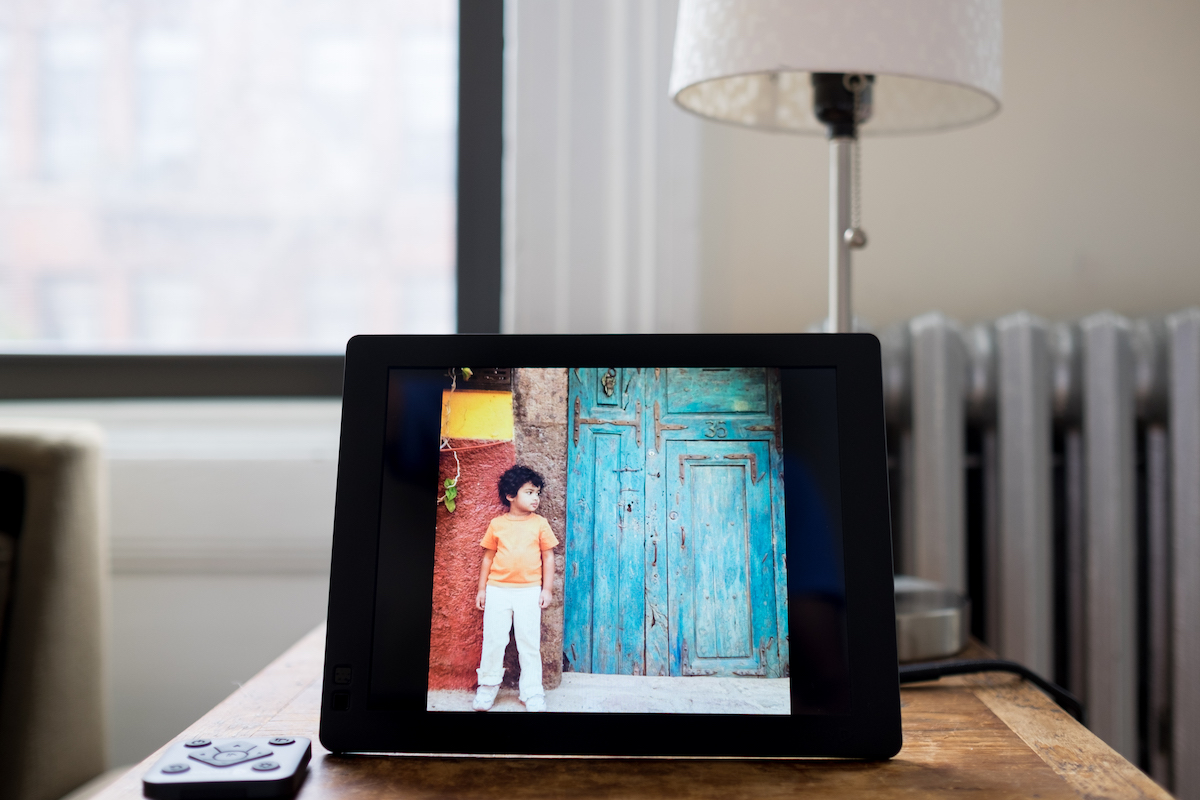
The Nixplay Seed digital photo frame is perfect way to keep faraway friends and family members in sight. Since it’s Wi-Fi-enabled, you can be anywhere and use social media platforms, cloud storage, or your smartphone to upload pictures. It’s a great gift because new and old moments can be shared anytime, giving viewers more reasons to touch base with you. It has a high-resolution IPS display that can show images in landscape or portrait orientation. The photo frame’s remote and sensor—which turns the device off when no one’s in the room — lets you choose what you want to see at your convenience. Multiple people can create photo playlists through the Nixplay website, or add pictures to be shown by sending them through email. With 8GB of storage it has the capacity to hold roughly 25,000 smartphone photos.
GoPro Hero5 Black Action Camera
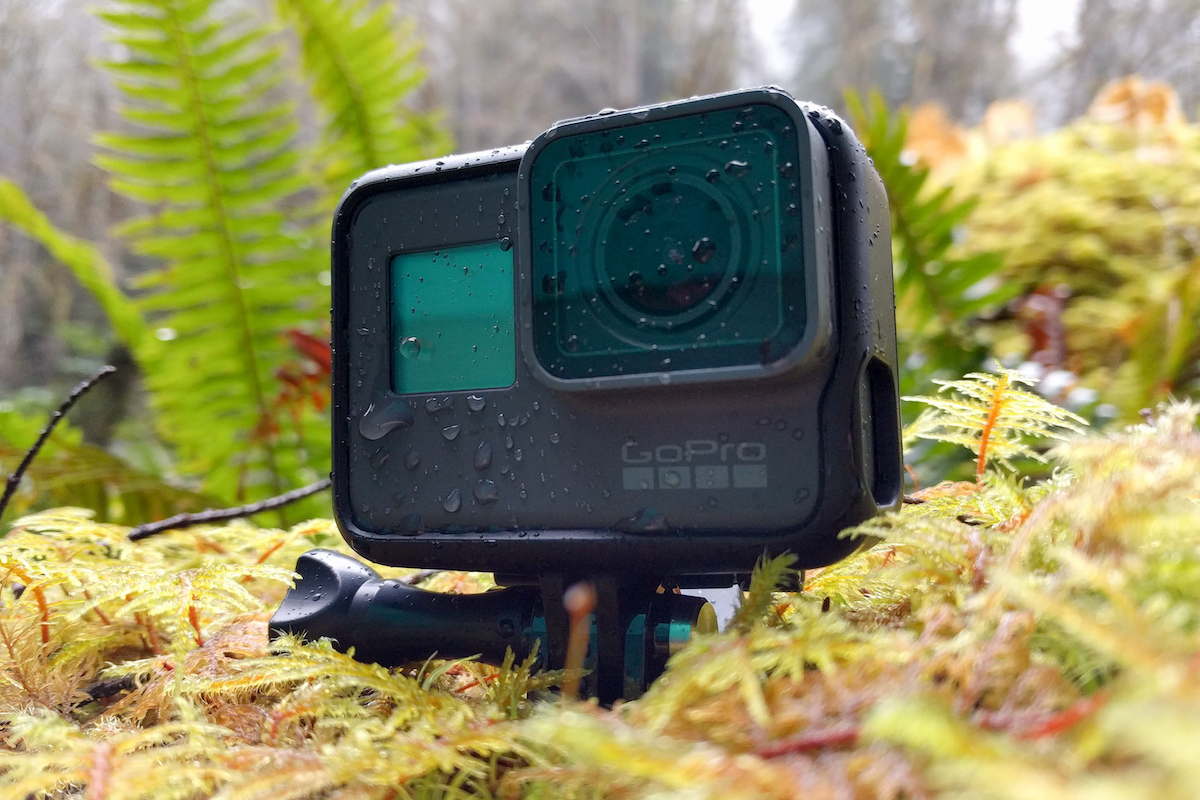
The GoPro Hero5 Black is our top pick for action cameras because it can be used for everyday filming, capturing memories during travel adventures, and is great in environments that aren’t suitable for larger, pricier camera equipment. It doesn’t have a clunky case, but it’s still waterproof. For those who usually place tech integration at the top of their gear list, the GoPro Hero5 Black also has a touchscreen interface and voice-control capabilities. During testing we found its footage to be crisp and clear with accurate color in addition to sound quality that’s worth keeping in professional edits.
Garmin Vivosport Fitness Tracker
If you’re looking for a way to jumpstart your exercise routine and you haven’t picked up a fitness tracker, now’s the time. We’ve tested 23 fitness trackers over the past three years and think the Garmin Vivosport is the best option. Its built-in GPS, long-lasting battery life and color display set it apart from others. In addition to monitoring your workouts (including strength-training reps), it helps keep tabs on your sleep and stress levels, and is Bluetooth-enabled for IOS and Android integration with streaming music and notifications.
This guide may have been updated by Wirecutter.
Note from Wirecutter: When readers choose to buy our independently chosen editorial picks, we may earn affiliate commissions that support our work.
Review: Huawei’s P20 Pro is a shiny phone with a strong personality
It’s been a month since Huawei unveiled its latest flagship device. I’ve played with this phone for a few weeks and it’s one of the most interesting Android phones currently available.
The P20 Pro is a solid successor to the P10 and a good alternative to other flagship phones, such as the iPhone X and Samsung Galaxy S9.
But it isn’t the perfect phone either. Some features are missing for no apparent reason. Some of Huawei’s choices are also questionable.
Looking for the perfect Android phone
A few years ago, many Android phones paled in comparison with the latest iPhone. Most of them were made out of plastic. And Android was simply too clunky back then.
2018 is a completely different story as you have a lot of options. Maybe you like Samsung devices or the pure Android experience of the Pixel 2. And maybe you’ve been looking at Huawei devices from afar. But if you live in the U.S., you won’t be able to buy the P20 Pro any time soon.
Let’s start with the overall design of the phone. It features a gigantic 6.1-inch OLED display with a now familiar notch at the top. It’s not as prominent as the one in the iPhone X, but it’s clear that Apple has started the next trend in smartphone design.
The frame of the design is made out of polished aluminium. It’s shiny and looks like stainless steel — but it’s lighter than steel. It feels good in your hand and is a great indication of what an iPhone X Plus could be.
The glass back comes in multiple colors. My review device had the twilight back. It’s a nice gradient from purple to blue that makes the P20 Pro stand out from the crowd. It’s much more distinctive than unified (boring) colors.
You can also use the P20 Pro as a portable mirror to fix your makeup or your hair when you’re on the subway. But the back of the device is so shiny that it was covered in fingerprints most of the time. That’s increasingly the case when you have a smartphone with a glass back.
Below the display, you’ll find a good old fingerprint sensor. In my experience it works well and I like having it on the front of the device when my phone is resting on a table. Unfortunately, it makes the phone quite tall overall.
[gallery ids="1612520,1612524,1612525,1612527"]Why stop at two when you can have three cameras
Everybody laughed when smartphone manufacturers started putting two camera sensors at the back of their devices. And yet, many people upgrade their phone to get a better camera. Some people even choose their next phone based on the camera exclusively.
And Huawei went a bit crazy on this front as the company integrated three cameras at the back of the device. There’s a 40 megapixels lens combined with a 20 megapixels monochrome lens and an 8 megapixels telephoto lens. And the phone supports super slow-motion videos at 960 frames per second.
On paper, it sounds like a bit too much. But it’s true that those three cameras are the most important and remarkable feature of the P20 Pro.
I used both an iPhone X and the P20 Pro on my last vacation to Cambodia. And here’s a gallery of some sample photos:
[gallery ids="1636444,1636438,1636443,1636442,1636436"]Let’s be honest, I’m not a great photographer. So I wanted to use the P20 Pro in the most normal use case. The P20 Pro has so many options and manual triggers that it feels a bit overwhelming for a normal user. But Huawei keeps saying that the P20 Pro is smart and can automatically capture the best shot for you.
If you use the normal photo mode, the camera tries to detect the content of the photo and adjust the settings automatically. For instance, if you’re shooting a portrait of a person, the P20 Pro automatically switches to Portrait mode. If you’re shooting at night, the phone will take a night mode photo by capturing multiple under- and overexposed photos and recompositioning the scene.
In my experience, the camera performed extremely well. It was quite hard to get a blurry, unfocused shot. But it was also something completely different from the iPhone X camera.
Colors are oversaturated in most cases. It looks too bright, too shiny and quite far from reality. And that wasn’t just the case on the smartphone itself (by default, the color profile of the display is quite saturated too). It was particularly true with nature shots. And I prefer the more natural tone of iPhone X photos.

When it comes to night photos, the P20 Pro is the best performing smartphone I’ve used. It performed incredibly well and it’s quite impressive that you can shoot these photos with a smartphone.

You can feel the strong personality of the P20 Pro when you’re taking selfies too. The camera app has a built-in beautifying effect that makes you look better. It is enabled by default, and you can’t disable it completely. Even when you set it to 0, it’ll make your skin smoother.

Overall, I’m impressed with the P20 Pro camera. But that doesn’t mean I like it better than the iPhone X. In some ways, it feels too complicated to get the perfect shot. In other ways, it corrects photos with software features that make them look a bit fake.
Many people will love the P20 Pro camera. It just depends on what you’re looking for.
Fine prints
Let’s go through some miscellaneous items. The P20 Pro doesn’t feature wireless charging. While it’s not a dealbreaker, it’s hard to go back to plugging a cable if you were already using wireless charging.
The system-on-a-chip is a Kirin 970 made by Huawei. Instead of boring you with benchmarks, let’s just say that it was perfectly fine and I didn’t feel limited at any moment. The P20 Pro is on par with other flagship Android devices. But it was particularly well optimized for power consumption. Battery life on the P20 Pro was very good.
The P20 Pro doesn’t have a microSD slot, but comes with 128GB of internal storage by default. There’s a single USB Type-C port (no headphone jack) and you’ll find both USB Type-C earbuds and a USB Type-C to headphone jack adapter.
My device had two SIM slots, but be careful if you plan on buying the P20 Pro. Huawei said that some versions of the device will only have one SIM slot.
When it comes to software, the P20 Pro runs Android 8.1 with Huawei’s EMUI custom skin. I’m not a fan of EMUI as the company regularly pushes you to create a Huawei account. The company has also developed its own version of many of Google’s apps.
It can be confusing if you’re just looking for Google’s own apps. But this is understandable as all Google services are still blocked in China. Chinese users need Huawei’s alternatives.
Overall, I was pleasantly surprised by the P20 Pro. It ticks all the right boxes to become a strong Samsung Galaxy S9 contender.
But more importantly, Huawei didn’t just build a safe phone. The P20 Pro has a strong personality and the company made some polarizing choices. You can see it across the board, from the back of the device to the beautifying effect when you’re taking selfies.
Huawei has been using the camera as the main element of its advertising campaign for the P20 Pro. The company is right to brag about its camera as it performs incredibly well. But software correction and saturated colors sometimes go too far, depending on your taste.
For years, most people looked at the new Samsung Galaxy S phone and the new iPhone to see what’s next in the smartphone world. But Huawei is now also pushing the needle forward with this phone.

iOS will soon disable USB connection if left locked for a week
In a move seemingly designed specifically to frustrate law enforcement, Apple is adding a security feature to iOS that totally disables data being sent over USB if the device isn’t unlocked for a period of 7 days. This spoils many methods for exploiting that connection to coax information out of the device without the user’s consent.
The feature, called USB Restricted Mode, was first noticed by Elcomsoft researchers looking through the iOS 11.4 code. It disables USB data (it will still charge) if the phone is left locked for a week, re-enabling it if it’s unlocked normally.
Normally when an iPhone is plugged into another device, whether it’s the owner’s computer or another, there is an interchange of data where the phone and computer figure out if they recognize each other, if they’re authorized to send or back up data, and so on. This connection can be taken advantage of if the computer being connected to is attempting to break into the phone.
USB Restricted Mode is likely a response to the fact that iPhones seized by law enforcement or by malicious actors like thieves essentially will sit and wait patiently for this kind of software exploit to be applied to them. If an officer collects a phone during a case, but there are no known ways to force open the version of iOS it’s running, no problem: just stick it in evidence and wait until some security contractor sells the department a 0-day.
But what if, a week after that phone was taken, it shut down its own Lightning port’s ability to send or receive data or even recognize it’s connected to a computer? That would prevent the law from ever having the opportunity to attempt to break into the device unless they move with a quickness.
On the other hand, had its owner simply left the phone at home while on vacation, they could pick it up, put in their PIN and it’s like nothing ever happened. Like the very best security measures, adversaries will curse its name while users may not even know it exists. Really, this is one of those security features that seems obvious in retrospect and I would not be surprised if other phone makers copy it in short order.
Had this feature been in place a couple of years ago, it would have prevented that entire drama with the FBI. It milked its ongoing inability to access a target phone for months, reportedly concealing its own capabilities all the while, likely to make it a political issue and manipulate lawmakers into compelling Apple to help. That kind of grandstanding doesn’t work so well on a seven-day deadline.
It’s not a perfect solution, of course, but there are no perfect solutions in security. This may simply force all iPhone-related investigations to get high priority in courts, so that existing exploits can be applied legally within the seven-day limit (and, presumably, every few days thereafter). All the same, it should be a powerful barrier against the kind of eventual, potential access through undocumented exploits from third parties that seems to threaten even the latest models and OS versions.
Watch Google I/O keynote live right here
How did you find Microsoft Build yesterday? We don’t really have time for your answer because Google I/O is already here! Google is kicking off its annual developer conference today. As usual, there will be a consumer keynote with major new products in the morning, and a developer-centric keynote in the afternoon.
The conference starts at 10 AM Pacific Time (1 PM on the East Cost, 6 PM in London, 7 PM in Paris) and you can watch the live stream right here on this page. The developer keynote will be at 12:45 PM Pacific Time.
Rumor has it that Google is about to share more details about Android P, the next major release of its Android platform. But you can also expect some Google Assistant and Google Home news, some virtual reality news and maybe even some Wear OS news. We have a team on the ground ready to cover the event, so don’t forget to read TechCrunch to get our take on today’s news.

Source: https://techcrunch.com/
This user is on the @buildawhale blacklist for one or more of the following reasons:
You got a 3.04% upvote from @upmewhale courtesy of @tokenguy!
Earn 100% earning payout by delegating SP to @upmewhale. Visit http://www.upmewhale.com for details!