ALL REFERENCE TO CANARIES # 1
By Serinology is understood the science that studies the Canaries and the different species of birds of the genus Serinus, while the Canariculture is the branch of Serinology that deals with the standards of breeding practices of these birds in captivity (caged) . However, for Canaries to enjoy optimal living conditions, it is necessary that the Canaricultor knows the most modern methods of breeding in relation to the rational character of the cages, the health of the premises, food, treatment of eventual pathological states (disease of these birds).

All the canaries that are distributed all over the world are descendants of the wild canary (Serinus canarius), it still lives in the wild in the Canary Islands, in the Azores and in Madera. In 1493 the Spaniards occupied the Canary Islands, they were attracted by the numerous flocks of birds that populated then. Although its original color is green with gray, it was not striking. If they noticed their singing qualities of this cheerful little bird that the Spaniards baptized with the name of Canario, taken from the name of the islands in which they lived. These singing qualities aroused the curiosity and enthusiasm of the Spaniards, as well as verifying how reliable and sociable they were. Taking advantage of these characteristics to capture them, they also discovered the ease with which they adapted to live in captivity.
In a short time the settlers began a prosperous trade of songbirds, many of these copies arriving in the homes of the Spanish aristocracy and they began to export to other nations once they observed the ease with which they reproduced in captivity, of course they were exported male specimens for their singing qualities.
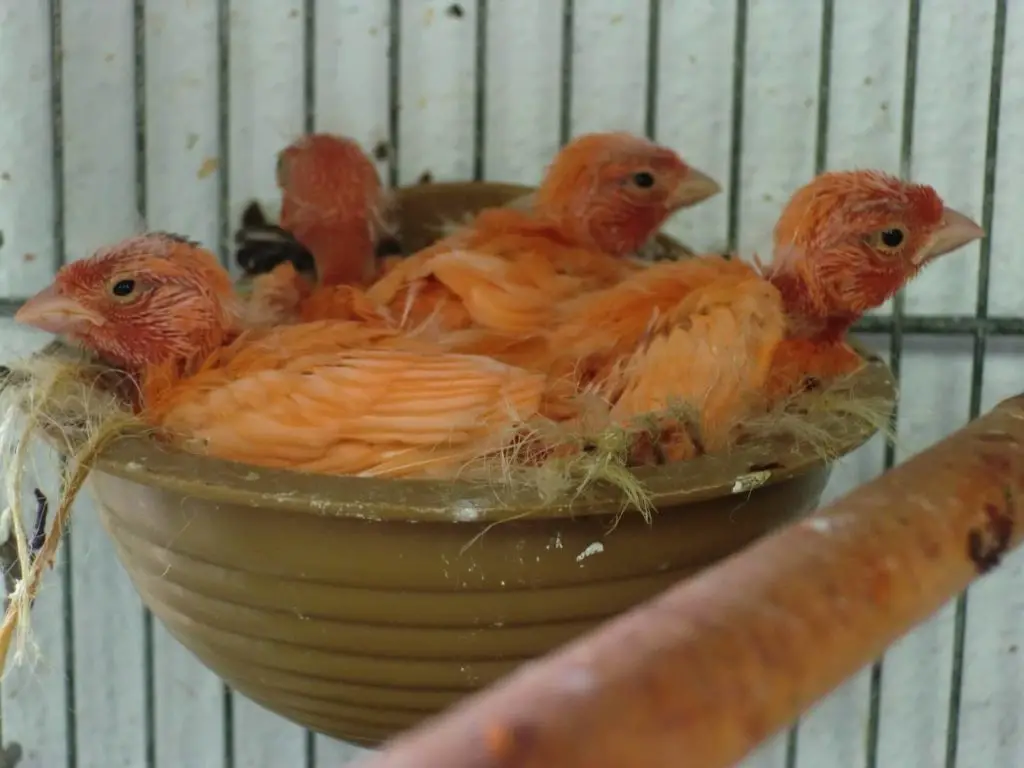
Although its original color is green with gray, a hundred years after its introduction in Europe, in breeding centers the first yellow canaries appeared because of this variation limited to individuals born in captivity, can be attributed to the appearance of one or more mutations arising spontaneously in the genes that regulate plumage coloration. Undoubtedly the change of feeding of the birds in captivity (eggs, breeding paste, honey, seeds, vegetables, fruits, vitamins and other foods), as well as the change of environment were responsible for the appearance of those mutations that produced phenotypic changes in the Canaries and able to pass on their descendants those qualities, also man of course in his desire to obtain copies that were distinguished from others by some special detail began to make crosses taking advantage of these mutations arising by chance. Then came the creation of the different breeds of domestic canaries with colors so different from the original. At present there are yellow, yellow and green canaries, white, red, orange, cinnamon, with crowns on their head and other characteristics. All these characteristics so different from their original parent as to put to think the breeders and not current breeders and doubt even of such offspring.


I wanted to make this brief introduction about canariculture as an opening for future publications that I will present to you, where I will provide all the knowledge obtained in this field, from mating and obtaining pigeons, feeding, sanitation, treatment of diseases, training to be present in singing contests, among many other things that seize this beautiful hobby.
GREETINGS FRIENDS ... @roddycordero