What Motivates You?
Motivation refers to a cause for action, willingness, and intentions. Motivation is based on the Latin phrase, or reason, a desire which demands satisfaction. These desires, wants or needs may be general, internal, social or generally innate. A person's behavior is guided by such desires, which in turn drives his behavior. But the satisfaction to these ends is frequently conditioned by other circumstances.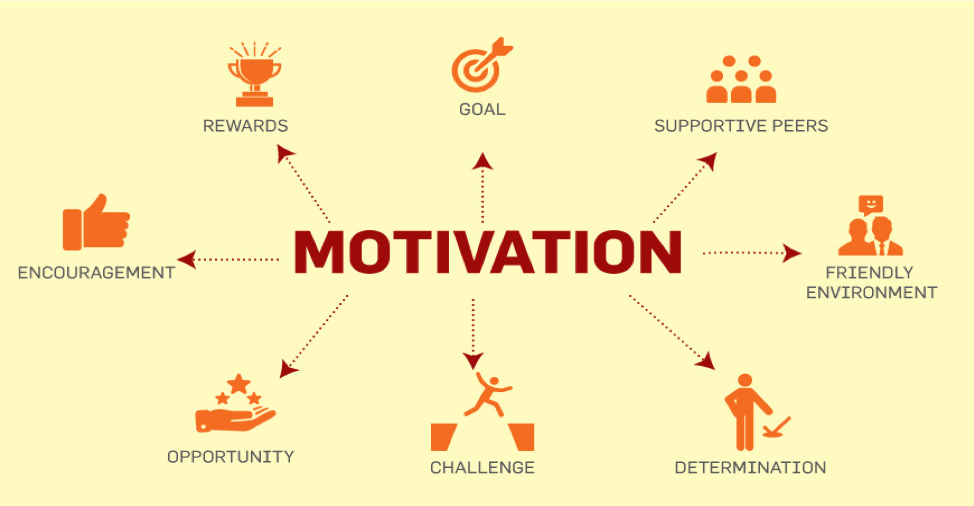
The major functions of motivation are that it stabilizes behavior, regulates behavior and serves as a guide to action and attitude. Motivational science has shown that motivation involves three major functions. The first is that motivation is the driving force that makes an individual or group of individuals attempt to achieve a goal. The second function is to ensure that individuals or groups satisfy a basic need. The third function is to ensure that an individual or group achieves a desirable status or goal.
An intrinsic function of motivation is that it allows us to rise above ordinary circumstances that are usually distressing and threatening. Motivation also allows us to rise above ordinary mental stresses and strains. Motivational psychology suggests that humans acquire and use motivation as a coping mechanism, a source of strength and confidence, and as a means of resolving conflicts and enhancing well-being. It also suggests that motivation can be used as a process that helps to understand and learn from our behavior and experiences.
Why do people apply motivation? Motivation, being an essential part of psychology, is required to act and behave in an appropriate way. It is necessary for appropriate behavior to be rewarded and for inappropriate behavior to be dealt with. It also plays a significant role in reinforcing our personality traits and enhancing our confidence and self-esteem. A good understanding of motivation enables us to recognize and control our negative and positive behavior and responses to various events and people in our environment. When we can effectively control our responses, we will not only be able to cope better with the undesirable outcomes of our actions but also to deal successfully with various challenging situations.
There are many theories on the functions of motivation. Some theories emphasize the role of the hormones adrenaline and dopamine, while others debate the importance of emotions like motivation, attachment, and acceptance. According to some experts, human motivation is shaped by four primary motivational theories namely, the Instinctive (or Proximal) Motivation Theory, The Two Drive Theory, The Three Step Model and The Fourth Fundamental theory. Each of these theories provides explanations for the motivation we exhibit and help us understand why certain behaviors are favored and others avoided. The fourth fundamental theory is in fact one of the most widely accepted frameworks on motivation, which defines it as a system of mental processes that permit us to make rational choices and select the best possible course of action that will lead to the achievement of our goals and aspirations.
An important part of human motivation is the process of goal achievement. Motivation plays a crucial role in this activity, since it is the driving force that helps us achieve our set goals in our daily lives. However, the process of goal achievement is also dependent on external factors such as the circumstances at hand and the attitudes and motivations of the people with whom we interact or meet. In order to be successful at achieving our goals, we should be aware of these factors and be able to adjust our behavior accordingly.
When we talk about motivation, there are different types of motives, which are either intrinsic or extrinsic. Intrinsic motives are those that come from within and are unaided by personal needs and desires. Intrinsic motivation is called the default drive or instinct that guides our behavior without the need for additional information, guidance or stimulus. These motives are considered universal and are therefore innate and requires no additional motivation from an outside source. The other three types of motives are extroverted, integrated and inhibited. Extroverted motives are associated with thrill seeking, risky behavior and extreme levels of self-stimulation; these motives, however, are also directed towards achieving certain results and often conflict with the needs and interests of others.
Intrinsic motivation is considered the foundation of all other motivational processes and is considered to be the initial step towards attaining a goal. Intrinsic motivators include natural events and behaviors that automatically lead to us reaching our goals in everyday activities. These motivators are called innate, because they are considered to be "in the eye of the beholder". On the other hand, extrinsic motivation is based on external factors such as reward or punishment, which can change over time and can thus, be manipulated in order to achieve different results. An extroverted person is one who is highly motivated to pursue their own interests and is able to exert strong control over various situations.
Congratulations! Your post has been selected as a daily Steemit truffle! It is listed on rank 9 of all contributions awarded today. You can find the TOP DAILY TRUFFLE PICKS HERE.
I upvoted your contribution because to my mind your post is at least 10 SBD worth and should receive 64 votes. It's now up to the lovely Steemit community to make this come true.
I am
TrufflePig, an Artificial Intelligence Bot that helps minnows and content curators using Machine Learning. If you are curious how I select content, you can find an explanation here!Have a nice day and sincerely yours,

TrufflePig