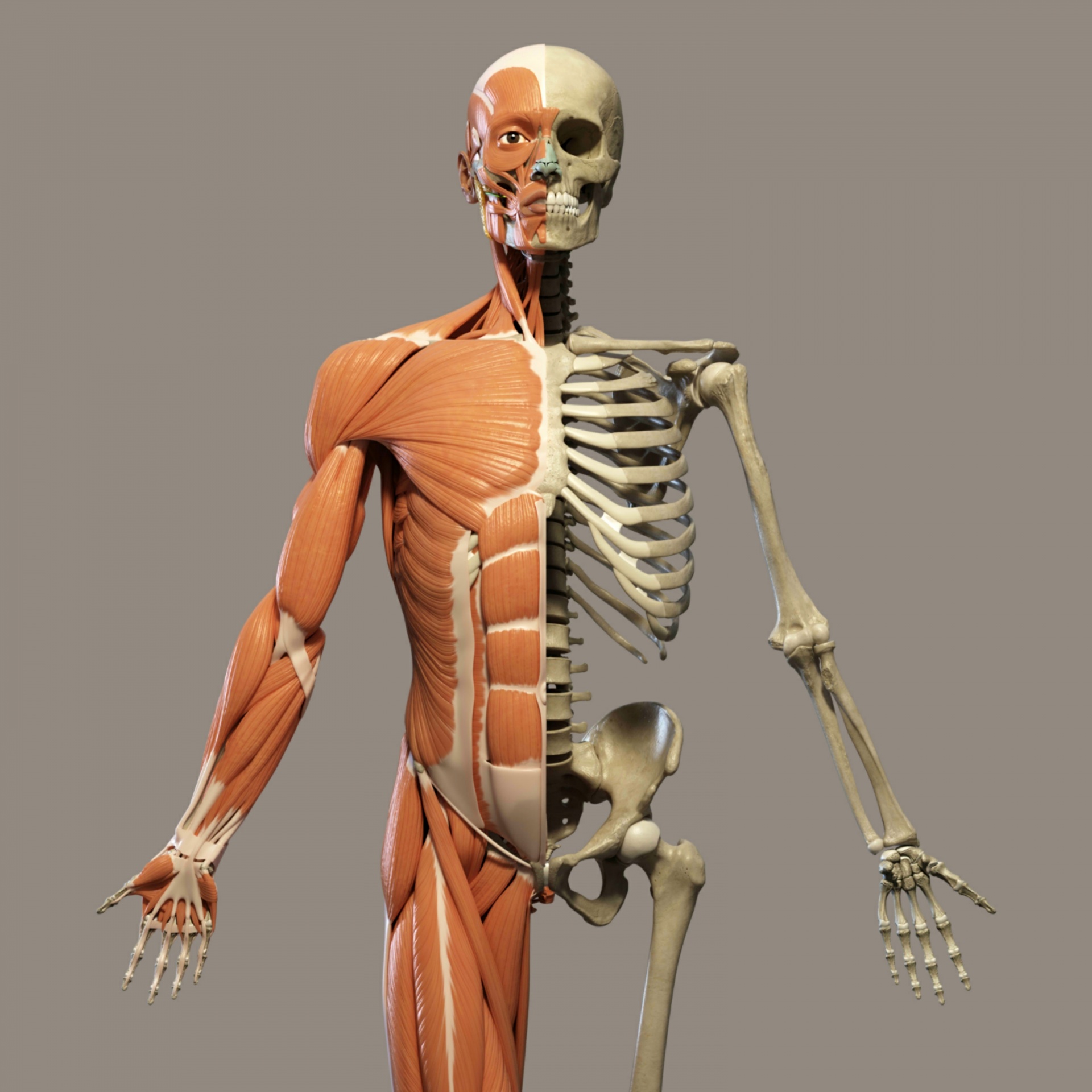
The Human Body From A Physiological Perspective
Introduction
The human body is a living system in dynamic interaction with the organic and inorganic elements in the environment. The human body is like a highly technical and sophisticated machine. It operates as a single entity but is made up of systems that work interdependently. Each system is associated with a specific and sometimes related function that is essential for the wellbeing of the individual.
The human [email protected]
Physiology is the study of how the body systems work, and the way in which their integrated activities maintains life and health of the individual. Within the body are different levels of structural organization and complexity. The most fundamental is the chemical.
The Chemical Foundation
All living organisms are made of tiny lifeless elements. Atoms of these elements combine to form molecules. There are 92 naturally occurring elements but wide variety of compound that makes up living tissues are composed almost entirely of only four elements: carbon, hydrogen, oxygen and nitrogen, and others of about 4% are sodium, potassium, calcium and phosphorus. Molecules consist of two or more elements that are chemically combined. The atoms that forms a molecule may be of the same or different elements for example a mole of oxygen (O2) contains two atoms of the same element while a mole of water (H2O) has atoms of different elements. When two or more elements combine the resulting molecule is referred to as a compound. Molecules that contain the elements carbon and hydrogen are classified as organic while others are inorganic. Living tissues are based on organic compound but there is also an essential need for inorganic compounds.
Body Composition
The fundamental substance of life is the Protoplasm. This is the material that makes up all living things. Protoplasm is made up of ordinary elements such as carbon oxygen, hydrogen, sulfur, nitrogen and phosphorus. Protoplasm forms a structural unit or building block that is called a cell.Cells are microscopic structures that carry-on all the functions of life. They take in food and oxygen, produce heat and energy, move and adapt to their environment, eliminate waste, perform special functions, and reproduce to produce new identical cells. The human body contains trillions of cells that vary in size, shape, and functions.
Every living body is composed of cells that define its structural and functional unit. A typical cell is a microscopic body, enveloped by a double layer plasma membrane. The cell is made up of a core, nucleus usually at the center, surrounded by a fluidy environment (matrix) known as cytoplasm. The cytoplasm suspends many simple organelles that carry out the cellular function. These organelles include; nucleus, mitochondria, endoplasmic reticulum, ribosome, golgi apparatus, just to mention a few. The actions of these organelles determine the function of the cell and where it will be found in the body.
Tissue is a community of cells that works together for a specific function. Cells aggregate to form communal relationship and working together to function as a tissue. There are four types of tissue; epithelial tissues which forms the lining and covering of the organs of the body; connective tissues which forms the supportive mass of the organs of the body; muscle tissues which form the mass of body muscles are characterized with the ability to contract; and nervous tissues which are exclusive to the nervous system having the characteristics to conduct impulse and signals.
Organs are organized into Organ System that perform specific life process. The body systems include; the integumentry, respiratory, circulatory, urinary, reproduction, musculoskeletal, digestive, endocrine, immune, lymphatic and nervous system. These system though with distinct function work interdependently. It is impossible to say which organ or system is more important than another, as they all work to make a whole organism.
Boundaries and lining
Different compartments or structures in the body are bounded for them to maintain their position and environment, to avoid affecting other structures by their activities. The body achieves this by using membrane. Membranes are sheets of epithelial tissue and their supporting connective tissue that cover or line internal structures or cavities.
Body fluid
The human body is made up of both solid and liquid matter. The body fluid is a very important component of the body as it accounts for about 75% of the total body weight. The body fluid is made up of water (60-65%) and both organic and inorganic solids (35-40%). This fluid is regulated within compartments as intracellular fluid (55%) and extracellular fluid (45%). The body fluid is significant in the regulation of pressure, transport of materials, fluidity and regulation of electrolytes.
Body framework
Body cavity
There are four cavities that houses visceral organs and resstrict them to specific regions. The cranial cavity houses the brain; the thoracic cavity houses structures in the chest region; the abdominal cavity houses the organs and glands involved in the digestion and absorption of food; the pelvic cavity contains internal reproductive organs, urinary structures and the sigmoid colon.

The Body Cavities house delicate organs in the BodyConclusion
The working of the Human body is compared to that of a working machine. It can be studied in parts as different organs works independently towards achieving its distinct function. Just like a machine, it tends to be effective and even last longer if attention is paid to its care and maintenance.
References
Referential source links for this article are included for further reading and all illustrative images are credited to their various sources. If you find it helpful and interesting kindly take a fraction of your time to UPVOTE, COMMENT,RE-STEEMand FOLLOW. Thank you.