Evolution In Action – Extra Bone In Knees
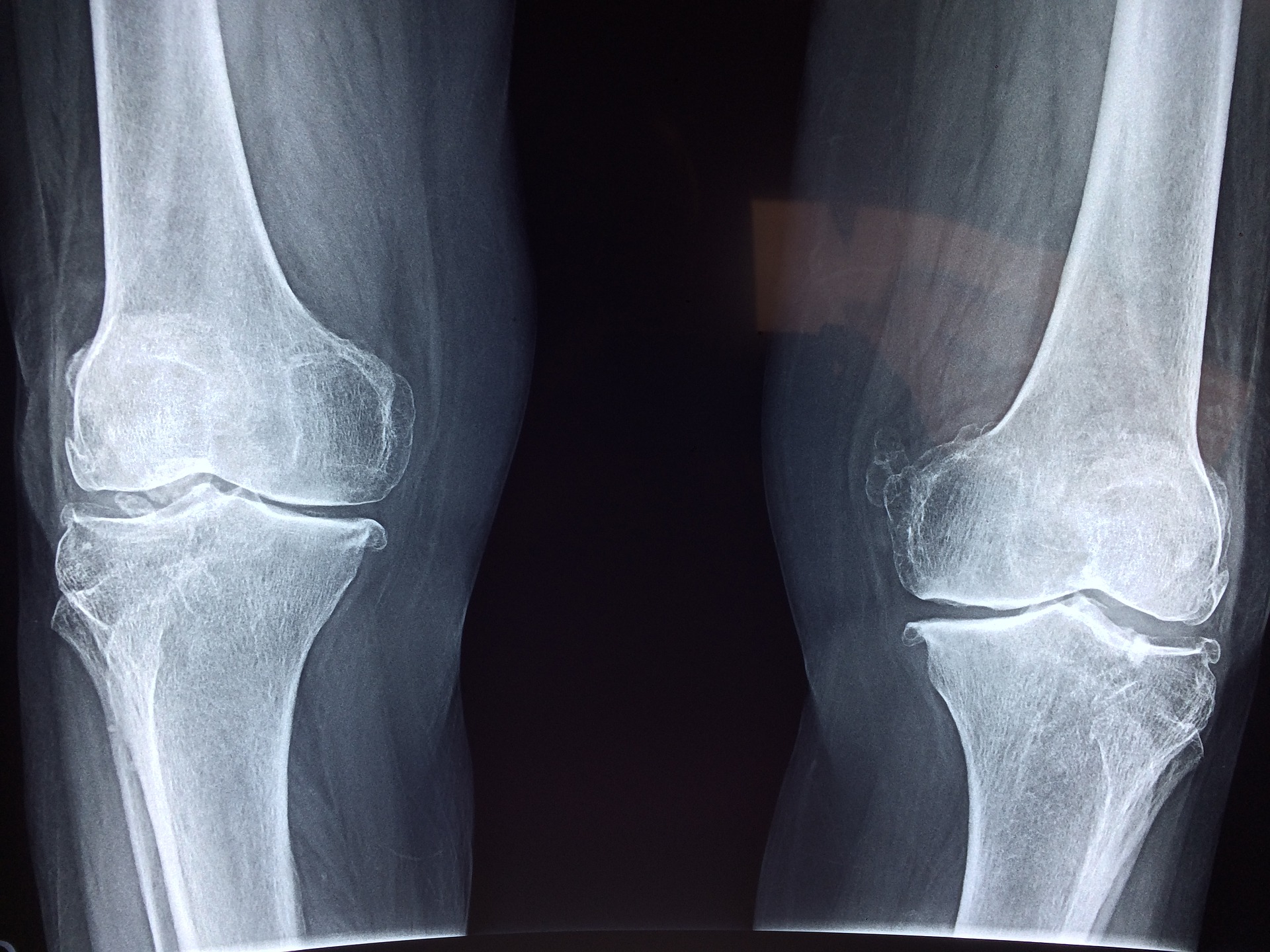
The bone known as fabella is something evolution has decided we don’t need millions of years ago. But in the past decades, the bone has been appearing again and anatomists urge orthopedists to take it into consideration.
- Be also sure to check out my other posts and follow me @kralizec and subscribe to my Youtube channel at Kralizec Gaming Youtube Channel
An adult human has 206 to 208 bones in his body. This doesn’t take so-called sesamoid bones into account – bones that can be found inside of your tendons and fabella is one of them. Its name is a diminutive of the word faba which is Latin for a bean. So it essentially means little bean. But the fabella bone is quite multifaceted. If it grows it may grow as a single bone or separated into two or even three separate pieces. We actually have a good number of sesamoid bones in our body – the biggest being the knee cap. Fabella is one of the smallest. In monkey is an integral part of the knee and significantly helps the leg muscles. But in most apes – including humans – it lost its use and thus disappeared thanks to evolution.
Michael Barthaume from the Imperial College in London and his coworkers studied anatomical publications and archives about the fabella from the past one hundred fifty years. They studied diagrams, x-ray images, magnetic resonance results, and many other sources. Overall they looked up information about the knees of roughly 21 000 people and came to a surprising conclusion. In the past 100 years, the appearance of the fabella has increased three and a half times. In 1918 just 11 % of people had it but nowadays more than 39 % of people have it.
Evidence that we are still evolving
We don’t really know why the fabella is returning. Maybe it has a similar purpose to other sesamoid bones. It could decrease the friction in tendons, help relay the power of muscles or similarly the knee cap increase the mechanical power of muscles. Or maybe it is completely useless. Berthaume himself thinks the return of the fabella may be connected to the ever-increasing height of humans. That comes hand in hand with long bones, higher body mass and thus more work for the joints.
The average person nowadays is much better fed and thus higher and more massive. That brings longer shin and larger calves. That in combination that we all have the genes for the creation of the fabella but outside factors decide whether it will grow or not. This may be the explanation of why we can see it more often. And it is a great example that evolution is still taking place in humans.
We should also not discount the fabella as people who suffer from osteoarthritis – a degenerative knee joint disease – have the fabella twice as often compared to people who have healthy knees. While we don’t know at the moment whether the fabella causes osteoarthritis in some way or not, orthopedists should still take it into account. If a patient who has knee problems they should consider whether they have the fabella or not.
Sources:
- If you like the content I’m producing about science maybe you will like the content I produce about gaming as well! Be sure to check out my other posts!
This post has been voted on by the SteemSTEM curation team and voting trail. It is elligible for support from @curie.
If you appreciate the work we are doing, then consider supporting our witness stem.witness. Additional witness support to the curie witness would be appreciated as well.
For additional information please join us on the SteemSTEM discord and to get to know the rest of the community!
Please consider setting @steemstem as a beneficiary to your post to get a stronger support.
Please consider using the steemstem.io app to get a stronger support.