Facts about the brain
The human body is an incredibly complex and intricate system that still baffles doctors and researchers, despite thousands of years of medical knowledge. The result is whimsical and sometimes amazing facts in our body.
The brain is the most complex and least understood part of human anatomy. About it, maybe we don't know much, but here are some very interesting facts that have been reported .
Facts about the speed of impulses in the brain .
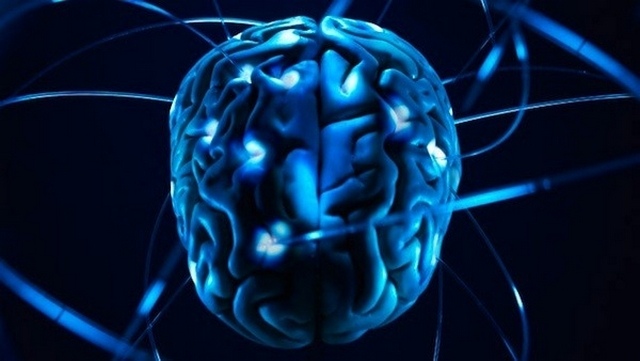
Nerve impulses travel through the brain at a speed of 273 km per hour.
Have you ever wondered why react so quickly to what is happening around You? Why hurt finger hurts right? This is due to the extremely fast movement of nerve impulses from the brain to parts of Your body and Vice versa. With the result that the reaction speed of nerve impulses is comparable to the speed of a powerful luxury sports car
Facts about the energy of the brain
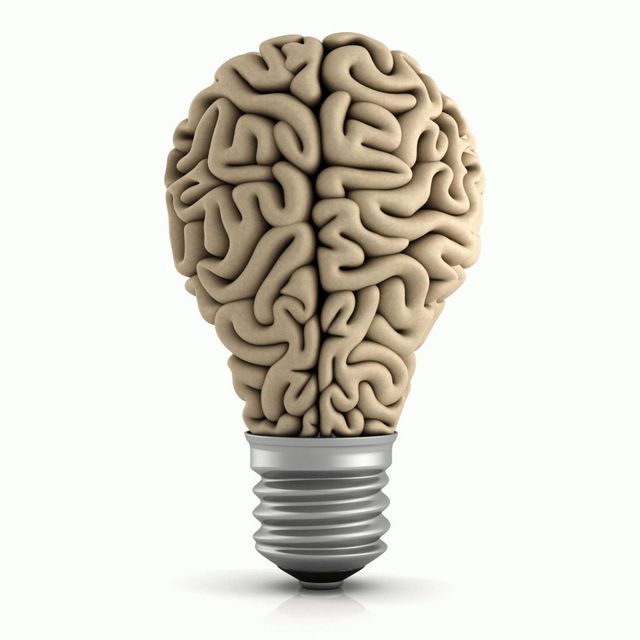
The brain produces energy equivalent to a 10-Watt light bulb. Cartoons, where the heroes weighs light bulb above the head during the thinking process, not too far from the truth. Your brain generates as much energy as it uses a small light bulb even when You are sleeping.
Meanwhile, the brain is the organ with the highest energy consumption. It takes from the body about 20% of the energy in this case is 2% of total body weight. Most of this energy is spent on the exchange of information between neurons and between neurons and astrocytes (type of cell).
Facts about brain memory.
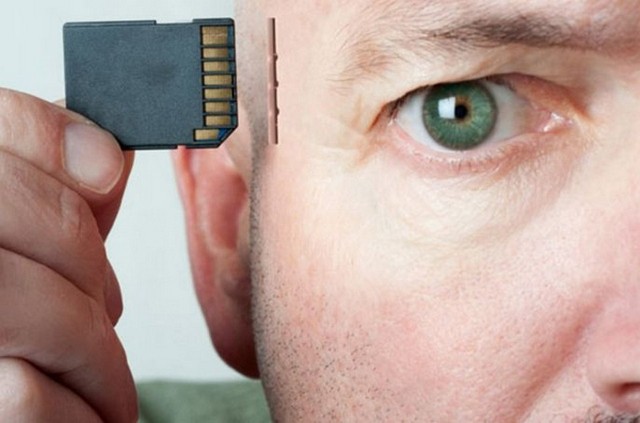
The human brain cell can hold 5 times more information than the British or any other encyclopedia.
Scientists have yet to learn the final figures, but presumably the capacity of the brain in electronic terms is about 1,000 terabytes.
For example, the UK national archives containing historical records for 900 years is just 70 terabytes. It makes the human memory is impressively roomy.
Facts about oxygen in the brain

Your brain uses 20% of the oxygen You breathe. Despite the small weight of the brain, it uses more oxygen than any other organ in the human body.
This makes the brain very susceptible to damage related to oxygen deprivation. So he likes it when You breathe deeply. If the flow of oxygen to the brain increase, it will begin to activate those areas of the brain that are not functioning in low blood flow and the aging process of cell death will slow down. Interesting fact!
The carotid arteries are branches in the tiny blood vessels inside the skull, forming an intricate and amazing network of capillaries. This is a very delicate blood tunnels that provide blood to the smallest parts of the brain, providing the necessary number of neurons and oxygen.
Facts about the brain during sleep

The brain is more active at night than during the day. Logically we can assume that thought processes, complicated calculations and tasks we do during the working day, which would have required more brain activity than, say, lying in bed. It turns out the opposite is true.
As soon as You fall asleep, the brain continues to work. Scientists still don't know why, but for all the dreams We should be grateful to this body. Interesting fact! In early childhood there is no difference between sleep and wakefulness. Explain this place of thinking in the brain. In childhood, almost all mental processes occur in the right hemisphere. The child learns images.
Therefore, a child's memories are similar to dreams in structure. Grown-up child is ready and teach specific concepts than "clog" the brain. So is the asymmetry of the brain. The left hemisphere is overloaded during the work day.
The situation as it is aligned during sleep, when the left hemisphere is "asleep" and the right begins to be active, plunging us into a world of imaginative thinking.
Facts about the brain during dreams

Scientists say that the higher the IQ a person has, the more he wants.
It certainly may be true, but we should not accept such a statement as a lack of ideas, if You can't remember your dreams. Most of us don't remember many dreams. After all, the majority of dreams, that we think only 2-3 seconds and this is barely enough to their brains fixed.
Interesting fact! Scientists conducted an experiment in which it was discovered that the brain is more active in a person when he wants to and not focused on monotonous work. At the beginning of the process of dreaming a big part of the brain starts to work hard. Therefore, we can conclude that dreams help in the resolution of important issues.
Facts about the number of neurons in the brain
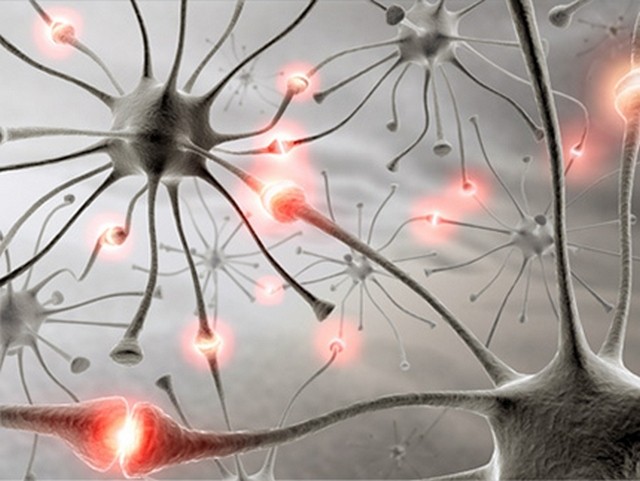
The number of neurons in the brain continue to grow throughout human life.
For many years scientists and doctors thought that brain and neural tissue cannot grow or regenerate. But it turned out that the brain works the same way as tissues in many other parts of the body. Therefore, the number of neurons can grow continuously. Note! Neurons is the basis of every nervous system.
These are special cells that have dendritic spines diverge in all directions, in contact with neighboring cells in which the same processes. All this creates a huge chemical and electrical network that is our brain.
It neurons allow the brain to perform different actions much more efficient and faster than any machine.
Facts about pain: the Brain does not feel pain!
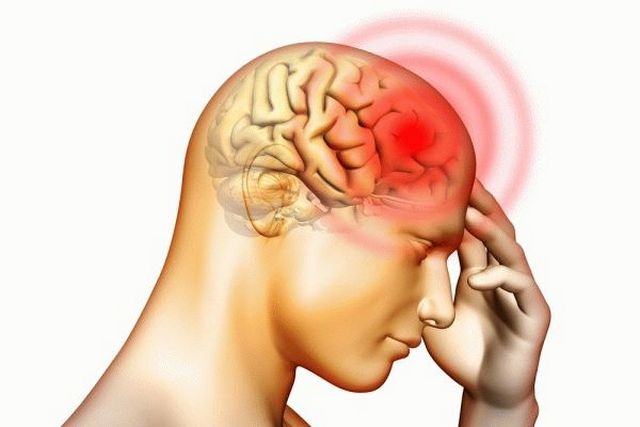
The brain itself cannot feel pain. While the brain is the pain center when you cut your finger or burned, he has no pain receptors and feels no pain.
However, the brain is surrounded by a variety of tissues, nerves and blood vessels, which are very susceptible to pain and can create You a headache.
However, headaches are of different types, and the exact causes of many remain unclear.
The myths and misconceptions people have about the brain
The results show that 65% of people believe this myth is true; and 5% think that this figure is increasing, and believing in evolution.

Even the TV show "Mythbusters" a few years ago mistakenly corrected the myth about 10% brain involved in 35%. Like most legends, the origin of this fiction is unclear, though there are some guesses.
The origins are from the neuroscientist Sam Wang (Sam Van) from Priston author of the book "Welcome to Your brain". Maybe it was William James (William James), who at the beginning of the 20th century was considered one of the most influential thinkers in psychology.
He said: "people Have unused intellectual potential". It's a perfectly reasonable statement was later revived in a distorted form, by writer Lowell Thomas (Lowell Thomas) in 1936, in his Preface to the book "How to win friends and influence people."

"Professor William James of Harvard said that the average person develops only 10 percent of his latent mental ability," Thomas wrote.
It seems that he or someone else at the time just mentioned he liked the number. An indication of 10% is clearly false for several reasons.
What percentage works in the human brain?
All aware of the fact that the whole brain is active all the time. The brain is an organ. Its living neurons, and cells, which in turn supported these neurons are always active. Have you ever heard about the fact that the spleen is only used by 10%? Probably not.

Here is how explains the working of the human brain, Professor of neurology and psychology at the University of new York Joe the Ice. Let's say You are watching a video image in the scanner magnetic resonance imaging.
Some areas of the brain responsible for hearing, or the visualization, for example, is now more active than other areas. Their activities will be depicted in the form of colored spots. These blobs of significant activity usually cover small parts of the brain, even less than 10%. Therefore, it may not seem like a knowledgeable person that the rest of the brain is "idle".
However, Joe Ice argues that a brain with little activity of certain functions still works 100%. In fact, the statement "only a certain part of the brain" are incorrect. When our brain is working to process information received from the eyes, ears, olfactory organs, it is first thinks what phase of processing this information.
All of this suggests that many of the brain sites responsible for the specific specialization. To work these stations, including at the same time, which may be up to 100% of the brain.
The brain is a complex, multi-tasking network of tissue. Talk about the fact that the brain is constantly working only one part, and the rest are stagnant mass of jelly, silly.
The facts of deceit: the Brain can be fooled!
Would you like to change your vision of the world or to experience hallucinations? People typically associate such phenomena with drug use such as LSD. However, there are ways to expand their boundaries of perception and without having to resort to illegal substances.
All you need is to understand how our brain works. Our mind is not a mirror of what is happening around. A big part of what we see in the outside world comes from within and is a by-product of how the brain processes sensations. In recent years scientists have found several ways that reveal the fallacy of our senses, and here are some of them
1. Procedure Ganzfeld
At first glance, this might seem like a bad joke. Procedure Ganzfeld is a mild sensory isolation technique that was first proposed in experimental psychology in the 1930s. For this experiment you need to set up a radio interference, lie on the sofa and using adhesive tape to attach the eye on the half balls from table tennis. Within minutes the person begins to experience hallucinations. Some people see horses running in the clouds, others hear the voice of a deceased relative.

The fact is that our minds are dependent on feelings and when they are very little, our brain starts to invent their own.
2. Reducing pain
If you suddenly slightly hurt, look at the damaged part with an inverted binoculars. In this case, the pain should decrease.
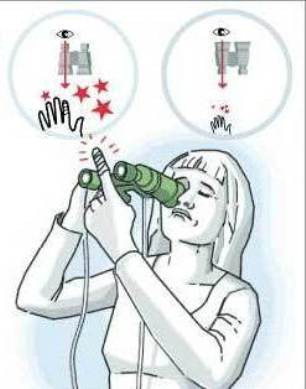
Scientists from the University of Oxford in the experiment showed that if you look at the wounded arm through the far end of the binoculars, it visually reduces the size of the hands as well as pain and swelling. This suggests that even basic sensations such as pain are dependent on our vision.
3. The Illusion Of Pinocchio
To do this you need two chairs and a blindfold. The man with the eyepatch sits in the back seat, giving a glance in the direction of the front of a seated person.
Then the one who is blindfolded, extends a hand and places it on the nose of the one who sits in the front.
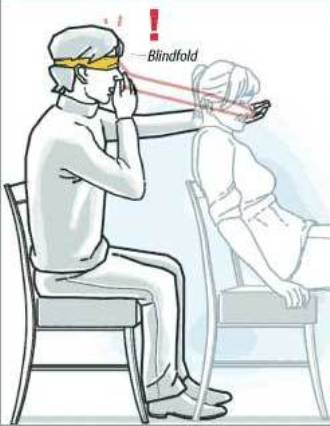
At the same time with the other hand he touches her nose lightly and starts stroking both noses. After about a minute, more than 50 percent of people say that their nose is extended. It's called the Pinocchio effect, or proprioception .
4. The cheating rumor
This trick can be done with three people, one of which will be experimental and the other two observers. Also you will need earphones attached to two plastic tubes on both sides. Ask the subject to sit on a chair an equal distance between the two observers. Each observer in turn says into the phone with the appropriate parties. The listener in this case correctly determines the direction of the sound.
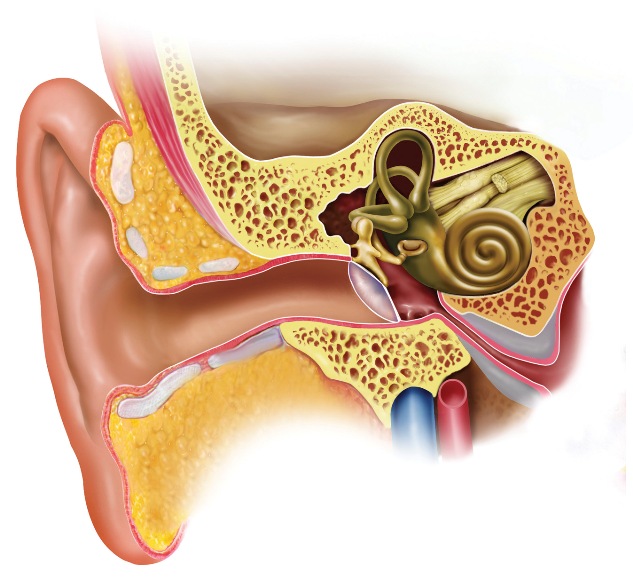
If you change the tubes and start speaking, the listener will get confused, and will indicate the opposite sound direction. Auditory localization is the ability of a person to determine direction to the sound source. The auditory system of a person with limited possibilities to determine the distance of the sound source, and is based on misvalues the time difference. When you change tubes, it enables a perception of the neurons on the opposite side of the brain and the person is unable to determine the source of the sound.
5. The deception of perception of light
View at the Central point (plus sign) black-and-white image for at least 30 seconds then look a wall and you will see a bright spot. Blinked a few times. What do you see?

Look at the eye of the red parrot while slowly counting to 20, and then quickly look at a single point in an empty cell. You should see a hazy image of a blue-green bird in a cage. The same can be done with the green cardinal, and a cage will appear indistinct silhouette of a bird of purple.

When we look at the image for some time, and then replaced it with a white background, then there is a residual image. This is because the photoreceptors (rods and cones) of the eye get tired, there is an imbalance of information and appears's an after-image.
The brain is unbelievably amazing! I upvoted you. Please consider upvoting my post. https://steemit.com/steemit/@brianphobos/an-olympian-needs-our-help-steemit-please-read-this-if-you-have-ever-been-passionate-about-something
Upvoted
Hi! This post has a Flesch-Kincaid grade level of 7.9 and reading ease of 68%. This puts the writing level on par with Tom Clancy and F. Scott Fitzgerald.