Free will and moral agency
There is, was, and mostly likely there will be for the foreseeable future, a great debate on free will, from neuroscientists, physicists, philosophers and everyone else, for that matter. I am neither of those things, but being a human in possession of internet access, I have my STD0.02, like most.

I decided to write this (did I really decide? Or was it the universe? Oh well, the grandfather of all knowledge must know ...), mostly to clear my thoughts and see what others think of them. I may not define free will as others do, but the point of this is not really semantics, but general musings.
I must begin this by stating that I quite unambiguously believe in free will – because, otherwise, what is the point of all of this? If everything you say, do and think is predetermined, is there a use for debate or philosophy? I perceive myself as having free will, so having it or not, by some scientific criteria or other, is not that relevant to me. I couldn’t tell the difference, either way.
Obviously there is such a thing as human nature (I even wrote a cool post about it, with a great title and nice pictures) which binds us all. There is nurture and environment. People do not think same and make different decision, and who you are affects your decision. Person B could not make the exact same choices as person A in similar circumstances, because humans are different from every point of view. This is what makes studies about humans difficult; you cannot test the influence of one factor or other ceteris paribus. But the fact that you have to take into account that people are who they are, the fact that there are some inherent constraints to decisions, does not, change the simple reality that humans can and do make decisions.
„ More than any other time in history, mankind faces a crossroads. One path leads to despair and utter hopelessness. The other, to total extinction. Let us pray we have the wisdom to choose correctly.” Woody Allen
Humans, more or less, have reason, and even use it once in a while; they make decisions based on external stimuli and previous experience. External and internal factors influence you, but in the end, good or bad, only you can make a choice, and this is what free will is all about.
That is not to say you should judge people harshly on their decisions or that you should completely ignore their life and environment. But you can neither eliminate capacity to decide. Some view a bad choice as a moral failing. It is not. But 100 bad choices without learning anything, that is something else and cannot be discounted. And some choices cannot be excused. Taken to extreme, it is not a rapist fault he raped someone because he was born a or society made him one. I cannot accept that.

Everyone makes a bad choice now and then. Some make more then others. Hold the judgement and try to help them do better. But you cannot decide for them. And they have their life, their choice, their decisions. Free will kind of works like that. People born in very similar conditions – let’s say identical twins which have similar nature and nurture – can turn out quite differently. Throughout history there were people who went against their society’s consensus, the environment so to speak, and this is what led to change.
“The urge to save humanity is almost always a false front for the urge to rule.” – H. L. Mencken“
The exclusion of free will can be seductive because “it’s not my fault” is powerful rationalization. If it is your fault, it means you need to do something about it, but if it is not your fault, not within your control, you can dodge any and all responsibility. In contrast to religious doctrines of predestination and fatalistic philosophies of mechanical causation, libertarians emphasized self-determination.
I can say, from personal experience, it is tough to fight you nature. And it is all so very easy to convince yourself there is nothing you can do, to indulge in a bad situation. But you can try to change something, and nine out of ten times it will not work. But sometimes it will and will get you a tiny step forward. And that’s something.

Tell someone: you have no chance, everything is beyond your control and there is no point in trying, they might take your word and not try. And this means zero chance of achieving something or changing a bad situation. If they try, even if the odds are stacked against, there is still a small chance at success. Which, as small as it may be, it is better than nothing. It is somehow seductive to convince yourself not to try, that you can't, that there is no way, to give up. Don't.
Agency and responsibility is part of what makes us human, differentiates us from the simpler creatures – aka food -, humans can go beyond instinct. If you remove agency from people and go to predestination you, in a way, dehumanize, or at the very least infantilize them, make them sound like lesser human being.
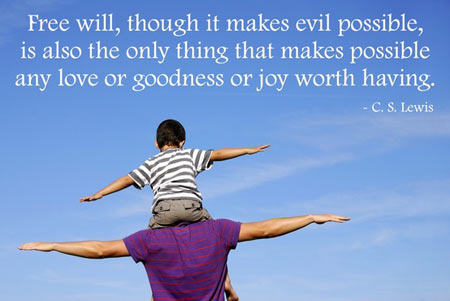
To conclude, summarize and whatnot, all the things that are part of us - nature and nurture - are also part of what constitutes free will. At least the way I see it. The fact that you can make decisions, get feedback from those decisions and maybe change them in the future is part of free will. The fact that you get to decide is free will, irrespective of the constraints inside you that affect the actual decision. There are always constraints in nature - gravity, the need for food and air, laws of thermodynamics and many more. Being bound to human and individual nature does not negate free will. Or a more concrete example being short preventing you from playing basketball does not negate free will.
Now a neurologist will feel compelled to add about here: you are your brain chemistry, or some such. The unique chemical and electrical phenomena inside each individual human brain is free will, even if there is or isn’t something more than that to conscience (a whole other endless debate right here). Some will add stories about people who had an accident and could no longer control themselves. But these are exceptions compared to the majority of humans. The fact that free will might be just the function of some part of the brain and for some it ceases to function does not negate free will, just like the existence of the blind does not negate that humans have sight.
The simple fact is that no two humans have the same brain. Each is unique. And this is the essence of free will. This uniqueness and individuality makes us human.
"Free will" is completely brain dependent. If you hit your head, or get drunk, or is not an sane adult but a child or mad, bye bye "free will".
Did you stab that man?
Your honor, I was drunk!
Oh in that case, not guilty.