The Risks of Generation S(elfie).
*Greetings. This post was originally written in Spanish in response to a prompt by #Reto12votos. The prompt was “selfie”.

The Risks of Generation S(elfie).
Our elders called the photographs portraits. "They are going to portray me," they said when they were going to have a picture taken. Seen like this, a selfie is a form of self-portrait. This term has a more artistic connotation since we associate self-portraits with the great masters of art: Durero, Da Vinci, Michelangelo, Rembrandt, Goya, Picasso, or Frida, just to name a few.

However, the term selfie could not be farther from art, especially if we consider that on top of the narcissist implications it already has we have to add now outrageous challenges and filter apps that aim at modifying the image to satisfy egos or the fad of the moment.
 Fuente
Generation Z (born in the last 20 years) should be called Generation S(elfie). This group has been joined by (segments of) all previous generations, in an attempt not to be displaced by what appears to be a practice that is here to stay.
As a good member of Generation X (born in the last 40-60 years), I am not very fond of selfie. I grew up with roll / film cameras that were only used to record special moments, in which many times you did not appear because it was you who took the photos. It did not occur to anyone then to turn the camera to include the photographer in the shot. Although that did not mean that we did not have Narcissuses among us, our generation did not see very well the over-emphasis or fixation on the image of the "I".
 Fuente
As the father of four girls (two pre-teens, two teens) I have lived very closely what peer pressure means for this generation so fascinated (obsessed?) with the "selfie". While it is true that modern telephone equipments offer tempting possibilities of photographic records that you could only get before if you hired a professional photographer, it is also true that selfies have brought out, in my opinion, more vices than virtues.
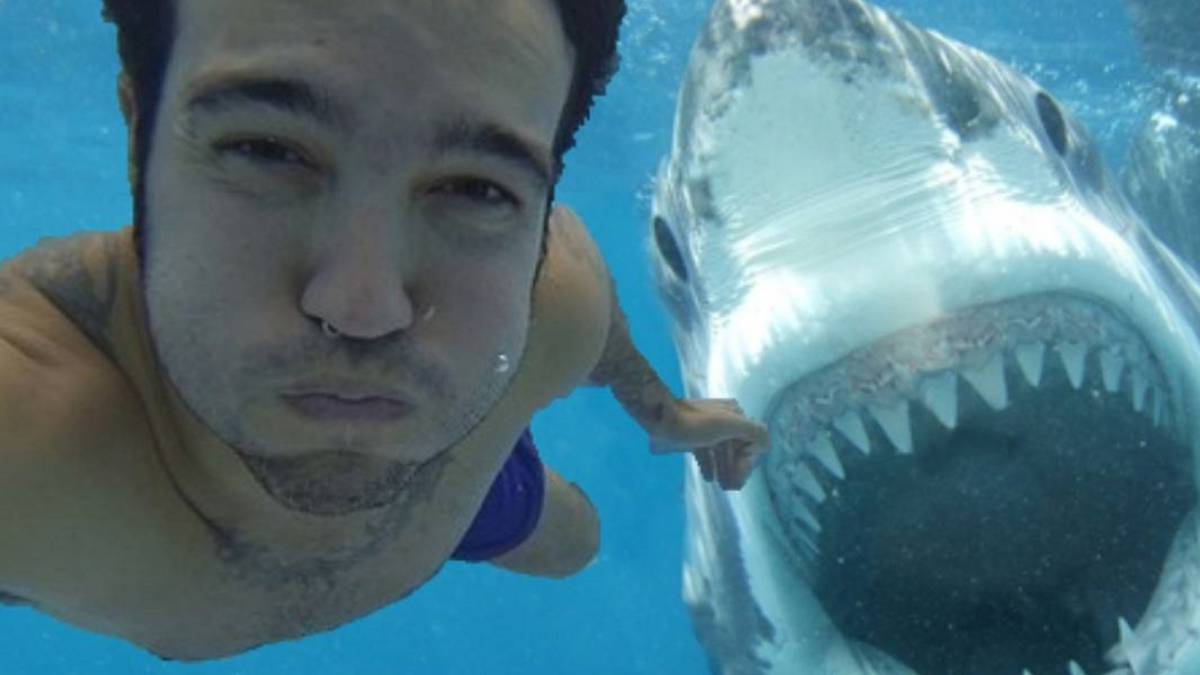
From self-esteem issues and overexposure, which usually ends up with privacy violations, to fatal accidents resulting from unnecessary risks to meet challenges or the need to achieve the original / perfect photo, selfies have degenerated into a need that for a sector of our population (not necessarily limited to generation Z, but predominantly in that demographic) borders on the pathological.

Fuente
Our youth are growing up in a society obsessed with social media and the status these media can give them. The search for acceptance and validation that was previously achieved in person, thanks to socialization and direct interaction, where your defects and virtues were tested in real-life situations, and where leadership was exercised by those who demonstrated that they had greater talents and ability to solve problems, is now achieved through the “likes” that social media posts receive, many of which are limited to a “selfie”.

Fuente
The expectations created around the perfect image of celebrities and the so-called influencers, are impossible to satisfy for the average youth, which translates into problems of self-esteem, anxiety, isolation, depression or aggressiveness. In the cases in which people achieve the craved acceptance thanks to their physical beauty, creativity, or ability to scandalize, the effects are no less harmful: narcissism, arrogance, obsessive-compulsive disorders, "diva" complex, etc.
 Fuente
I think the selfie has practical and justified uses, and it's fun to see that people of all ages (and even some animals) can turn to this technology resource to record memorable moments. A family visit, a tourist place, a historical event, a personal or professional celebration, a situation of danger or tragedy, can all be justification for a selfie. Some commentators estimate that obsessing over selfies on a daily basis, for no particular reason, needing to upload them to the networks and anxiously awaiting the reactions of such photographs are indicators that some pathology may be developing and require professional attention.
From how many daily selfies can you assume there is a problem? It is not clear, but the average person tries many "shots" before feeling satisfied with the photograph they want to make public. This process of posing and selection, which is usually conditioned or informed by the standards imposed by celebrities, is in itself a problem. If our happiness or acceptance depends on the positive reactions in social networks and a good part of our energy, time, and daily talent is diluted in selfies that do not fulfill any practical function, it is necessary a little of that introspection that the defenders of selfies offer to justify their existence in this generation. Hopefully the image that our young people see, without filtered distortions, is the same that their loved ones have always seen and that their assessment is not conditioned by the number of “likes” that their publications receive.

Recording a mega-line to get domestic gas.
It is necessary for this generation to stop aiming so much at themselves and point the camera at the world around them. They may discover that there are things that require their attention, time, resources, and talents to make the world they feel so disgusted about a better place.
