There is No Problem with Apu

You Have a Problem with Apu
Comedian Hari Kondabolu recently stirred up some controversy regarding a beloved and long-standing character on The Simpsons - Apu, the Southeast Asian convenience store owner with a heavy accent and thriving bachelors life. In Kondabolu’s documentary The Problem with Apu, he explores the narrative and impact of Apu from the perspectives of other Southeast Asian Americans who, for the longest time, only had the brown cartoon as a mainstream representation of their cultural presence in the US. The director/comedian has been conducting an extensive ‘explanation tour’ for the last few months since its release, trying to make others understand the harm of a single and silly stereotype.
The documentary rounds up some of the most prominent brown (I’ll use that adjective here to mean individuals from Southeast Asia as to stay consistent with the vocabulary of “white” and “black”) stars of the US - Hasaan Minaj, Kal Penn, and Aasif Mandvi to name a few - and does an ‘investigation’ of their experiences with the character. Kondabolu goes to compare it a form of “blackface” and consult individuals like Whoopi Goldberg. Finally, the comedian even confronts the head figures who produce The Simpsons to get a personal explanation for why the only Southeast Asian dude in the show is so extremely stereotypical.
And as you can expect, the documentary is bloated with pent-up discomfort towards the show. We’ve seen these kinds of claims before that non-serious representations are harmful to minority groups without much say in the world of entertainment. There are proportionally very few brown actors and actresses so the rest of Americans get to see very little of brown culture. Other than Apu with his thick accent and 7-11 routine. And to the people who are embarrassed by this stereotype, I say -
I get it. I’m right there with you.
I grew up in northern New Jersey and many of my close friends were Southeast Asian. They were all sons and daughters of immigrants and many of them grappled with the overbearing conservatism of not only their families but also cultural attitudes towards them. Their parents held respectable jobs as engineers and professors and all of my friends worked hard to become successful in their respective industries like banking, medicine, and entrepreneurship. None spoke with a noticeable accent and everyone had a story to tell about some bigoted PoS (not Proof of Stake…) whipped out the accent in a derogatory manner.
And I understand the discomfort and pain and ongoing cringe that minorities experience when a mainstream culture is ignorant to you. I remember countless “ching-chong” jokes when I was younger and people asking me when I was going to see my uncle Kim Jong Il next. It didn’t help to have most Americans think of the owner of City Wok anytime they thought of Asians in the 90s.
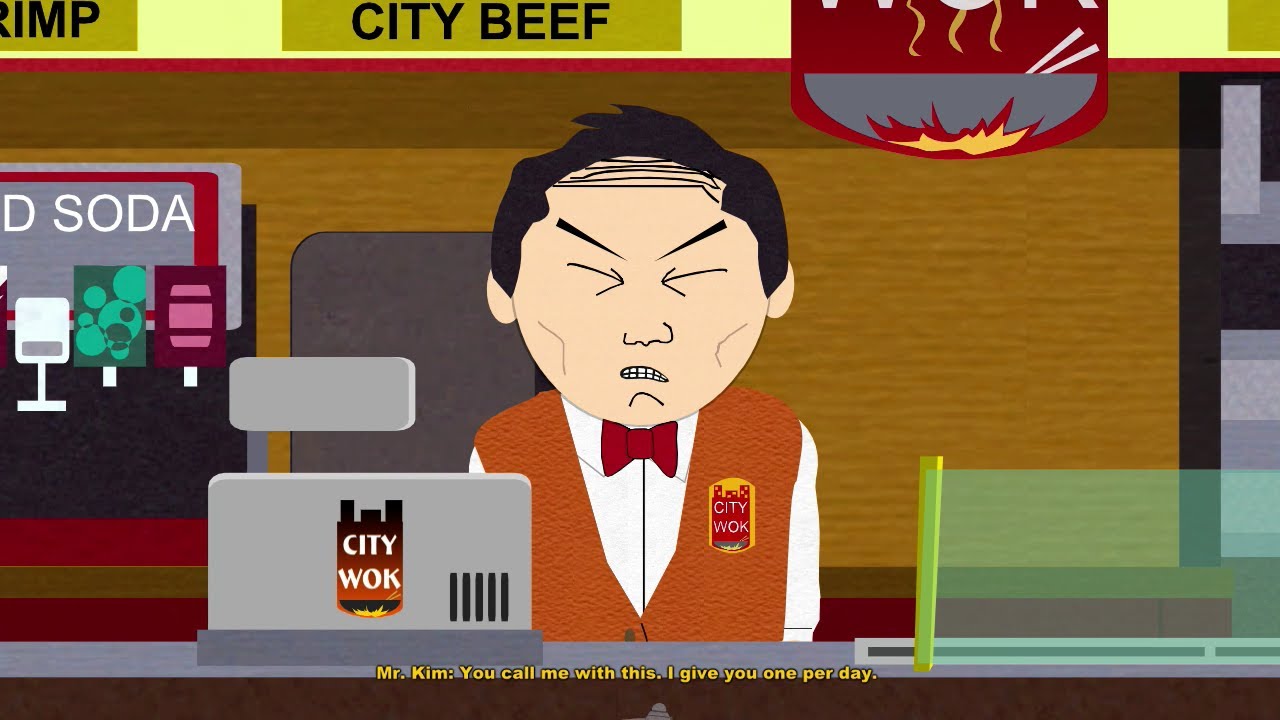
Source
I do understand all this and the experiences of minorities of any place are very similar. But the reason I titled this post the way I did was because I don’t think the tactic of accusing someone of a ‘racist’ transgression is appropriate here. This discomfort is uniquely personal and instead of my preferential strategy of promoting resiliency, many would rather lash out at someone they believed has wronged them.

House of Caricatures. Source
Especially when it is regarding a cartoon comedy whose sole purpose is to stereotype everyone. The Mexicans, the Chinese, the Indians, the Scottish, the closet gays, the creepy religious prophet, and so many more.
Isn’t everyone in the Simpsons a stereotype?
But there is a diversity of ‘white’ stereotypes and only one caricature of brown people.

This is a major false argument of many testimonies in the documentary. They have weaved together a unique perspective of victimhood, claiming that just because other characters shared a skin color that no white minorities would feel similar offense. This is the most glaring weakness of identity politics as there is no legitimate way to compare one’s experience to another. For some, race is the major defining factor that drives their victimization. For others, it’s religion. For others, it’s their sexuality. For others, it’s their economic level. For others, it’s their history. And the list goes on forever.

What this documentary is (and what happens all to often with ultra-progressive socially-driven motives) is a cathartic witch-burning of what a group of people have identified as a demon to them. I would argue that this is only a short-term solution that quickly devolves into an unsolvable problem and can only be soothed with more outrage at someone, at something.
There are a lot of other nuances I wish to discuss on this topic, such as the ‘right’ of (white) voice actor Hank Azaria to dub an Indian character. Or whether racial ‘representation’ is suited for entertainment at all.
But I want to get your thoughts and opinions on this situation first before getting more specific. Do you think there is a problem with Apu?
IDK. I struggle to find a way where Apu is "problematic," unless we're just saying that all comedy has to be bland and PG-rated. The way he is handled is so benign, respectful, and the joke is never at Apu's expense or his culture's expense.
As a jew (non-practicing, but bar-mitzvah'd) if I spent any of my energy fighting against extreme jewish stereotypes, both "in good fun" and the ones that are genuinely hateful, it would just be so pointless. I can't imagine that this comedian's shtick is going to be helpful to anybody. Apu is a respectable guy and a beloved member of the fictional town of Springfield, IMO they should leave him alone already.
The last bit is a great point and should be repeated for anyone looking to start a crusade against a joke or cartoon character... The Southeast Asian community is definitely in a point of transition in terms of media representation so I can understand the growing pains of trying to single-out a few boogeymen. But yea, this isn't an effective tactic.
So are you picking up where you left off last week @hansikhouse? Or have you done it again ;) I think I should just brace myself when I read your pieces, get so enthralled in it....and then come to this mid climax point. You would be a wildly successful director.
I do whole heartedly agree with doing away with tokenism. Seems far more disrespectful and harmful to ones true potential....BUT I personally feel it takes a culturally open and inclusive society for it to work.
Puahahaa thanks for the compliment and suggested career change @kchitrah...
And I agree with you. Everything, especially minority representation, starts with tokenism. Apu is a foundation to build off and away from, not something to be destroyed.
Amen to that. At least you have minority representation, some countries....shall not name names...have majority representation. Go figure.
Yeah, it wasn't The Simpsons' fault that Apu was the only South-Asian-American character on TV.
Exactly this.
Well we are all entitled to our opinions, while some are embarrassed by him being stereotyped and having heavy accent, some could marvel at his uniqueness and manner of doing things differently, if i must say
요즘 한글 포스팅이 뜸하셔서 무슨 내용인지도 모르나 인사드리러 왔습니다 ^^
주말 잘 보내세요 ^^~
Hey, I posted a comic with a ching-chong joke last week; are you offended?
누군가에게 인종, 종교, 성적인 취향 등이 희생양을 이끄는 요소로 작용할 수 있죠. 되게 글 수준이 높네요. 게다가 영어 ㅠㅠ 잘보고갑니다.
멋져요!