Is lying a bad habit or a disease?
You imagine things aren't quite what they are? Do your friends smile every time you excitedly talk about an event? You think you know everything about your habit of exaggerating, but... is that it?
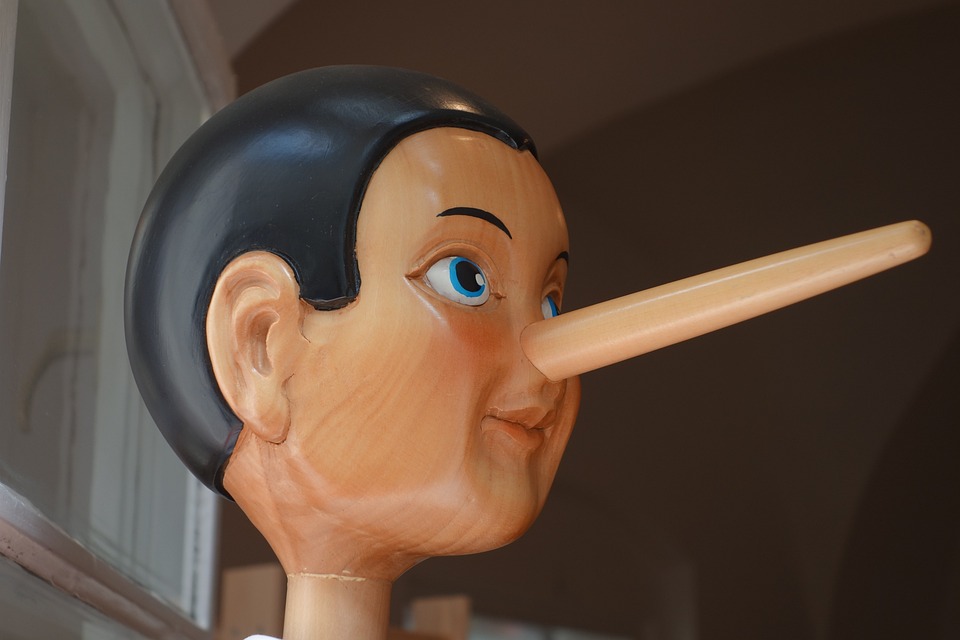
Why are we exaggerating?
Exaggeration is a symbolic magnifying glass of our character. When we exaggerate, we make our experiences, successes, and abilities greater than they really are. This means that we have a strong need to hide our shortcomings, or that we are in a painful state. Landscaping reality for many people is also an exciting game in which they masterfully manipulate their interlocutors and information. Sometimes, however, for some it is innocent fun, and for others - an abnormal and very annoying chatter or directly impudent lie.
They say that exaggerating is not good, because things can not be seen in the true light. What is true light? Hypochondriac, for example, is absolutely sure that he has signs of a disease (diseases), and in his eyes it does not become an exaggeration. But if you look from the side... It turns out that the truth changes depending on the point of view.
Is it possible to call the exaggeration in art?
Almost every artist, sculptor, Director and writer builds his work on the basis of exaggerated reality. Cartoons in Newspapers entertain us precisely because words and images exaggerate things. And this does not mean that they depict or tell anything that is not really the case. On the contrary, they capture the main and quite real characteristics of things and strengthen them for a certain purpose. In these cases, exaggerating reality is an art form. And if a person does not know it perfectly, he risks to look awkward and funny.
When is it a painful condition?
If we are inclined to exaggerate reality, we should bear in mind that perhaps we are talking about pathology. In such a case, the affected individuals do not realize the falseness of the events they describe. This so-called Munchausen syndrome, its diagnosis is complex, as is the treatment. Unconscious lies are associated with memory disturbances, when the victim is unable to distinguish reality from illusion. So do not be in a hurry to be angry with your friend, who again tells “science fiction”, and do not forget that a person may actually be sick. So instead of getting angry, you can sympathize with him.
** Is this a deliberate lie?**
Unfortunately, the transition from pathological lies to deliberately exaggerated truth is very difficult to capture. Even if a person is mentally healthy and just lying, his motivation may be unconscious. He does not understand why exaggerating, but not cease to do it, because it is stronger than him.

Usually this is done in order to be in the spotlight, and is manifested in people with emotional deprivation in childhood (the expectation that the need for emotional support will not be adequately met by others). Everyone felt completely natural need to Express themselves in the best light. At some, however, memory is suppressed and replaced by “inconvenient” experiences. For example, if a particular person enhances their positive traits, then over time, thanks to fantasy, the trace left in the memory becomes more and more, and at some point a person loses control and no longer distinguishes reality from what he came up with.
How to recognize fiction?
We live in a world of illusions, and it is up to us how we adapt to it. It is necessary to accept any information with certain reservations. We're not gonna take a liar out of his bad habit. It depends on us whether we will be able to come to the rational core of what is said, and how it will be accepted. You don't have to believe everything they tell you. After all, nowadays it is easy enough to check any information. Learn to" sift " it through a sieve of doubt. And then the obvious lie would be easily recognizable.