Film Review: Coming Home (1978)
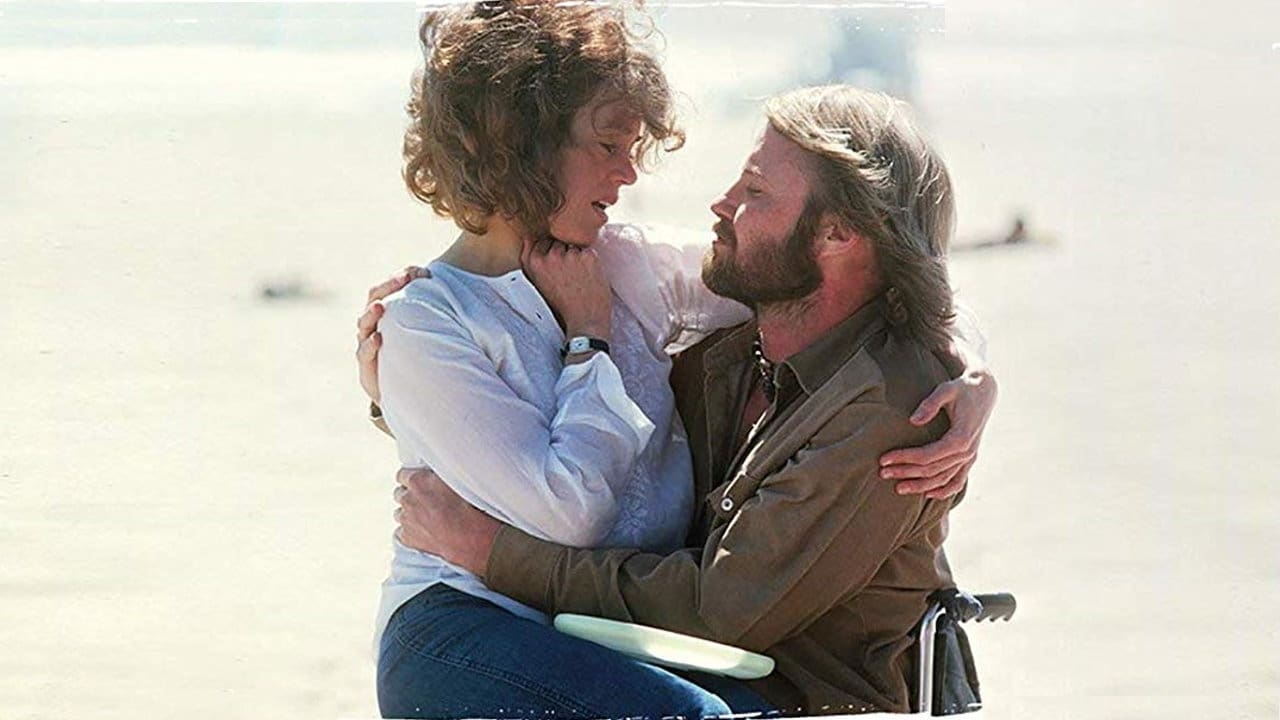
Few film directors were so quintessentially New Hollywood as Hal Ashby. His filmography, at least its good parts, coincided with the period while Ashby himself was, unlike all other New Hollywood directors, uncompromisingly anti-establishment, which reflected both in his counterculture lifestyle and left-wing politics. The latter played important part in Coming Home, 1978 drama nowadays remembered as one of the most popular and most important films made about Vietnam War.
The plot begins in 1968 Southern California. While the increasingly bloody and unpopular war begins to tear American society apart, Captain Bob Hyde (played by Bruce Dern), ambitious US Marine officer, still believes in official line and enthusiastically goes to fight in Vietnam. His wife Sally Bender (played by Jane Fonda) shares traditional values and support his decision, but when he departs, she finds herself truly alone for the first time in her life. She decides to volunteer in veterans hospital and among many young men whose bodies and souls were permanently maimed during their service in Vietnam she finds Luke Martin (played by Jon Voight), paraplegic veteran who also happens to be her old school acquaintance. Two of them become friends and, after a while, their relationship becomes romantic and even sexual, despite Luke’s condition. This is further complicated by Luke’s anti-war activism, as well as Bob who, deeply affected by horrors war, returns home as a shadow of a man he used to be.
Made three years after the fall of Saigon, in a time when Hollywood producers finally felt comfortable to come to grips with Vietnam fiasco, Coming Home reflects prevailing attitudes and wears anti-war stance on its sleeve. This shouldn’t be too surprising, because the film originated as the idea of Jane Fonda, known for her passionate opposition to the war and (in)famous publicity stunt in Hanoi. She was convinced that the most realistic and practical way to portray the war was indirect approach through depicting its psychological aftermath at the home front. Film was also inspired by Fonda’s friendship with fellow anti-war activist and paraplegic veteran Ron Kovic, who served as a model for Luke’s character, and whose life was later depicted in 1989 biopic Born on the Fourth of July. Fonda had good fortune that almost anyone in her project – Ashby, Voight, screenwriters Waldo Salt and Robert C. Jones – shared her views on the war. Those views apparently matched those among the audience which resulted in very good box-office results and spectacular and widely-publicised race for “Oscars” with another Vietnam War film The Deer Hunter.
Coming Home lost that race but it won consolation prize in form of “Oscars” for Best Actor and Best Actress. For Jane Fonda that was her second such award and it could be said that it was deserved. She convincingly presented transformation of former cheerleader and obedient wife into strong, independent woman. Jon Voight won his “Oscar” for truly great performance in which he plays character who begins as a pathetic wreck, but gradually finds dignity and purpose and, in the process, wins hearts of her partner and the audience. His speech to the students at the end of the film, which was, in good New Hollywood tradition, ad-libbed, is one of the most memorable of the era. For many audience this film became memorable for their sex scene, which, despite being very explicit (and later serving as euphemism for certain sexual activity), represents one of the most romantic moments of New Hollywood.
This film is incredibly well-acted, but great acting comes together with certain flaws. The most obvious is inconsistency in approach. Ashby tries to be as realistic as possible, like in the opening scenes which features real life disabled veterans honestly discussing war with various opinions about it. This is, however, compromised by setting the film in sunny Southern California, with protagonists who belong to middle class and can afford to buy and drive sports cars – very unlike The Deer Hunter which featured blue-collar characters in bleak Pennsylvania. Ashby also has some problems with pacing and the film would have been more effective without subplots involving Sally’s bohemian friend (played by Penelope Milford) and her mentally disturbed brother (played by Robert Carradine). The most annoying is the use of most popular late 1960s pop and rock songs in almost any scene of the film. Technique, which was supposed to give period “feel” to the film, was often copied in other, much inferior films, and here it doesn’t work and instead reminds the audience that they watch film produced with someone who could pay hefty royalties. Despite that, Coming Home is film that deserves recommendation, perhaps even more now, when the new generations should be reminded what the real price of a war really is.
RATING: 7/10 (++)
Blog in Croatian https://draxblog.com
Blog in English https://draxreview.wordpress.com/
Leofinance blog https://leofinance.io/@drax.leo
Cent profile https://beta.cent.co/@drax
Minds profile https://www.minds.com/drax_rp_nc
Uptrennd profile https://www.uptrennd.com/user/MTYzNA
Hiveonboard: https://hiveonboard.com?ref=drax
Rising Star game: https://www.risingstargame.com?referrer=drax
1Inch: https://1inch.exchange/#/r/0x83823d8CCB74F828148258BB4457642124b1328e
BTC donations: 1EWxiMiP6iiG9rger3NuUSd6HByaxQWafG
ETH donations: 0xB305F144323b99e6f8b1d66f5D7DE78B498C32A7
Movie URL: https://www.themoviedb.org/movie/31657-coming-home
Critic: AA
