Extreme Parenting – Part Two

I read an article about ‘extreme parenting’ the other day. In it, the author talks about five times in her son’s life she has employed extreme behavior to discipline him.
https://www.fatherly.com/fatherly-forum/why-i-choose-extreme-parenting-for-extreme-child/
As a parent, I understand that all parents will most likely encounter at least one situation in their lifetimes that they absolutely aren’t prepared for, a situation that for whatever reason catches them off guard, surprises them, and pushes them to their limits. I also understand that most parents will lose their temper from time to time and will probably have at least one outlandish reaction to their children’s behavior in their lifetime. I have certainly had my share of these moments, and this is what I have learned from them.
Regarding the above referenced article, in each of the five instances of extreme parenting that the author describes, it appears that she chose to parent from a place of anger. I’m sure there were a lot of reasons why she chose to do so. Maybe one of those reasons is she wasn’t aware that there were other options at her disposal. In this post, I would like to explore what I feel are some of the options she could have explored had she chosen to parent from a place of peace. By doing so, I hope to give other parents options they can try employing when they are faced with intense and difficult situations.

Explain the situation to your child. Explain the way you are feeling, what you want, and what you would like your child to do. Most importantly, explain why you feel the way you do and why you want your child to do whatever it is you want him/her to do. For example:
Listen, we really have to go. I’m sorry, but we don’t have any more time to play. We have to hurry because I have to pick your brother up from soccer practice. He is going to be finished in twenty minutes. Look at my watch. See this number? See this other number over here? When this long needle gets all the way over to this number, your brother is going to be done with soccer. That’s not much time. If we don’t leave now, your brother will be all by himself. He might get sad or scared. Do you want your brother to be sad or scared? Well, listen. I really want you to help me. Can you help me? I need you to walk all the way to the car. It isn’t far. It’s just right over there. Do you see it? If you can walk all the way over to the car, that will help me so much! You’ll be my little helper. Etc.
Switch roles with them. Pretend you are helpless and you need their help. Try to give them some kind of responsibility.
I can’t walk back to the car by myself. It’s too far, and I’m really tired. Pick me up. Hold my hand and pull me. Come on, you can do it. Yes, you can. I know you can. You’re so strong. Just try. Etc.
Explain the situation to your child and tell him that he can either come with you or stay where he is and do whatever he is doing by himself. Tell him, though, that you won’t be coming back to get him. Tell him that he’ll have to find his own way home. Ask him to decide.
Give your child a time or a play limit. Tell her that it’s time to go, but that she can play on the swings for one more minute or go down the slide one more time. Tell her to choose. If she tries to negotiate, negotiate with her. If she doesn’t accept your offer, be firm and tell her that you have to go home right now. Tell her the choice is up to her, she can either go home right now or she can play on the swings or the slide for just a little longer.
Explain the consequences of his actions to your child. Tell him that if he stays in the pool any longer he won’t be able to do something that he loves to do at night. Explain that there isn’t enough time in the day to do everything and that he has to choose between doing one thing or the other.

Does your child like races? If so, challenge her to a race. I’ll race you to the car. Ready? Set. Go!
Does your child like physical challenges or knocking things out of your hands? Work with that. Can you balance this rock on your finger? I bet you can’t do it. Try. Wow! You can do it. Can you balance that rock on your finger and walk at the same time? You can. Let’s see who can do that and walk the farthest. Come on. Let’s go this way. Then start walking toward your car.
Is your child competitive? If so, try something like this. Look at me. I’m taking really small steps. I bet you can’t take smaller steps than me. Let’s see how many steps it takes to walk over to that tree. Now let’s take big steps. Now let’s walk fast. Etc. In this vein you can make progress in moving toward your car.
Everyone knows the countdown, and the countdown is very effective, especially when used on a daily basis and in combination with the above strategies. I often find that after explaining things to my children and giving them some choices, if I do a five-second countdown with occasional reminders and prompts between the numbers, they are ready to do either what I want them to do, or what we agreed upon by the end of the countdown.
Become a character or role that your child likes. My son likes fire trucks and likes to pretend he his putting out fires, so I might do something like this:
Oh my gosh! Mommy called and said there’s a fire. We have to go put it out. Here, put on your helmet. You’re going to need your fireman coat too. Don’t forget that. Oh no! Where are my boots? Do you see them? Okay. Let’s go. The fire is way over there. It’s far away. Do you see the smoke? We’re going to have to get in the car and drive really fast. Come on!
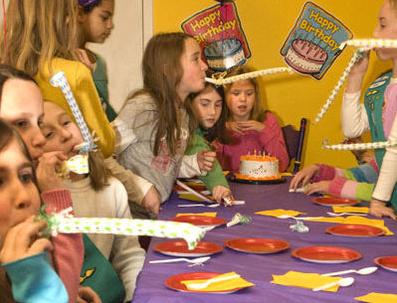
Do you remember what happened at Missy’s birthday party last year? She called your mom the ‘B’ word, didn’t she? How did that make you feel? You got in a fight with her, didn’t you? Well, calling me an a@#hole isn’t much different than calling me the ‘B’ word. How do you think I feel right now? Etc.
Say something funny. Act funny. Do whatever you can to make your children laugh. Break out in the chicken dance. Put your head inside of your shirt and act like a headless zombie. Pretend a bee is suddenly stinging you in various parts of your body. Do whatever you can to get their attention off of the thing that is causing the problem.
In the article that is referenced above, the author writes this:
Strong willed children test our boundaries as parents on a regular basis. They test our abilities to assert authority. They challenge us to be creative.
She is absolutely right! Children, whether strong willed or not, challenge us to be creative on a daily basis. They do not, however, challenge us to think of creative punishments. They challenge us to think of creative ways to solve problems. They challenge us to think of creative ways to keep our composure. They challenge us to be creative and to be better.
Though it may not seem like it when your temper is rising and your children are making you angrier and angrier, you do have a choice. You always have a choice. Giving in to your anger is a choice, and so is letting it go.
Please remember this the next time you feel yourself starting to get angry, and please try using any or all of the techniques listed above. Remember, though, if you want these techniques to work, you can’t just do them half way. You have to own them. You have to throw yourself into them. And you can’t let your anger get in the way.
If you liked this post, please also consider reading part one.
Extreme Parenting – Part One https://steemit.com/life/@boxcarblue/extreme-parenting-part-one