The city life of bumblebees
The city life of bumblebees
 Attribution-ShareAlike CC BY-SA by @enmart thanks to @aboutcoolscience and @davinci.art - [Source](https://steemit.com/@davinci.art)
There was significantly less food stored in the agricultural colonies compared to urban ones and bees living in rural areas were dying also more quickly. This may seem counter-intuitive but urban environments are becoming a refuge for bees that have seen their floral resources dramatically reduced by agricultural practices (Carvell et al. 2006). Especially when cities and towns have garden and parks they can offer high diversity of floral resources (Loram et al. 2008). This is positive, even if most urban flowers are chosen for their esthetic appeal rather than their nutritional potential (Garbuzov and Ratnieks 2014).
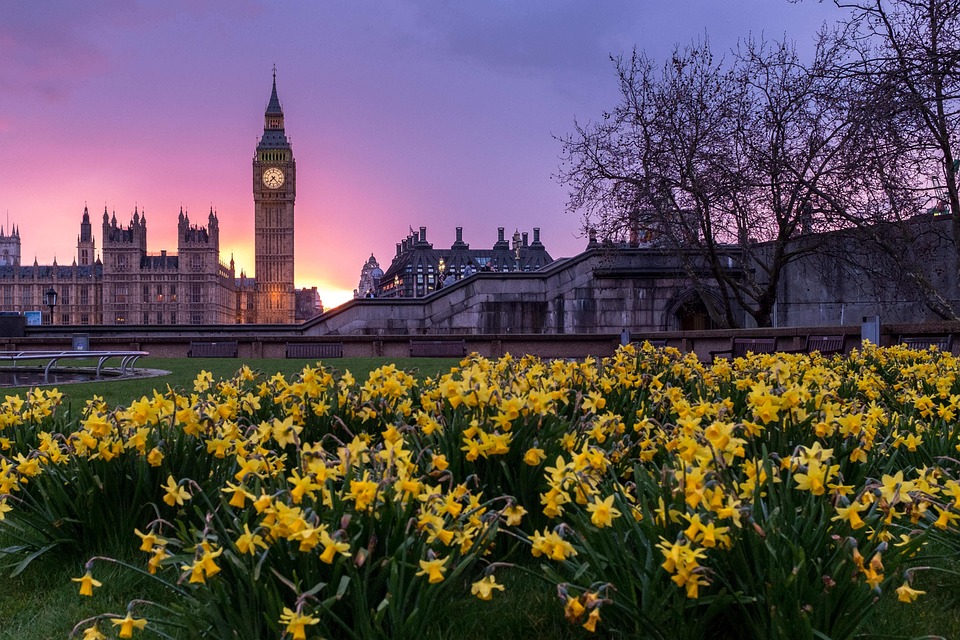 Image CCO Creative Commons [Source](https://pixabay.com/en/architecture-blooms-blossoms-1850632/)
 Image CCO Creative Commons - [Source](https://pixabay.com/en/bee-flying-holding-honey-buckets-45792/)
References
Aronson, M. F. J. et al. 2014. “A Global Analysis of the Impacts of Urbanization on Bird and Plant Diversity Reveals Key Anthropogenic Drivers.” Proceedings of the Royal Society B: Biological Sciences 281(1780): 20133330–20133330. http://rspb.royalsocietypublishing.org/cgi/doi/10.1098/rspb.2013.3330.
Carvell, Claire et al. 2006. “Declines in Forage Availability for Bumblebees at a National Scale.” Biological Conservation 132(4): 481–89. http://linkinghub.elsevier.com/retrieve/pii/S0006320706002023.
Desneux, Nicolas, Axel Decourtye, and Jean-Marie Delpuech. 2007. “The Sublethal Effects of Pesticides on Beneficial Arthropods.” Annual Review of Entomology 52(1): 81–106. http://www.annualreviews.org/doi/10.1146/annurev.ento.52.110405.091440.
Garbuzov, Mihail, and Francis L. W. Ratnieks. 2014. “Quantifying Variation among Garden Plants in Attractiveness to Bees and Other Flower-Visiting Insects” ed. Ken Thompson. Functional Ecology 28(2): 364–74. http://doi.wiley.com/10.1111/1365-2435.12178.
Goulson, Dave et al. 2010. “Effects of Land Use at a Landscape Scale on Bumblebee Nest Density and Survival.” Journal of Applied Ecology 47(6): 1207–15. http://doi.wiley.com/10.1111/j.1365-2664.2010.01872.x.
Kark, Salit, Andrew Iwaniuk, Adam Schalimtzek, and Eran Banker. 2007. “Living in the City: Can Anyone Become an ?Urban Exploiter’?” Journal of Biogeography 34(4): 638–51. http://doi.wiley.com/10.1111/j.1365-2699.2006.01638.x.
Loram, Alison, Ken Thompson, Philip H. Warren, and Kevin J. Gaston. 2008. “Urban Domestic Gardens (XII): The Richness and Composition of the Flora in Five UK Cities.” Journal of Vegetation Science 19(3): 321–30. http://doi.wiley.com/10.3170/2008-8-18373.
United Nations. 2014. World Urbanization Prospects. United Nations. https://esa.un.org/unpd/wup/publications/files/wup2014-highlights.pdf.
Osborne, Juliet L. et al. 2007. “Quantifying and Comparing Bumblebee Nest Densities in Gardens and Countryside Habitats.” Journal of Applied Ecology 45(3): 784–92. http://doi.wiley.com/10.1111/j.1365-2664.2007.01359.x.
Samuelson, Ash E., Richard J. Gill, Mark J. F. Brown, and Ellouise Leadbeater. 2018. “Lower Bumblebee Colony Reproductive Success in Agricultural Compared with Urban Environments.” Proceedings of the Royal Society B: Biological Sciences 285(1881): 20180807. http://rspb.royalsocietypublishing.org/lookup/doi/10.1098/rspb.2018.0807.
Senapathi, D. et al. 2015. “The Impact of over 80 Years of Land Cover Changes on Bee and Wasp Pollinator Communities in England.” Proceedings of the Royal Society B: Biological Sciences 282(1806): 20150294–20150294. http://rspb.royalsocietypublishing.org/cgi/doi/10.1098/rspb.2015.0294.
Sirohi, Muzafar Hussain, Janet Jackson, Mike Edwards, and Jeff Ollerton. 2015. “Diversity and Abundance of Solitary and Primitively Eusocial Bees in an Urban Centre: A Case Study from Northampton (England).” Journal of Insect Conservation 19(3): 487–500. http://link.springer.com/10.1007/s10841-015-9769-2.
Communities that support me are:

enlarge
Attribution-ShareAlike CC BY-SA
Reuse this image by copying and pasting this text with it:
Attribution-ShareAlike CC BY-SA by @elvisxx71 thanks to @aboutcoolscience and @davinci.art
IMMAGINE CC0 CREATIVE COMMONS, si ringrazia @mrazura per il logo ITASTEM. Click here and vote for @davinci.witness
Yes, this can be the most important factor that can explain these findings. I thought bees would have a better life living in a natural place instead of a city. It is good to know there are animals being benefited by our cities
Off topic: in case you want to fix the broken hyperlink with some sources, instead of using the code [source](link), use this one below:
<a href="link"><sup> Source</sup></a>
You can remove the sup part in case you don't want small letters.
Cheers @aboutcoolscience!
Thank you for the suggestion, I really appreciate the help!
I read this reasearch on Wired and I find this news very interesting.
I believe that Nature with animals and vegetables is so strong to overcome also the artificial human world, being able to live better with us.
Very interesting discourse on bees and their preferred location. It is surprising to me to know bees would prefer to live in urban areas than in rural areas. Naturally and personally, I would have said the other way round should be the case but this reason:
...is very logical and convincing.
Regards
@eurogee of @euronation and @steemstem communities
Thanks for your sharing.
really enjoyed this.....i never knew that bees can survive more in the city until i read this blog. will love to see more of this. Kudos